 Beauty is God’s good gift. Whatever is truly good and beautiful comes from God (James 1:17), whose own beauty is beyond words. King David longed to know God’s magnificent beauty, saying:
One thing have I desired of the Lord, that will I seek after, that I may dwell in the house of the Lord all the days of my life, to behold the beauty of the Lord, and to enquire in His temple. (Psalm 27:4)1
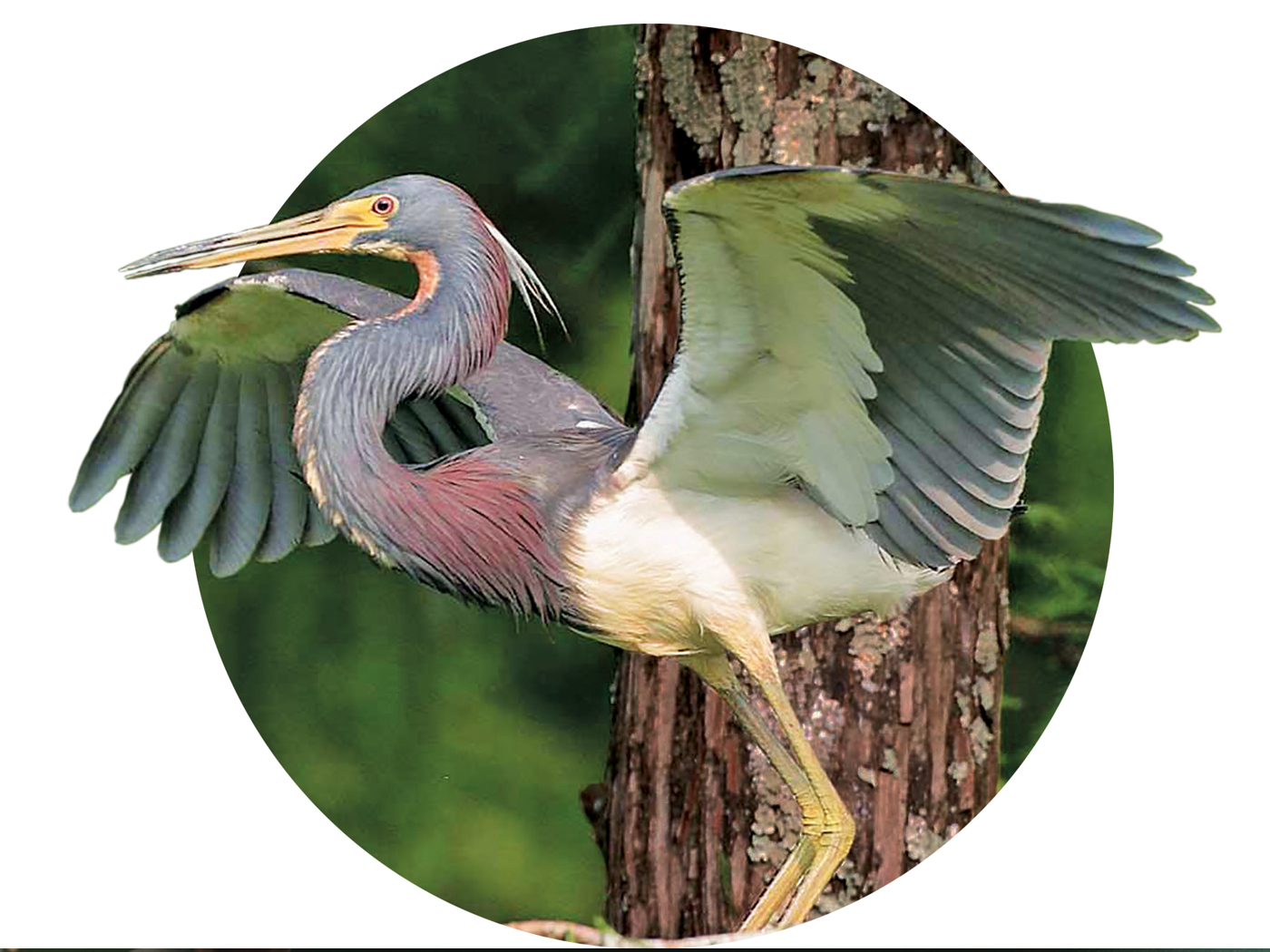
Because ultimate beauty belongs to God, it’s not surprising that His creation—even in its fallen condition—exhibits many examples of beauty, one of which is a bird called the turquoise-browed motmot (Eumomota superciliosa). This Neotropical forest bird’s plumage combines emerald green, cyan-to-indigo blue, and brownish russet, and the wings have a black outline when outspread. It has a decurved (curved downward) bill that it uses to snag insects or pick fruit, and it has conspicuous, turquoise-colored eyebrows. But the motmot’s real claim to fame is its two extra-long racket-tail feathers that are used for balance and wagtail signaling.2
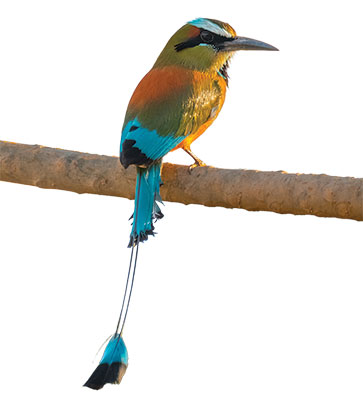
Scanning electron microscopy shows that these unusual tail feathers are a beautiful work of bioengineering, even at the microscopic level—so much so that even evolutionists sometimes forget themselves and admit that these purposeful, pendulum-like tail-feathers give “evidence” of developmental “design.”
The racketed shape of the motmot’s tail is attained when weakly attached barbs fall off, and the barbs along the wire appear to be weakly attached due to a combination of a reduced structural attachment and a lack of structurally enhancing melanin in the proximal rami of the barbs. Data provided in this [Journal of Avian Biology] paper provide evidence that certain barbs are designed to fall off, and that the shape of the motmot’s tail is pre-determined at the time of development.2
Meanwhile, the Lord Jesus Christ—our Creator—delivers beauty in our world, even though Earth is marred by Adam’s sin and the consequential ugliness that sin produces. For example, I saw this spectacularly beautiful bird in 1998 at Chichén Itzá, a site once used as a Mayan center of horrific human sacrifice and cannibalism.3
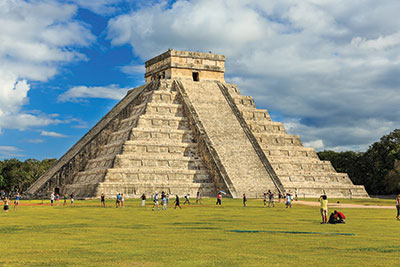
In some of the most dangerous places on Earth there are some of the most beautiful animals. These include the turquoise-browed motmot that, for years, has dwelt conspicuously near the cenote (limestone-dominated sinkhole-well) area of Chichén Itzá in Mexico’s Yucatan Peninsula. Even in places where the fallenness of mankind is evident—and sometimes dominant—the “good-yet-groaning” beauty of God’s artistic creation is still there to admire and appreciate, for those with eyes to see.4
Turquoise-browed motmots were created beautiful because all true beauty is created by our Lord Jesus Christ (Ecclesiastes 3:11). In fact, our God is beautiful, and His work in the turquoise-browed motmot not only reflects our Creator’s beauty and creativity but also His gracious character as He preserves such hidden-in-plain-view beauty, even in our fallen world.
References
- Interestingly, David’s verb translated “enquire” is an infinitive form of bâqar, a verb that connotes serious, discovery-seeking research, not unlike the empirical and forensic research by which ICR scientists strive to learn from and honor the Lord. Wigram, G. V. 2001. The Englishman’s Hebrew Concordance to the Old Testament, 3rd ed. Peabody, MA: Hendricksen (originally published 1874), 265, showing Aramaic equivalent in Ezra 4:15, 19; 5:17; 6:1; and 7:14. Regarding ICR’s research mission priorities, see Guliuzza, R. J. 2023. Continuous Environmental Tracking: An Engineering-Based Model of Adaptation. Acts & Facts. 52 (6): 22–23.
- “The distinctive racket-tipped…long central tail feathers…terminate in blue-and-black rackets that appear to hang, unattached below the body of the bird. The apparent detachment occurs because the feather shafts proximal to each racket-tip (wires) are devoid of barbs. Although barbs originally grow along the wires, the barbs are later lost to give the tail feathers their racketed shape.” Quoting Murphy, T. G. 2007. Lack of Melanized Keratin and Barbs that Fall Off: How the Racketed Tail of the Turquoise-browed Motmot Eumomota superciliosa Is Formed. Journal of Avian Biology. 38 (2): 139–143. See also Peterson, R. T. and E. L. Chalif. 1973. A Field Guide to Mexican Birds. Boston, MA: Houghton Mifflin, 113 and plate 22. Emphasis added.
- The Chichén Itzá excursion was facilitated by the Norwegian Cruise Lines’ Norwegian Star when this writer served aboard that cruise ship as guest lecturer naturalist-historian.
- Johnson, J. J. S. Jungle Biodiversity Discoveries in Perilous Times. Creation Science Update. Posted on ICR.org June 12, 2020. See also Eidsmoe, J. 1998. Columbus and Cortez, Conquerors for Christ. Green Forest, AR: New Leaf Press, chapter 5.
Stage image: Blue-crowned Motmot. Many species of motmots have racketed tails.
Stage image credit: Copyright © Francesco Veronesi, 2016. Used in accordance with federal copyright (fair use doctrine) law. Usage by ICR does not imply endorsement of copyright holder.
* Dr. Johnson is Associate Professor of Apologetics and Chief Academic Officer at the Institute for Creation Research.