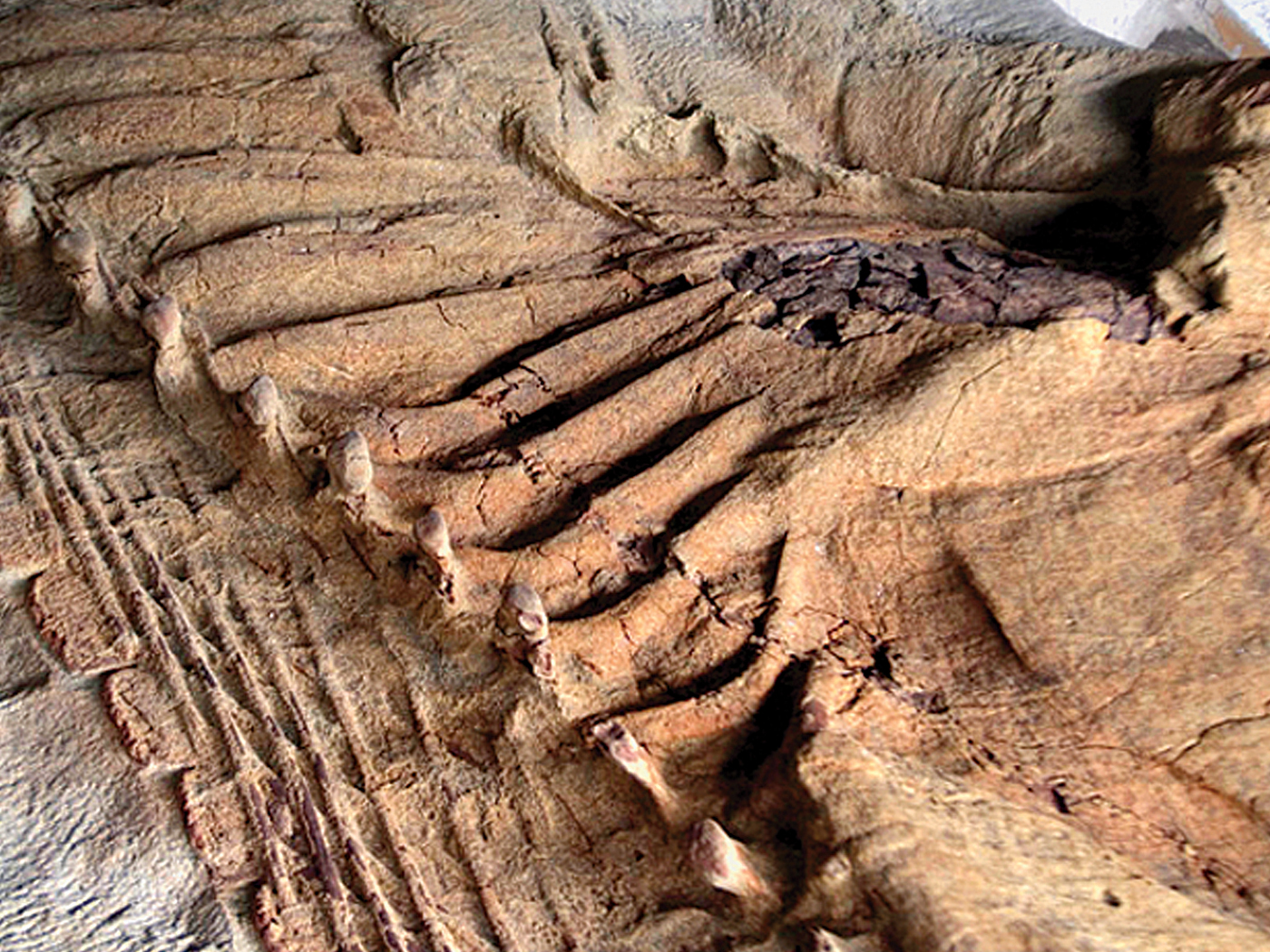
The remains of a dinosaur found in the Hell Creek Formation of North Dakota are so well preserved that some scientists are just “gobsmacked.”
The mummified remains belong to a hadrosaur nicknamed “Dakota” and were the subject of a recent study that appeared in the Proceedings of the Royal Society B.1 About the size of a hippo, the dinosaur is supposedly 66 million years old. But its skin says otherwise, a find that paleontologist and the study’s co-author Phil Manning called “absolutely gobsmacking.”2
Like many other young-looking dinosaur remains,3,4,5,6 this specimen was “extremely well preserved” and contained “soft-tissue replacement structures and associated organic compounds.” Using various advanced techniques, the researchers established the “survival and presence of macromolecules.”1 They were even able to compare the dinosaur’s skin structure with that of living creatures, finding that it is similar to the two-layered structure of modern birds and reptiles.
What is “gobsmacking” about this find is that given the millions of years this dinosaur has supposedly been dead, these soft tissue structures should absolutely not be there anymore. What is known empirically about Dakota, “B. rex,” and other dinosaur remains is that they contain organic molecules, including either intact or partially-decayed proteins from the original dinosaur.
The very presence of such materials counters the “millions of years” assigned to them. Nonetheless, scientists have tried to support long-age interpretations by inventing special caveats. This time, “the power of sediments” was hailed as a magical preservative of the tissues.7
But Dakota shows no signs of being 66 million years old, or even one million years old. The most logical explanation for the presence of preserved organic skin molecules is that these remains are from a creature that died relatively recently. Biblical data not only provides the timeframe for its demise in Flood deposits a few thousand years ago, but also a mode of deposition in agreement with what the study’s authors described as a dinosaur that “fell into a watery grave.”2
References
- Manning, P. L. et al. 2009. Mineralized soft-tissue structure and chemistry in a mummified hadrosaur from the Hell Creek Formation, North Dakota (USA). Proceedings of the Royal Society B. Published online before print July 1, 2009.
- Mummified dinosaur skin yields up new secrets. The University of Manchester press release, July 1, 2009.
- Criswell, D. 2006. How Soon Will Jurassic Park Open? Acts & Facts. 35 (6).
- Thomas, B. Fossil Feathers Convey Color. ICR News. Posted on icr.org July 21, 2008, accessed July 14, 2009.
- Thomas, B. Hadrosaur Soft Tissues Another Blow to Long-Ages Myth. ICR News. Posted on icr.org May 12, 2009, accessed July 14, 2009.
- Thomas, B. 2008. Dinosaur Soft Tissue: Biofilm or Blood Vessels? Acts & Facts. 37 (10): 14.
- Vieru, T. Cell Structure Imprints Found on Dinosaur Fossil. Softpedia. Posted on softpedia.com July 1, 2009, accessed July 14, 2009.
* Mr. Thomas is Science Writer at the Institute for Creation Research.
Article posted on July 30, 2009.