The word evolution is often used imprecisely, leading the public to believe that any biological change is evolution, and, therefore, it’s a fact.1 But phenotypic variation within the same species has nothing to do with evolution.
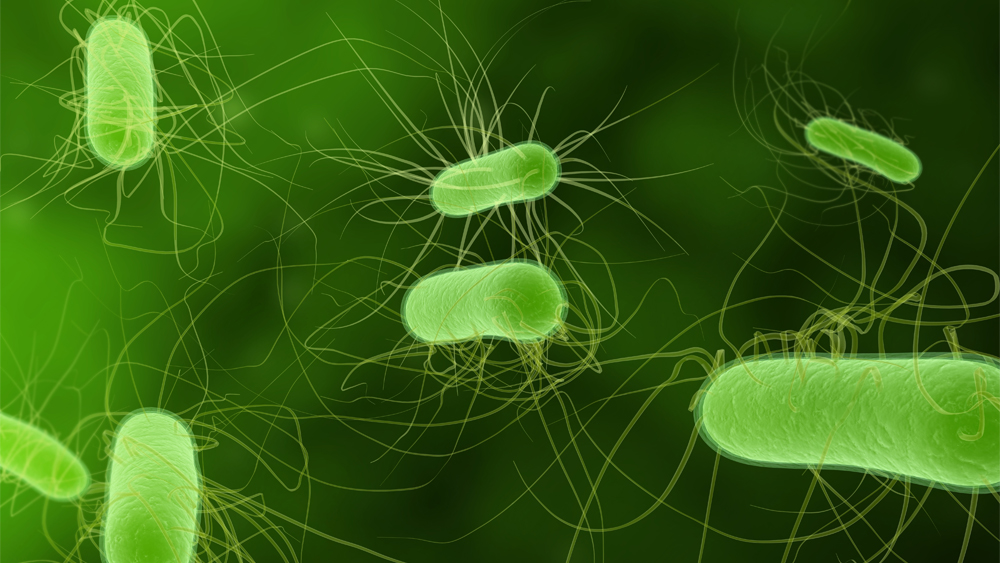
Recently, biological research has been conducted aboard the International Space Station (ISS) by the University of Wisconsin-Madison.2 Scientists wanted to see how conditions in the microgravity of space changes the battle between bacteria and bacteriophages (or phages), which are viruses that attack, for example, the common gut bacterium Escherichia coli.3 They also hope to design phages that have greater activity against drug-resistant pathogens.
The report in ScienceDaily stated,
Space fundamentally changes how phages and bacteria interact: infection is slowed, and both organisms evolve along a different trajectory than they do on Earth. By studying those space-driven adaptations, we identified new biological insights that allowed us to engineer phages with far superior activity against drug-resistant pathogens back on Earth.4
But neither organism evolved. They have remained E. coli (bacteria) and T7 phages.5 To validate real evolution, the new phenotypes of these two life forms would have to exhibit gain of functional coded elements. This has not been shown to occur.
Instead, what is found are differences in mutational preferences: “Deep mutational scanning of the phage receptor binding domain revealed striking differences in the number, position, and mutational preferences between terrestrial and microgravity conditions, reflecting underlying differences in bacterial adaptation.”2
Mutational preferences occur within the bacteria as they track their new microgravity environment, facilitating innovative genetic variation as part of their adaptive design. In other words, such minor change is not due to random mutations or the addition of a novel genetic regulatory element(s).6 It is due to genetic mechanisms built into the E. coli and phages.
The ScienceDaily article said,
The space-station phages gradually accumulated specific mutations that could boost phage infectivity or their ability to bind receptors on bacterial cells. Meanwhile, the space-station E. coli accumulated mutations that could protect against phages and enhance survival success in near-weightless conditions.4
The phages didn’t gradually accumulate specific mutations that constructed new and purposeful coded elements into their genome. They underwent—as the ScienceDaily article said—“microbial adaption,”4 or the reorganization of preexisting functional coded elements. This fits the creation model. There is no need to appeal to random Darwinian evolution.
To conclude, the two microorganisms—phages and bacteria—are designed by God as active, problem-solving entities. The research showed they were able to adapt to their unique microgravity surroundings based on their ability to continuously track their new environment.7 They purposefully adapted themselves “along a different trajectory than . . . on Earth”4 and filled a microgravity niche. Throughout this research they remain E. coli and T7 phages. There was no evolution.8
References
- Morris, J. 2006. Just How Well Proven Is Evolution? Acts & Facts. 35.
- Huss, P. et al. 2026. Microgravity Reshapes Bacteriophage–Host Coevolution Aboard the International Space Station. PLOS Biology. 24 (1).
- Sherwin, F. New RNA Viruses Discovered in Ocean Water Samples. Creation Science Update. Posted on ICR.org April 28, 2022.
- Scientists Sent Viruses to Space and They Evolved in Surprising Ways. ScienceDaily. Posted on sciencedaily.com January 18, 2026.
- Thomas, B. Bacterial ‘Evolution’ Is Actually Design in Action. Creation Science Update. Posted on ICR.org October 15, 2012.
- Tomkins, J. Random Mutations Debunked by Secular Scientists. Creation Science Update. Posted on ICR.org February 3, 2022.
- Continuous Environmental Tracking. Posted on ICR.org.
- Sherwin, F. Are the Galápagos Islands a Laboratory of Evolution? Creation Science Update. Posted on ICR.org August 14, 2018.
* Dr. Sherwin is a science news writer at the Institute for Creation Research. He earned an M.A. in invertebrate zoology from the University of Northern Colorado and received an honorary doctorate of science from Pensacola Christian College.