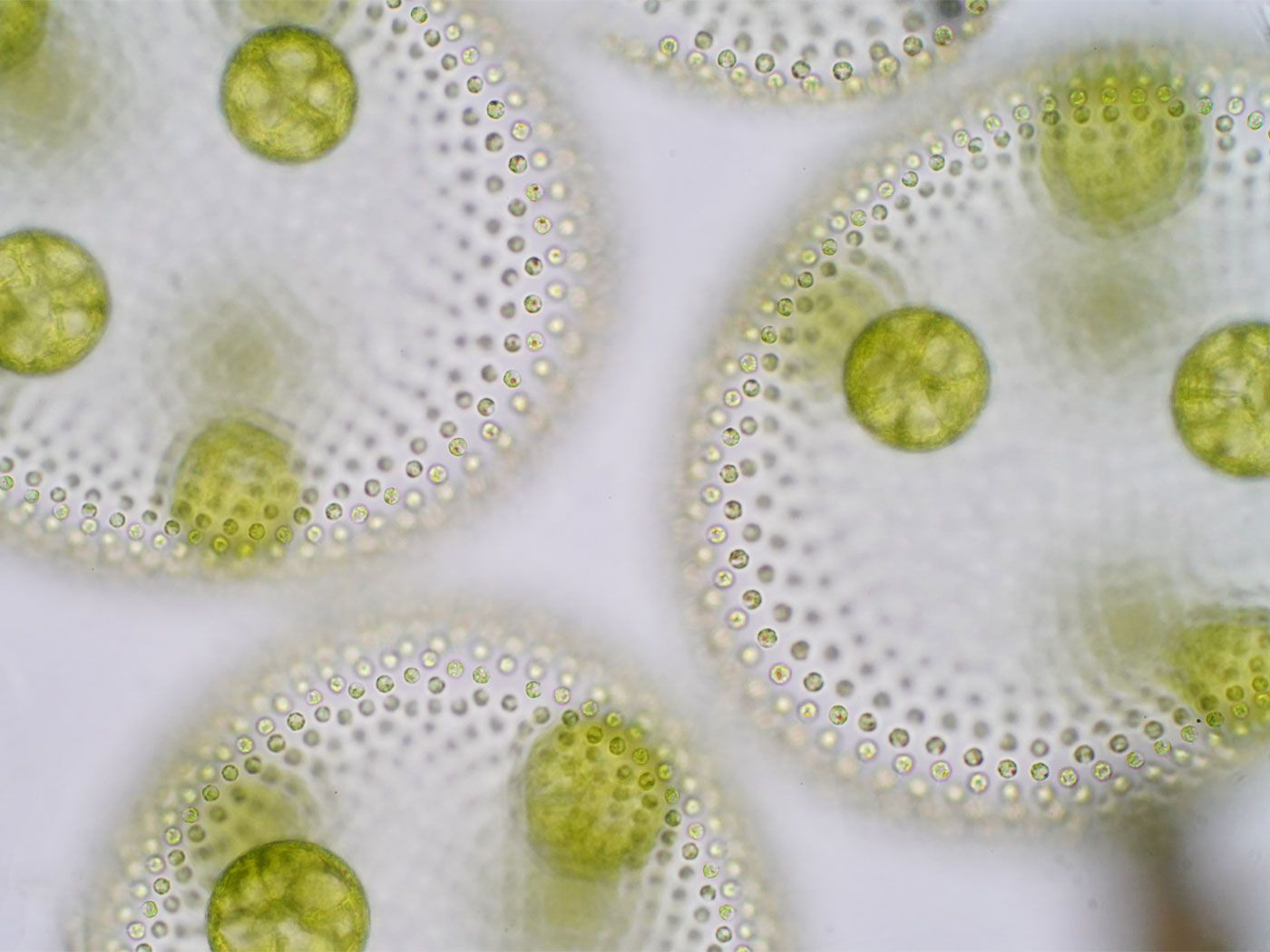
Northern Canadian lakes were the source of recently discovered unique photosynthetic bacteria of the phylum Chloroflexota. After years of culturing, cultivating, and incubating water samples from Boreal Shield lake, University of Waterloo (Ontario, Canada) scientists have described their discovery of the surprising bacterial species in the pages of the science journal Nature.1
The discoverer of the bacterium, Jackson Tsuji of the University of Waterloo, stated, “I remember a professor emeritus in the lab, Keizo Shimada, congratulating me on discovering what we now believe is a new branch of photosynthetic life and a key piece of the puzzle for resolving how photosynthesis developed on Earth.”2
A new branch of photosynthetic life may well have been discovered. It is unique because of the reaction center protein. “Certain core photosynthesis genes we had expected to see weren’t there, but in their absence, there was a completely novel clade of photosynthetic reaction center protein,” Tsuji says.2
Photosynthetic reaction centers and their associated proteins are incredibly complex. They perform primary energy conversion reactions using light to catalyze a transmembrane electron transfer. The whole mechanism, i.e., all parts, of photosynthetic reaction centers must be complete and in place so the electron acceptor traps a light-excited electron from the reaction center chlorophyll. Only a complete and fully functional reaction center can pass this electron on to the electron transport chain where ATP (cellular energy) is produced. This doesn’t sound like what one would expect from chance, time, and natural processes; instead, it clearly points to purpose, plan, and special creation.
Phototrophy is the ability of an organism to carry out photon capture to manufacture complex carbon-based compounds (e.g., carbohydrates) and obtain cellular energy. Tsuji et al. stated, “The Chloroflexota phylum preserves an evolutionary record of the use of contrasting phototrophic modes among genetically related bacteria, giving new context for exploring the diversification of phototrophy on Earth.”1 This is hardly an evolutionary record. It is simply a record of genetically related bacteria with a unique reaction center protein. The discovery says nothing about the gradual development of photosynthesis from biochemistry that is not photosynthetic. Such genetic variation is within the creation purview.
Is there “diversification of phototrophy on Earth”? Yes. God created photosynthetic organisms with the genetic ability (diversification or variation) to move in and fill various niches. But the phylum Chloroflexota has not preserved a macroevolutionary record because it’s not there. Dr. Tsuji stated, “This breakthrough challenged current scientific knowledge of how photosynthesis came to be and explained some of the ‘whys’ we couldn't explain before. Yet, it also created more questions than answers—and I was excited to investigate more”2
The Nature scientists said, “Scientific exploration of phototrophic bacteria over nearly 200 years has revealed large phylogenetic [relating to evolutionary diversification and development of a species] gaps between known phototrophic groups that limit understanding of how phototrophy evolved and diversified.”1 So, is this photosynthetic apparatus ancient or just different? In other words, since it has a different reaction center than “typical” photosynthetic reaction centers, is it because the bacteria are primordial, having evolved over “millions of years”? No. The oldest photosynthetic bacteria are 100% photosynthetic.
A recent article in Science News reported, “The finding pushes back the evidence of thylakoids [sophisticated flattened structures inside a chloroplast upon which the incredibly complex light reactions occur] in cyanobacteria by 1.2 billion years.”3 The article went on to say, “Cyanobacteria, like these ocean-dwelling Prochlorococcus, invented photosynthesis billions of years ago.”3 Invented? That’s not a very scientific explanation. What’s the difference between invented and created?
Tsuji et al. stated, “Despite using different reaction centres, our phylogenomic data [comparing entire genomes] provide strong evidence that RCI-utilizing and RCII-utilizing Chloroflexia members inherited phototrophy from a most recent common phototrophic ancestor.”1 But the most recent common phototrophic ancestor is unknown, and since this is so, how do the evolutionists know Chloroflexia members inherited phototrophy from it? One could just as easily say Chloroflexia was created with these unique reaction centers, giving them the ability to live, for example, in the challenging northern Canadian lakes.
The University of Waterloo article concludes by stating that this bacterium is like a living fossil.4,5 In other words, there has been no change through the ethereal “millions of years.” This is exactly what creationists would expect. The irreducibly complex photosynthetic machinery has been in place since the creation.
“Our initial findings for the metabolism of this bacterium and its photosynthetic machinery make it natural to speculate that the bacterium is like a ‘living fossil’—an organism that has held onto traits like those of ancient life,” Tsuji says. “In the years ahead, we want to learn more about the surprising characteristics of this bacterium to gain new insights into how photosynthesis came to work the way it does today and how this process transformed the Earth throughout its history.”2
There’s no question that this newly discovered bacterium has surprising characteristics that helped it to move in and fill challenging environments. But although photosynthesis in Chloroflexota uses a Type I reaction center,1 it doesn’t mean it’s an evolutionary relative. The most recent common phototrophic ancestor will always be unknown, even though it is what the supposed evolution of photosynthesis is mainly based upon. Creationists, on the other hand, see the amazing photosynthetic process as having been that way since the creation thousands of years ago, as recorded in Genesis.6,7
References
- Tsuji, J. et al. Anoxygenic phototroph of the Chloroflexota uses a type I reaction centre. Nature. Posted on nature.com March 13, 2024.
- McQuaid, K. Surprising bacterium from Canadian lake shines new light on ancient photosynthesis. Phys.org. Posted on phys.org March 13, 2024.
- Saey, T. Bacteria fossils hold the oldest signs of machinery needed for photosynthesis. ScienceNews. Posted on sciencenews.org January 3, 2024.
- Sherwin, F. Yet Another Living Fossil Found. Creation Science Update. Posted on ICR.org December 12, 2022.
- Thomas, B. Spectacular Spider Is a Long-Living Fossil. Creation Science Update. Posted on ICR.org February 24, 2010.
- Thomas, B. Photosynthesis uses quantum mechanics. Creation Science Update. Posted on ICR.org June 25, 2012.
- Sherwin, F. Photosynthesis Continues to Amaze. Creation Science Update. Posted on ICR.org March 14, 2019.
* Dr. Sherwin is a science news writer at the Institute for Creation Research. He earned an M.A. in invertebrate zoology from the University of Northern Colorado and received an Honorary Doctorate of Science from Pensacola Christian College.