James J. S. Johnson, J.D., Th.D., and Tim Clarey, Ph.D.*
 Acadia National Park displays Christ’s artistry throughout almost 50,000 acres of forests, island wildlife, salty-air breezes, and rocky seashores. When visiting Acadia, we can see exhibits of how Christ loves life, loves variety, and caringly fits wildlife for habitats.
What Is Acadia National Park?
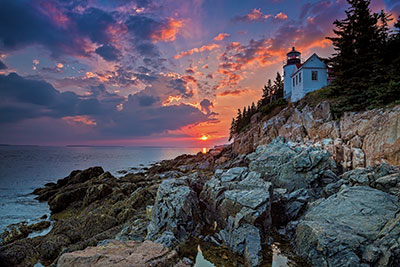
Composed of Maine’s peninsular mainland and nearby islands in the Atlantic Ocean, Acadia is America’s first national park established east of the Mississippi River.1 Rising upon Desert Island is Acadia’s Cadillac Mountain, the tallest mountain (1,530 feet) on America’s eastern seacoast, blending granite boulders, evergreen trees, and cranberry bushes.1,2
Acadia’s visitors can enjoy appreciating creation ecology—especially wildlife and biogeography—in beautiful eastern forests, freshwater ponds and streams, marshy wetlands, biodiversity-packed islands, and seashore galore.1,2
Busting Deep-Time Myths of Ancient Granites
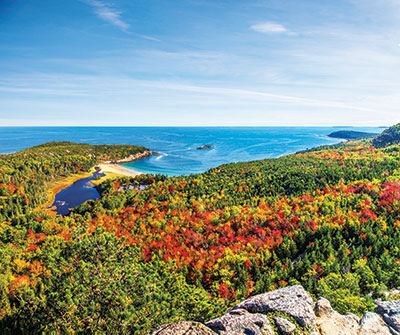 Cadillac Mountain showcases pink-colored, coarse-grained granites that are well worth hiking. These granites are early Flood igneous rocks exposed by erosion—including post-Flood Ice Age glacial erosion—that formed rounded, smoothed surfaces, especially on Cadillac Mountain.
Evolutionists claim magmas move and cool slowly over eons of time. But recent research debunks this uniformitarianism-based myth, proving that granite magma formations and movements don’t require millions (or even thousands) of years. Accordingly, Acadia’s granites corroborate Genesis.3,4
God Bioengineered Life to Be Fruitful and Multiply
Wildlife abounds in Acadia. Evergreen-dominated forests house birds, butterflies, bugs, large and small mammals, reptiles, amphibians, earthworms, and more.2 Freshwater habitats (streams, ponds, marshlands) contain busy aquatic insects, finfish, shellfish, turtles, frogs, etc.5 Tidewater-washed shorelines support shorebirds, seabirds, crustaceans, hauled-out seals, jellyfish, and more.6
Christ programmed Acadia’s wildlife for fruitfulness and multiplication,7 so Acadia’s wildlife abundance continues generation after generation. But none of this is simple or lucky. Christ selected (and bioengineered) the necessary details for the reproductive success of Acadia’s wildlife. Documenting those details could fill many libraries, but space constraints permit only one example here.
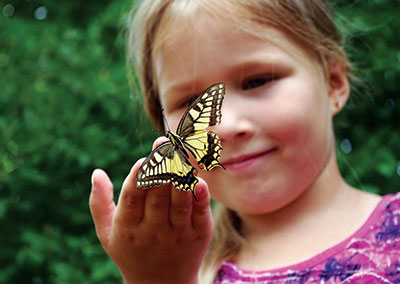 Consider the eastern tiger swallowtail (Papilio glaucus) butterfly. It begins life as a large, green, fertilized egg deposited upon a plant, afterward hatching into a crawling larval caterpillar, and then transforming into an immobile cocoon before later emerging as a flight-capable butterfly. All of this sequential development constitutes a truly miraculous metamorphosis.8
Should we be surprised that God’s program for procreating and producing fragile butterflies is carefully regulated, successfully reproducing swallowtail butterflies? Also, should we be surprised that God incorporated camouflage traits (including what look like snake eyes, nose, and mouth) to offset the vulnerabilities of growing swallowtails?8 Furthermore, as caterpillars they use foul-smelling emissions to deter predators!9
Not only does God accomplish reproductive success with such butterflies, He does so efficiently, cleverly, and beautifully. Acadia’s wildlife neighborhoods provide many more examples of habitat-filling life cycles—including growth, development, and reproduction “according to their kinds”—and ICR has already described many of these in other publications (lobsters, seals, echinoderms, etc.).10-12
God Loves Variety in Wildlife
The diversity of Acadia’s habitat-filling wildlife is mind-stretching.1,3 Acadia’s forests consist of evergreens (like balsam fir, pines, spruces) mixed with deciduous trees (like maple, birch, aspen), sometimes edged by marshy wetlands or cranberry bogs, generously hydrated by freshwater streams and ponds—plus a hodgepodge of shrub-sprinkled rocky fields and hills that stretch to Acadia’s rocky coasts, cobblestone shores, mudflats, tidepools, and sandy beaches.
Acadia’s forests contain birds (owls, hawks, woodpeckers, chickadees, woodcocks, waxwings, nuthatches, doves, spruce grouse, pheasant, sparrows, crossbills, finches, pine siskin), land mammals (moose, fox, deer, squirrels, pine marten, mice, raccoon, bats, snowshoe hare), insects (honeybees, blackflies, deerflies, borer beetles, mosquitoes, yellow jackets, butterflies, moths), and arachnids (spiders, ticks).2
 Freshwater streams (Marshall Brook, Hunter Brook) and ponds are plentiful in Acadia—Schoodic Beaver Pond, Aunt Betty Pond, Half-Moon Pond, Round Pond, Seal Cove Pond, Witch-Hole Pond, Eagle Lake, etc.—where eagles, ospreys, river otters, and minks snatch brook trout (Salvelinus fontinalis). Besides the almost-ubiquitous brook trout, these freshwaters contain brown trout, lake trout, perch, and landlocked Atlantic salmon.
Adjacent wetlands (e.g., Gilmore Marsh, Bass Harbor Marsh) support muskrats, frogs, toads, salamanders, painted turtles, birds (bobolinks, ducks), and garter snakes.5 Acadia’s intertidal shores, tidepools, and coastal seawaters (including Somes Sound fjord) provide habitat for many birds (eiders, ducks, gulls, loons, osprey), marine mammals (porpoise, seal), finfish (sunfish, herring, bass, haddock, mackerel, salmon, cod), shellfish (lobster, green crab, mussels, sea snails, tortoiseshell limpet), sea anemone, sea stars, etc.6
God Makes Wildlife and Habitats Fit Each Other
Much could be said about how Christ fits diverse wildlife to fill Acadia’s habitats.13 Acadia’s pregnant pine marten mothers experience delayed embryo implantation, timing gestation so that birthing occurs in springtime when food availability is optimal. Because the bioenergetic metabolism needs (i.e., food energy requirements) of lactating marten mothers are so demanding, both mothers and newborns benefit from this phenological providence.14
Whether we see it or not, Christ carefully provides for even His humblest creatures.
Snowfleas are springtail hexapods, insect-like detritivores (eating decaying leaves, moss, fungi) that survive Acadia’s cold winters using antifreeze!15
Acadia National Park—what an adventure-inviting blend of post-Flood mountain rocks, wildlife-rich forests, hiking trails, and tide-washed island coastlines. Acadia uniquely exhibits Christ’s caring providences, reminding us that our Creator loves to fit His variety of creatures to fill a variety of habitats.16
References
- Marsi, R. 1996. Acadia. In National Parks. C. Jackson, ed. White Plains, NY: Readers Digest Association, 8-17. See also Acadia National Park: Crown Jewel of the North Atlantic Coast. National Park Service. Posted on nps.gov, accessed April 22, 2021.
- Sutton, A. and M. Sutton. 1985. Eastern Forests. New York: Chanticleer Press/Audubon Society Nature Guide, 139 (plate 6), 355-357, 360-366, 384-386, 398-399, 407-408, 417-419, 425-426; Johnson, J. J. S. 2012. Valuing God’s Variety. Acts & Facts. 41 (9): 8-9.
- Clarey, T. 2020. Carved in Stone: Geological Evidence of the Worldwide Flood. Dallas, TX: Institute for Creation Research, 194-233.
- Rosen, J. 2016. Crystal clocks. Science. 354 (6314): 822-825; Ruprecht, P. and T. Plank. 2013. Feeding andesitic eruptions with a high-speed connection from the mantle. Nature. 500 (7460): 68-72. See Phelps, P. R., C.-T. A. Lee, and D. M. Morton. 2020. Episodes of fast crystal growth in pegmatites. Nature Communications. 11: 4986.
- Niering, W. A. 1998. Wetlands. New York: Chanticleer Press, 147 (plate 28), 377-379, 388-393, 406-407, 499, 609.
- Amos, W. H. and S. H. Amos. 1989. Atlantic and Gulf Coasts. New York: Chanticleer Press, 154-155 (plates 8-12), 504, 525, 534, 547, 605.
- Johnson, J. J. S. 2013. Fulfilling the Genesis Mandate While Helping the Poor. Acts & Facts. 42 (12): 19. See also Johnson, J. J. S. 2013. Siberian Huskies and the Dominion Mandate. Acts & Facts. 42 (6): 18-19.
- Acadia National Park: Invertebrates. National Park Service. Posted on nps.gov, accessed May 1, 2021. See Johnson, J. J. S. 2015. The Ghost Army. Acts & Facts. 44 (11): 20.
- See Acadia National Park, ibid, note 8.
- Johnson, J. J. S. 2018. Lobsters Get Comfortable in Their New Skin. Acts & Facts. 47 (9): 21.
- Johnson, J. J. S. Common Seals Display Extraordinary Bioengineering. Creation Science Update. Posted on ICR.org May 5, 2020, accessed May 1, 2021.
- Sherwin, F. Brittle Stars See with Their Skin. Creation Science Update. Posted on ICR.org December 26, 2019, accessed May 1, 2021.
- Acadia National Park: Moths of Acadia. National Park Service. Posted on nps.gov, accessed April 22, 2021.
- Hatler, D. F., D. W. Nagorsen, and A. M. Beal. 2008. Carnivores of British Columbia. Victoria, BC: Royal British Columbia Museum, 220-221.
- Acadia National Park: Invertebrates: Winter. National Park Service. Posted on nps.gov, accessed April 22, 2021.
- Psalm 150:6; Revelation 4:11.
* Dr. Johnson is Associate Professor of Apologetics and Chief Academic Officer and Dr. Clarey is Research Associate at the Institute for Creation Research. Dr. Clarey earned his Ph.D. in geology from Western Michigan University.