“For whosoever will save his life shall lose it; but whosoever shall lose his life for my sake and the gospel’s, the same shall save it.” (Mark 8:35)
The principle expressed in this verse must be of paramount importance, for it is found repeated in one way or another probably more often than any other single principle in the New Testament. Note the following examples representing at least four separate messages from the Lord Jesus.
Matthew 10:39: “He that findeth his life shall lose it: and he that loseth his life for my sake shall find it.”
Matthew 16:25: “For whosoever will save his life shall lose it: and whosoever will lose his life for my sake shall find it.”
Luke 9:24: “For whosoever will save his life shall lose it: but whosoever will lose his life for my sake, the same shall save it.”
Luke 17:33: “Whosoever shall seek to save his life shall lose it; and whosoever shall lose his life shall preserve it.”
John 12:25: “He that loveth his life shall lose it; and he that hateth his life in this world shall keep it unto life eternal.”
This remarkable divine paradox—that to die means to live—is also found expressed in many other ways in the epistles. Paul says, for example: “I am crucified with Christ: nevertheless I live” (Galatians 2:20). Note also such Scriptures as Romans 12:1-2; 2 Corinthians 5:14-15; 6:9-10; Philippians 1:21-24; 2 Timothy 2:11-12.
There are many pietistic Christians who interpret such passages as implying a so-called “deeper life” that is attained by certain Christians and not by others through some mystical experience. However, Jesus did not say to lose one’s life for a deeper life, but for “my sake and the gospel’s”! Christ wants us to live in simple obedience to His will as recorded in His Word, proclaiming in all we say and do that He is Creator, Savior, and coming King. HMM

To Die Is to Live
More Days of Praise

The Wells of Salvation
“Therefore with joy shall ye draw water out of the wells of salvation.” (Isaiah 12:3)
This beautiful verse is in the midst of a psalm...
The Man of God
“But thou, O man of God, flee these things; and follow after righteousness, godliness, faith, love, patience, meekness.” (1 Timothy 6:11)
There...
The Meaning of "Day"
“And God called the light Day, and the darkness he called Night. And the evening and the morning were the first day.” (Genesis 1:5)
Many...
The Latest
Hummingbird Hawkmoth Exhibits Astonishing Abilities
The incredible hummingbird hawkmoth (Macroglossum stellatarum), and other insects of the Lepidoptera order, continue to amaze entomologists.1,2...
More Than Just Parts: The Networking of Cells
An engineer can list every part in a system and still miss how it works. Think of a radio. Its parts matter, but so does the wiring that joins them....
Living Centenarian Sturgeon: Extreme Genesis Longevity Is Plausible
Native American oral tradition contains stories of sturgeon living for centuries. While this was largely seen as folklore among conventional scientists,...
Brainy Bees Solve Pollen Problem
The uncanny abilities of the honeybee cause entomologists to shake their heads in wonder.1,2
Scientists have long known that honeybees...

October Wallpaper
"Be anxious for nothing, but in everything by prayer and supplication, with thanksgiving, let your requests be made known to God; and the peace...
Possible Ark Site Has Mainstream Media Hopping
An organization named Noah’s Ark Scans is investigating a site called Durupinar, almost 20 miles from Mount Ararat in Turkey. Could it contain...
ANNOUNCEMENTS
Heroes of Creation Science: Henry M. Morris
“The creation/evolution issue is, in a very real sense, the most fundamental issue of all.” —Henry M. Morris
Many people believe the...

Creation Kids: Fungi
Hi, kids! We created a special Acts & Facts page just for you! Have fun doing the activities while learning about the wonderful world...
APOLOGETICS
What is True and False?
by Patrick C . Marks, D. Min., and Brian Thomas, Ph.D.*
In the first article of this series, we explained that truth—that which matches reality—is...
The Cambrian Layer: Explosion or Burial?
The lowest sedimentary layer, rich in hard-shelled fossils, is known as the Cambrian record. Beneath it is the Precambrian, which contains far fewer...
Shop Related Products
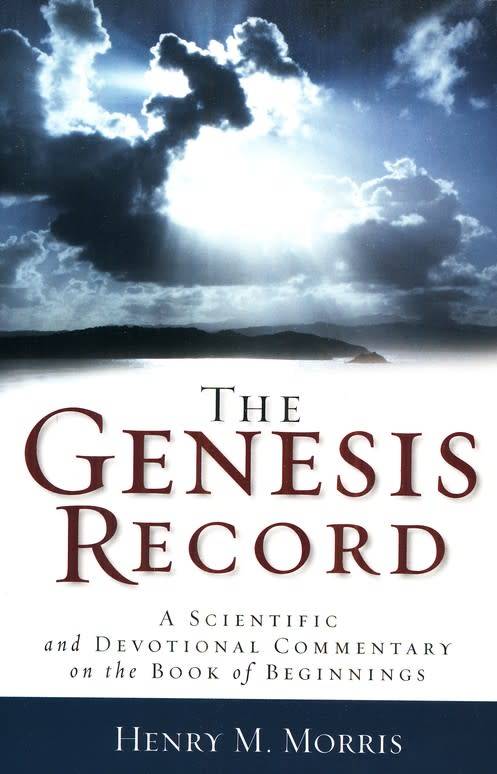
The Genesis Record
$47.99
Scientific Creationism
$14.99