Dogs don’t read the words on a page. Neither did Coco, the famous gorilla that learned to communicate using simple hand signs. So what affords humans the unique ability to read and write, and why do we do it? These kinds of questions drive Zeynep Saygin’s research at Ohio State. Her team’s recent discovery sets the stage for some answers.
Brain experts already knew about the visual cortex—an area of the brain where neurons fire as we interpret faces, shapes, and words. But Saygin’s group seeks to understand what happens in our brains as we learn to read.
The team compared functional magnetic resonance imaging (fMRI) data sets from 40 newborns to similar scans of 40 adults. fMRI shows neuron activity within the brain, so the comparison would indicate if baby brains come into the world already equipped with the wiring necessary to perceive and process letters later in life.
Literate adults have close connections between the part of the brain that processes the sight of letters, called the visual word form area (VWFA), and the brain’s nearby language network. The researchers discovered that newborn brains come prewired with similarly tight connections between the two areas.
They published their discovery in Scientific Reports.1
Saygin, the senior author of the study, told Ohio State News, “Even at birth, the VWFA is more connected functionally to the language network of the brain than it is to other areas. It is an incredibly exciting finding.”2
Lead author Jin Li said, “It’s interesting to think about how and why our brains develop functional modules that are sensitive to specific things like faces, objects, and words.”2
Why indeed?
From a Darwinian perspective, our brains’ functional modules would have incrementally developed over eons for our survival. But in what scenario would our ancestors have been forced to read or die? For that matter, how could such pressures reach into and rewire our brains?
On the other hand, if humans came from supernatural creation instead of mere nature, then the possibility opens for God to have intentionally prewired our brains “to see words.”2 And why would a Creator do that?
Reading is the key to understanding the most important information for time and eternity found in the Bible. Scripture says we were created for God, that our sins have driven a wedge between us and God, but that God sent His Son to take our sins upon Himself in order to restore our relationship with Him.
So, it makes sense that a God who has invested so much into us would also have endowed us with the prewiring needed to see letters. That way each can learn to read, take up the Bible, and discover the way back to Him.
References
1. Li, J. et al. 2020. Innate connectivity patterns drive the development of the visual word form area. Scientific Reports. 10: 18039.
2. Grabmeier, J. Humans are born with brains ‘prewired’ to see words. Ohio State News. Posted on news.osu.edu October 22, 2020.
*Dr. Brian Thomas is Research Associate at the Institute for Creation Research and earned his Ph.D. in paleobiochemistry from the University of Liverpool.
Babies Are Born Ready to Read
More All Life Systems Were Created by God
Sequoia National Park: Giant Trees Exhibit Expert Engin.,.
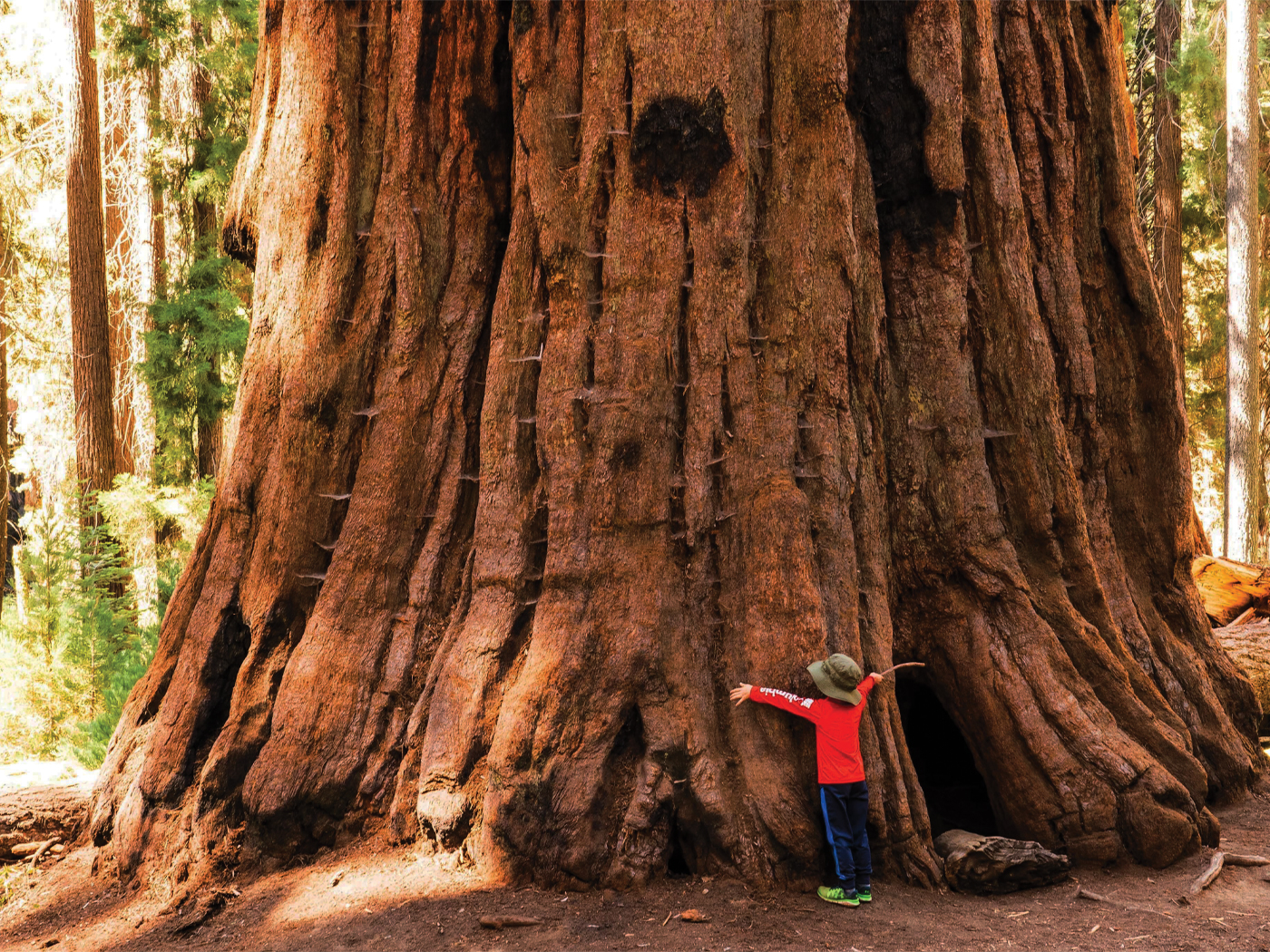
Question: What are the biggest trees on planet Earth? Answer: Giant sequoias (Sequoiadendron giganteum).1 They grow on west-facing slopes...

Origin of Biofluorescence in Fishes
Biofluorescence is a phenomenon in which creatures—plant or animal—absorb light at a certain wavelength and release or emit it at a different...
The Incredible Canine Sniffer
As any dog owner will tell you, the smelling ability of Rover is incredible.1 Surprisingly, however, “little is known about the structure...
More Life Was Created Fully Functional
Living Gyroscope in Flies
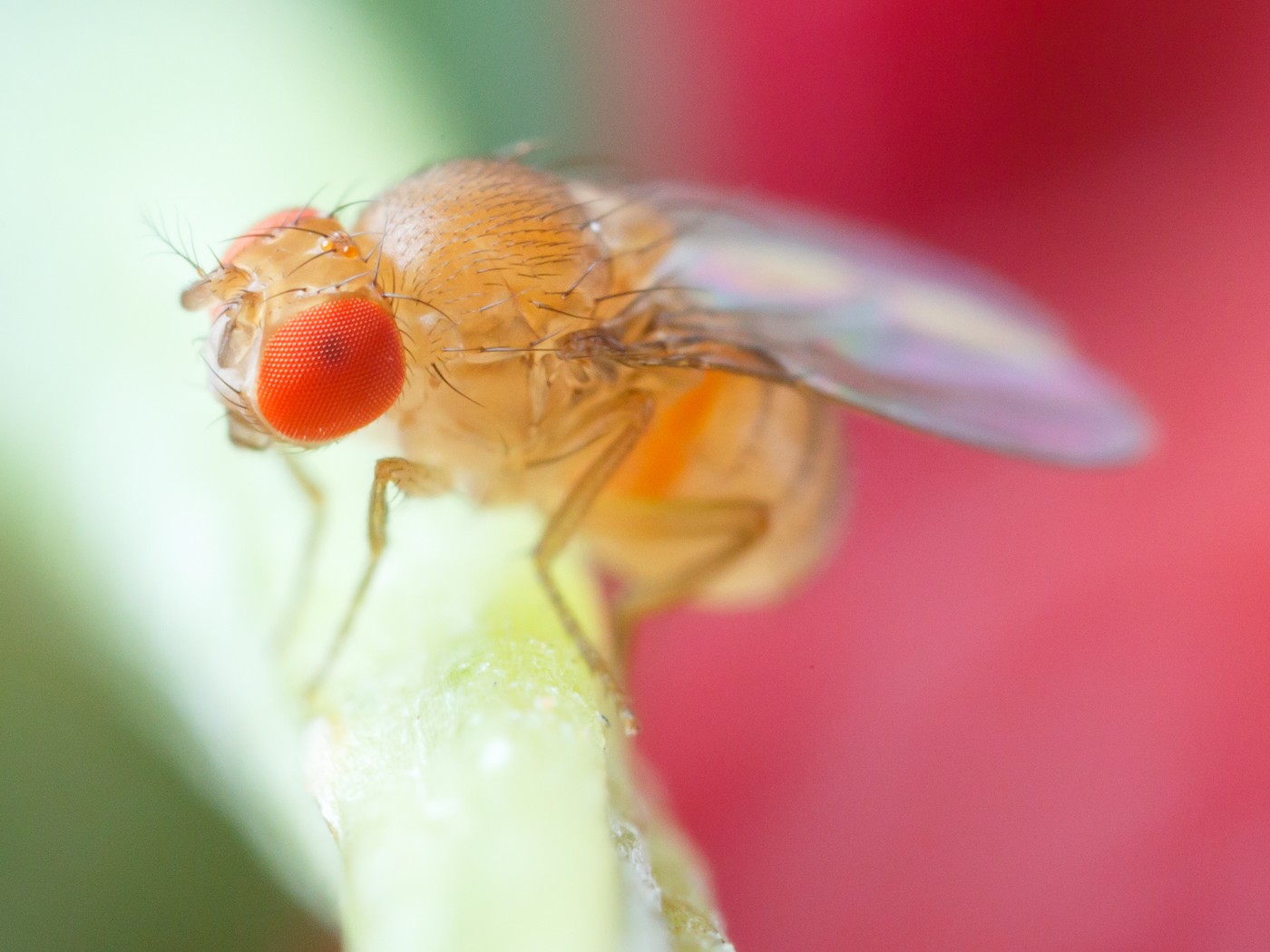
The lowly fruit fly (Drosophila) is the research biologist’s friend in fields such as biomedical science, genetics, and developmental biology....
Clock-like Cicadas, Abuzz with Amazing Activity
For a generation of millions (maybe billions) of North American jumping bugs called cicadas—often mislabeled in America as locusts—life changes...
Dinosaur "Raptors" Likely Hunted Alone
A new study published in Palaeogeography, Palaeoclimatology, Palaeoecology has found that the behavior of dinosaurs in movies is not very accurate at all.1...
More Man Was Created by God
Human Brain Research Finds New Folds
Brain researchers from San Diego State University have just reported digitally capturing the dense folds of a preserved human cerebellum using a high resolution...
America's 250th Birthday
The United States of America is officially 250 years old! Most Americans celebrate and thank God for reaching such a milestone. After all, the history...
Did Our Brains Evolve Language Pathways?
A Newcastle University press release title reads, “Origins of language pathway in the brain at least 25 million years old.”1 How...
More Human Body
Human Brain Research Finds New Folds
Brain researchers from San Diego State University have just reported digitally capturing the dense folds of a preserved human cerebellum using a high resolution...
Do Our Wisdom Teeth Show Poor Design?
Wisdom teeth crowd most mouths. We no longer use these teeth, so why do they take up space in the backs of our jaws?
Back in 2008, the Wall Street Journal...
RNA Ties and Unties Itself
There are two types of nucleic acids (genetic molecules): DNA and RNA. DNA (deoxyribonucleic acid) is a large linear molecule designed to store genetic...
More Problems with Evolution
Guppies Dodge Predators Like Spanish Bull-Fighters
Have Trinidadian guppies learned evasive maneuvers from Spanish bullfighters? Recent research published in the journal Current Biology1 reports...
No Evidence T. rex Hatchlings Had Feathers
The recent discovery of a tiny tyrannosaur jaw bone fragment and a claw has some scientists again pushing dinosaurs as birds.1 But is there...
3-D Human Genome Radically Different from Chimp
All plant and animal genomes studied so far exhibit complex and distinct three-dimensional (3-D) structures in their chromosome configurations depending...
More Contrasting Worldviews
Thermometers and Fish: What’s the Mercury Reading?
For centuries, mercury has been used in thermometers for reading our body temperatures, but now we measure mercury levels to see if seafood is safe to...
Cambrian Explosion Alive and Well
A new editorial in GSA Today is claiming that secular scientists should cease using the term “Cambrian Explosion.”1 It’s not...
Cretaceous Bird Beak Pecks Holes in Evolution
Rock layers in China have yielded yet another strange bird. Two features in its partial skull—the only parts found—make it both a unique discovery...
More Science
Like Father, Like Son, in the Deepest Deep
Two of the remotest places ever visited by humans are the moon and the deepest part of the ocean. Earth’s lowest point is called the “Challenger...
How Octopus Tentacles Find Crab Dinners
Sever an arm from an octopus, and like an underwater zombie it’ll keep groping its surroundings. Even without a brain, its suckers still detect and...
Coast Guards and Corvids: Flying to the Rescue!
Days ago, a fishing boat near the Shetland Islands needed emergency help, and received it in a timely manner. So, a fearful predicament had a happy ending.1
In...
More God's Design Is an Engineering Wonder

Making a TOBD Easy: A Conversation That Says It All
“I get what you’re saying! And I would love to think about biology from a design perspective, but I don’t even know where to begin,”...
The Lipstick Vine: Evidence of Designed Adaption
In their desire to validate the questionable case for evolution, conventional biologists will appeal to local adaptation, variation, and ecological...
Genomic Tandem Repeats: Where Repetition Is Purposely A.,.
Tandem repeats (TRs) are short sequences of DNA repeated over and over again like the DNA letter sequence TACTACTAC, which is a repetition of TAC three...
More Living Creatures Were Clearly Designed
Let the Fossils Speak for Themselves
When conventional scientists call a fossil an early step in animal evolution, the claim may rest more on a reading of the fossil than on the fossil...
Rewriting the Origin of Spiders and Horseshoe Crabs . ..,.
According to the fossil record, arthropods—in all their complexity—have always been arthropods.1,2 They belong to the phylum...

Applying the Theory of Biological Design to Optimal Owl.,.
by Randy J. Guliuzza, P.E., M.D., and Aaron T. Guliuzza, P.E.*
If the greatest writers had been well-versed in fields of science,...
More Creation Science Update
Can Moths Sense Earth's Magnetic Field?
In the late 1960s, a scientist named Ronald Lockley wrote, “How do animals find their way over apparently trackless country, through pathless...
ICR Research Is Revealing Evidence for Pre-Flood Longevity
One of the claims of Scripture most ridiculed by skeptics is the Bible’s matter-of-fact assertion that ancient people once lived for hundreds...
Your Bones Talk
The human skeleton hanging in the classroom often gives the impression that bones are inanimate objects, only serving as a structural support for the...
The Latest
Hummingbird Hawkmoth Exhibits Astonishing Abilities
The incredible hummingbird hawkmoth (Macroglossum stellatarum), and other insects of the Lepidoptera order, continue to amaze entomologists.1,2...
More Than Just Parts: The Networking of Cells
An engineer can list every part in a system and still miss how it works. Think of a radio. Its parts matter, but so does the wiring that joins them....
Living Centenarian Sturgeon: Extreme Genesis Longevity Is Plausible
Native American oral tradition contains stories of sturgeon living for centuries. While this was largely seen as folklore among conventional scientists,...
Brainy Bees Solve Pollen Problem
The uncanny abilities of the honeybee cause entomologists to shake their heads in wonder.1,2
Scientists have long known that honeybees...

October Wallpaper
"Be anxious for nothing, but in everything by prayer and supplication, with thanksgiving, let your requests be made known to God; and the peace...
Possible Ark Site Has Mainstream Media Hopping
An organization named Noah’s Ark Scans is investigating a site called Durupinar, almost 20 miles from Mount Ararat in Turkey. Could it contain...
ANNOUNCEMENTS
Heroes of Creation Science: Henry M. Morris
“The creation/evolution issue is, in a very real sense, the most fundamental issue of all.” —Henry M. Morris
Many people believe the...

Creation Kids: Fungi
Hi, kids! We created a special Acts & Facts page just for you! Have fun doing the activities while learning about the wonderful world...
APOLOGETICS
What is True and False?
by Patrick C . Marks, D. Min., and Brian Thomas, Ph.D.*
In the first article of this series, we explained that truth—that which matches reality—is...
The Cambrian Layer: Explosion or Burial?
The lowest sedimentary layer, rich in hard-shelled fossils, is known as the Cambrian record. Beneath it is the Precambrian, which contains far fewer...
Shop Related Products
Living in Light of Genesis
$15.99