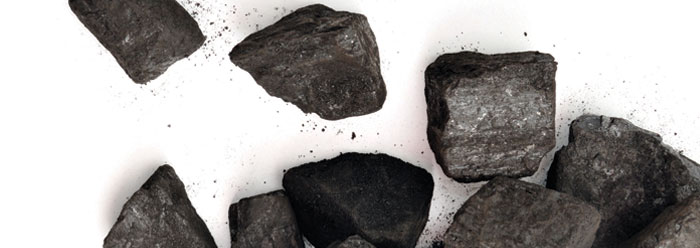
The term "fossil fuel" applies to organic material deposits that can burn, thus producing energy. One such fuel is coal, which is the solid altered remains of plant material, while oil and gas are the liquid and gaseous remains of various organic or inorganic sources. Standard thinking requires long ages for their origin.
For decades it has been taught that dead plants accumulate in the stagnant, oxygen-poor waters of a swamp, where they partially decay and eventually alter into combustible peat. Over time, the surrounding land may become submerged under the ocean, where other types of sediment can stack on top of the organic material, generating both heat and pressure, and driving off the water and gasses, leaving mostly carbon. Over vast ages under these conditions, the peat supposedly metamorphoses into coal.
But there are problems with this "story" about the unseen past. First, nowhere on earth today does peat spontaneously become coal. Second, while peats do accumulate in stagnant swamp waters, these appear nothing like coal. Today’s peats have a fine texture resembling "mashed potatoes" penetrated by tree roots, while coals are coarser, more like "coffee grounds," and interspersed with sheets of altered bark. Swamp peats undulate in elevation, dissected by numerous streams. Coals, however, usually sport extremely flat surfaces above and below. Surely something other than a peat swamp was involved in the formation of coal seams.
As a matter of fact, the coalification process doesn’t even require much time. In recent years, several laboratory experiments have shown that coal can form quickly, in just hours or days. Extreme conditions can accomplish it even more quickly. Heat is required, but not necessarily pressure. The process is accelerated by the presence of a volcanic clay, such as montmorillinite or kaolinite, always abundantly intermingled with coal. This clay can be seen as thin "clay partings" in unburned coal or as "clinkers" that must be removed from coal furnaces after the coal has burned. If these conditions are met, organic plant material (peat) will rapidly become coal.
When Mount St. Helens erupted in 1980, phenomenal processes were set in motion that instantly produced geologic results mimicking those we are taught to think required millions of years. A highly energetic blast of superheated steam was released that traveled at great speeds and devastated the surrounding forest. A ring where the trees were removed was surrounded by the "blow-down zone," with a scorched zone surrounding that. After the eruption, a charred log was found with wood on one end and material on the other that under microscopic analysis proved to be a rather high grade of coal, formed essentially instantly.
The blast uprooted millions of trees and washed them into nearby Spirit Lake, where they floated for years in an eerie mat of logs, moved around by incessant winds. As they moved, the bark abraded and sank to the bottom, where it collected as a thick layer of peat. In a matrix of volcanic ash and decaying leaves and wood, it took on a surprisingly layered appearance. This peat is not now becoming coal, but it has the required ingredients and geometry. If another volcanic event were to blanket the layer with hot ash, it might rapidly metamorphose into coal. All necessary conditions have been met.
The eruption of Mount St. Helens provided insight into processes operating during an even greater catastrophe, the great Flood of Noah’s day. Observations of the eruption’s aftermath have expanded our ability to understand the Flood. The results of ICR’s long research at Mount St. Helens remain a great encouragement to Bible-believing Christians. They also confront skeptics with the truth of God’s Word.
Reference
Morris, J. and S. Austin. 2003. Footprints in the Ash. Green Forest, AR: Master Books.
* Dr. Morris is President of the Institute for Creation Research.
Cite this article: Morris, J. 2011. On the Origin of Coal. Acts & Facts. 40 (6): 18.