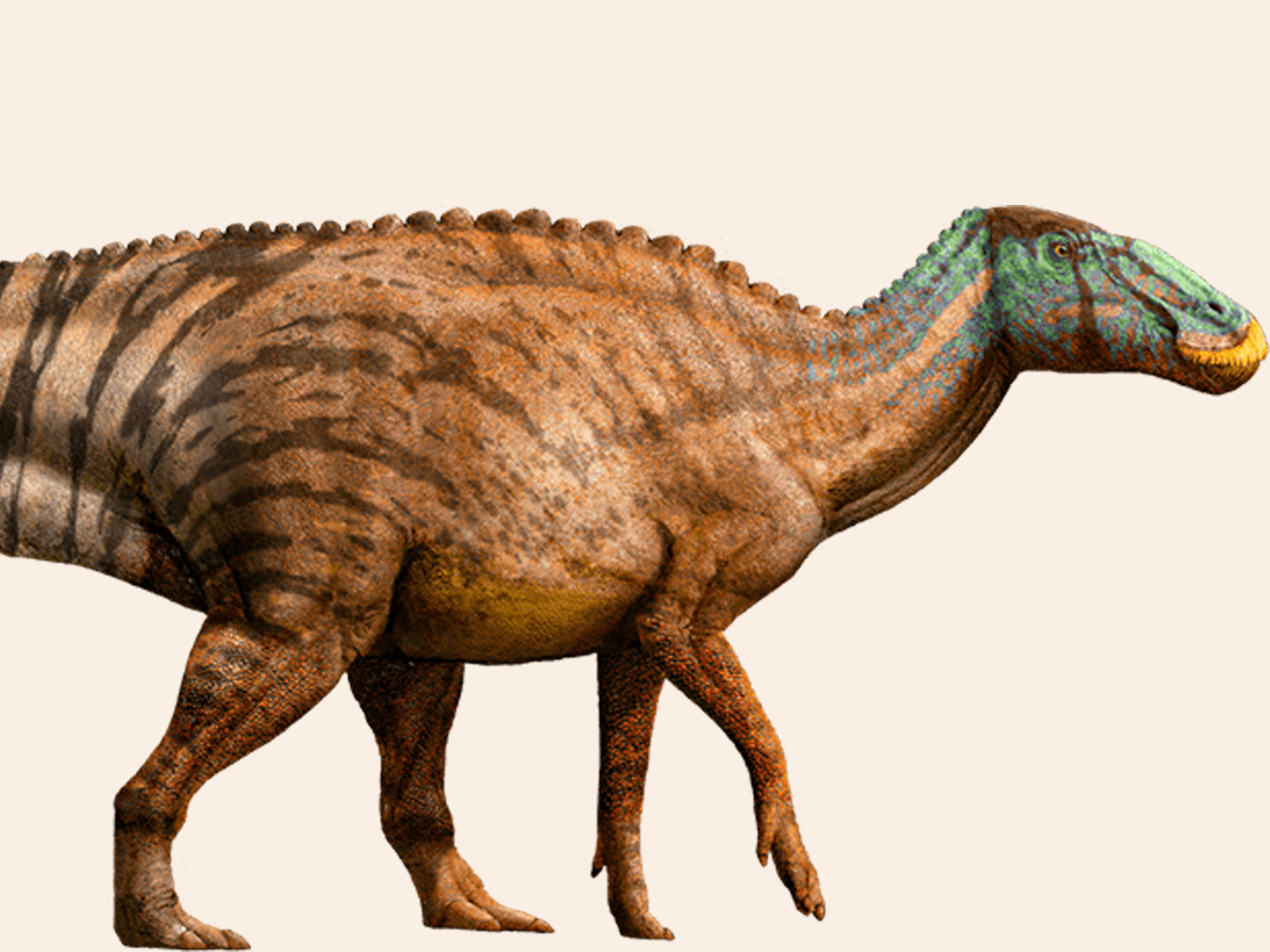
Crumbling seaside cliffs at Whitby in northern England continuously reveal new fossils. Most of them are remains of small plants and animals, but researchers from the University of Manchester described a much larger fossil: a giant vertebra from a sauropod's tail.1 How long ago was the rare bone buried?
Researchers described the rock formation containing this rare fossil in the online journal PLoS ONE. Sedimentary rocks containing sea creature fossils sandwich the Saltwick Formation, a roughly 80-foot-thick sandstone layer. Enlightenment Era naturalists assigned these rocks to the Jurassic System based on their evolutionary age expectations for certain fossils. The PLoS ONE authors repeated this assignment, writing, "Palynomorph [plant pollen fossil] evidence indicates that the latter formation is Aalenian in age."1 "Aalenian" refers to an "age" within a middle Jurassic time "Period," but these ages and periods only occur in man-made diagrams. The real rocks show no time stamps.
In fact, using sauropod and pollen fossils as age indicators requires faulty circular reasoning. For example, one must assume that there was a time long ago when sauropod dinosaurs dominated lands around the world. With that assumption in place, of course one will see a "time" of sauropods—a Jurassic Period—wherever sauropod fossils are uncovered.2 But what if a completely different cause produced sauropod fossils?
What if sauropods never dominated the Earth during some ancient episode of time, but instead happened to be in the way of flood waters that inundated a region in which they lived? This equally scientific assumption calls into question generations of age assignments for rock layers like these. When stripped of its circularly-derived age designation, Jurassic Period rocks would simply be Jurassic System rocks.
In addition, features in and around the Saltwick Formation refute its middle-Jurassic age assignment of 170-or-so million years. First, tides, rainfall, and storms continue to erode them. A tourist book describing the situation on the English coast said,
The cause of the problem is mostly to do with the layers of porous, hard sandstones interbedded with soft, impervious shales and mudstones….The mudstones easily liquefy and the weight of the rocks above squeeze the whole mix a little like an old-fashioned ice-cream wafer sandwich under pressure. The result is a dramatic loss of stability and both hard sandstone and soft shale come crashing down as massive landslips.3
How long before these rocks, and indeed all rocks around the world, totally succumb to the relentless gnawing of today's gradual erosion? Earth should have become a water world after about 50 million years of today's erosion rates.4 How could a 170 million year-old rock persist on England's coast if regular erosion would have erased it three times over?5
Fossils of modern-looking creatures also refute the Saltwick Formation's secular age assignment. Sauropods are probably extinct, so they don't look modern. But its exquisitely preserved ferns look quite familiar. The rocks preserve at least three different kinds of ferns, the basic forms of which still live today.6 They even contain petrified bits of trees that looked like today's endangered monkey puzzle tree, the national tree of Chile. What are the odds that mutations and evolutionary selection would have done virtually nothing to change these plants after 170 million years?
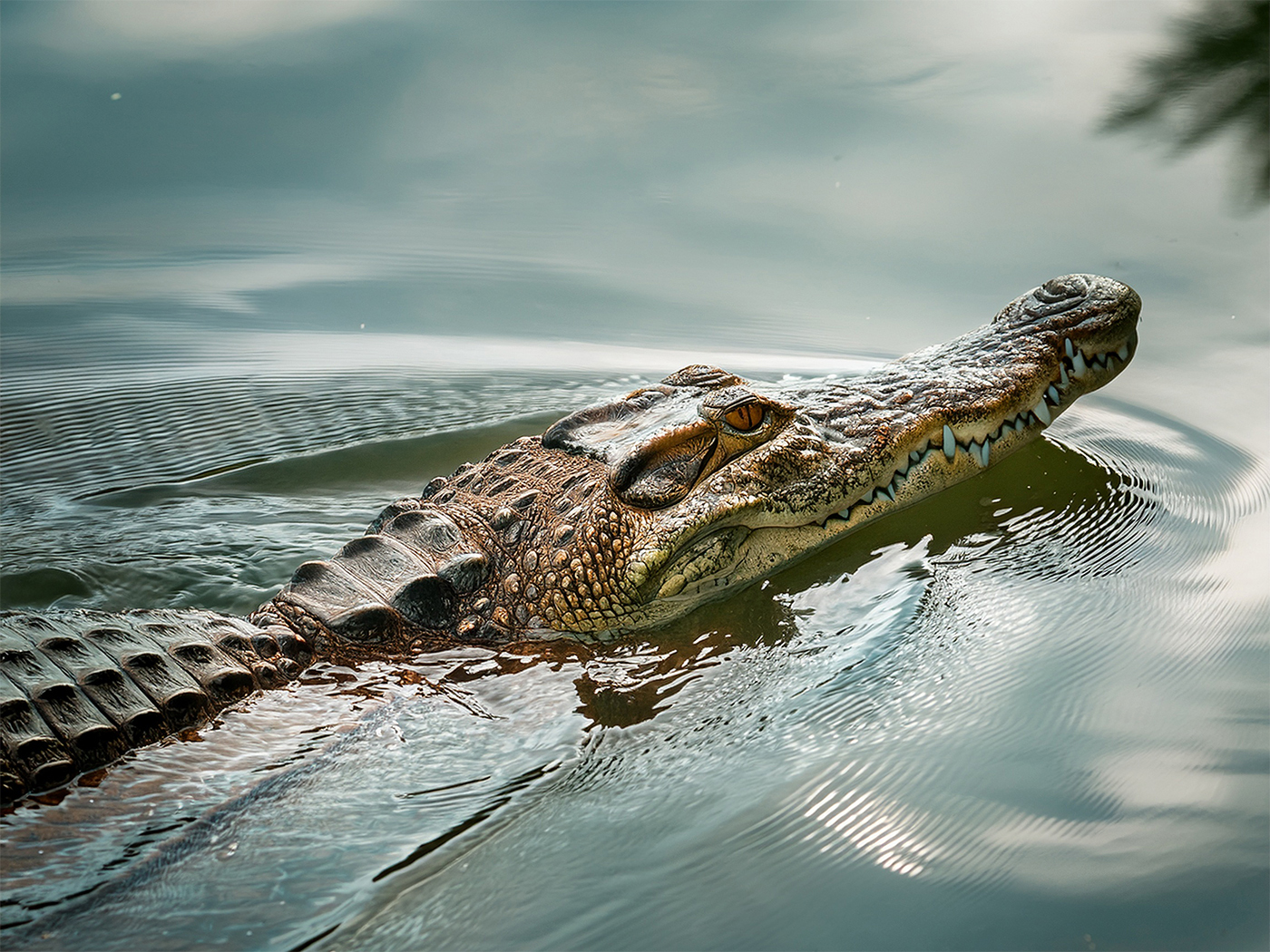
One must invoke the same almost miraculous suspension of what should have been relentless evolutionary change to explain why Saltwick's crocodile, clam, and turtle fossils, which show so little evidence of evolution that they easily fall into modern categories.
A final feature that should widen the door to the possibility of a Saltwick Formation that is thousands, not millions, of years old is its indications of catastrophic deposition. The study authors wrote, "The Saltwick Formation overlies the marine Dogger Formation and is succeeded by the marine Eller Beck Formation."1 In other words, marine deposits occur above and below it. They formed when fast-paced waters inundated ocean creatures and spread their remains on continent.
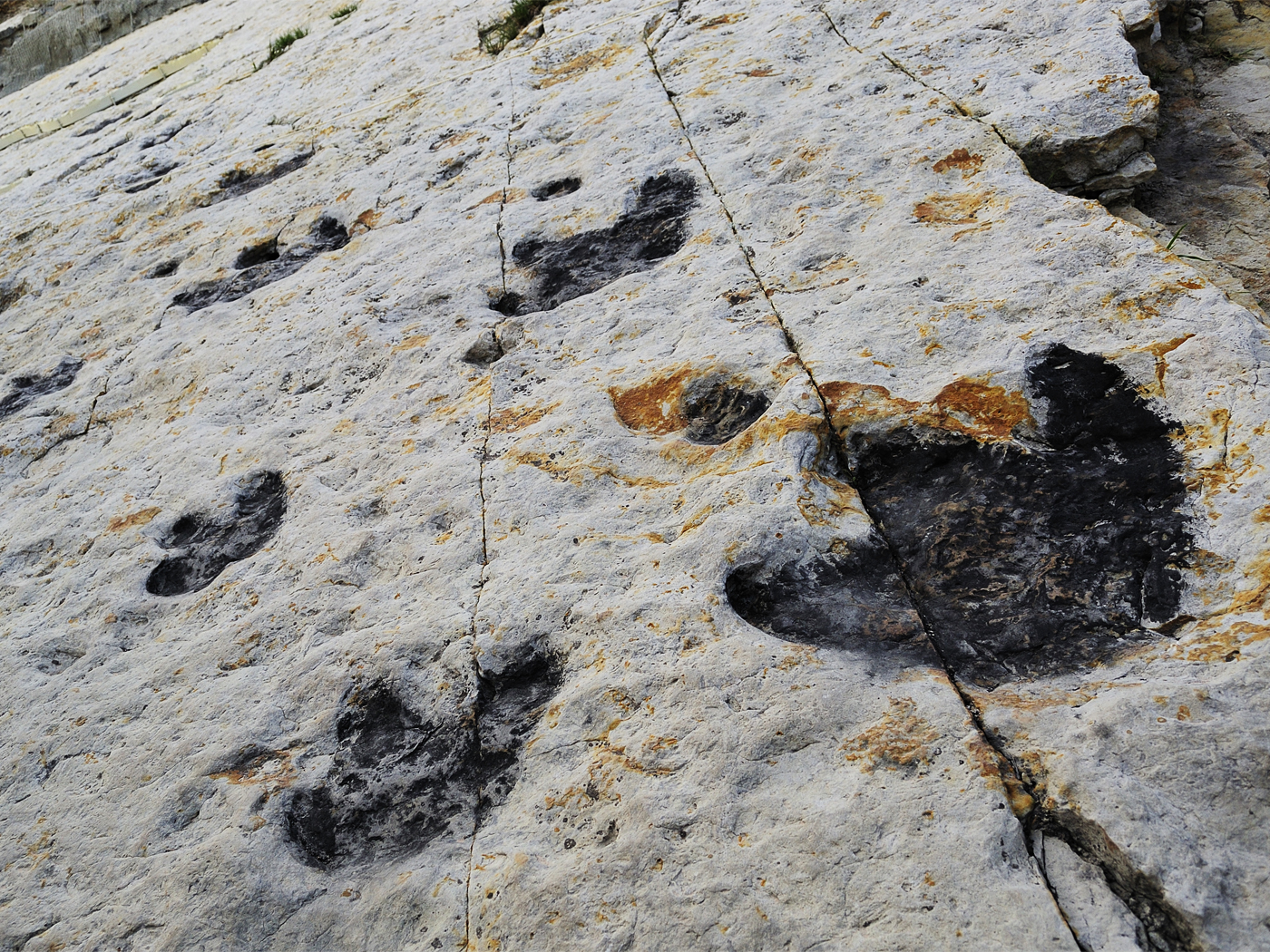
Researchers from the University of Sheffield investigated the area's dinosaur footprints and wrote in ORYCTOS in 2008 that although the Saltwick Formation was non-marine, it "is dominated by floodplain and lacustrine [lake-like] mudrocks with thin sheet sandstones of crevasse splay origin."7 Crevasse splays occur when floodwaters breach their levees, as occurs during times of watery violence. Mundane and predictable weather patterns do not produce giant stacks of sand and mudstones, but catastrophes like the 1980 eruptions at Mount St Helens do. Is it such a great leap to infer that the Saltwick Formation came from a phase of Noah's Flood only thousands of years ago that happened to sandwich these dinosaur fossils between two sedimentary layers filled with marine creatures?
The same erosion that should have erased the world's rocks and fossils millions of years ago exposed this giant sauropod tail vertebra, giving England's secularists another opportunity to remind folks that the middle Jurassic "Period" began some 170 million years ago. But this story ignores the area's fossils that show no hint of millions of years' worth of mutations, and it ignores rocky clues of disastrous catastrophe that suggest this rare bone was buried thousands, not millions, of years ago. In other words, there never really was a Jurassic World—just a flooded one.
References
- Manning, P.L. et al. 2015. A New Sauropod Dinosaur from the Middle Jurassic of the United Kingdom. PLoS ONE. 10(6): e0128107.
- The circular argument might sound like this: 1. Sauropods were fossilized 170 million years ago. 2. These rocks contain sauropod fossils. 3. Therefore, these rocks were deposited 170 million years ago. If the first premise is wrong the conclusion is wrong.
- Rotherdam, I.D. 2014. Yorkshire's Dinosaur Coast. Glaucestershire, U.K.: Amberley Publishing.
- Thomas, B. Continents Should Have Eroded Long Ago. Creation Science Update. Posted on icr.org August 22, 2011, accessed June 2, 2015.
- A secular geologist once responded via email to my article in Reference 4 by explaining that today's erosion rates do not apply to the past. How convenient. Would he say the same about radioisotope decay rates?
- Its Coniopteris ferns fit today's family of tropical ferns in the family Dicksoniaceae, and its other fern fossils fit general categories of living ferns. See Notification of Site of Special Scientific Interest to Scarborough District of North Yorkshire County, UK.
- Whyte, M. A., and M. Romano. Dinosaur footprints associated with an ephemeral pool in the Middle Jurassic of Yorkshire, UK. ORYCTOS. 8: 15-27.
Image credit: PLoS One. Adapted for use in accordance with federal copyright (fair use doctrine) law. Usage by ICR does not imply endorsement of copyright holders.
*Mr. Thomas is Science Writer at the Institute for Creation Research.
Article posted on June 18, 2015.