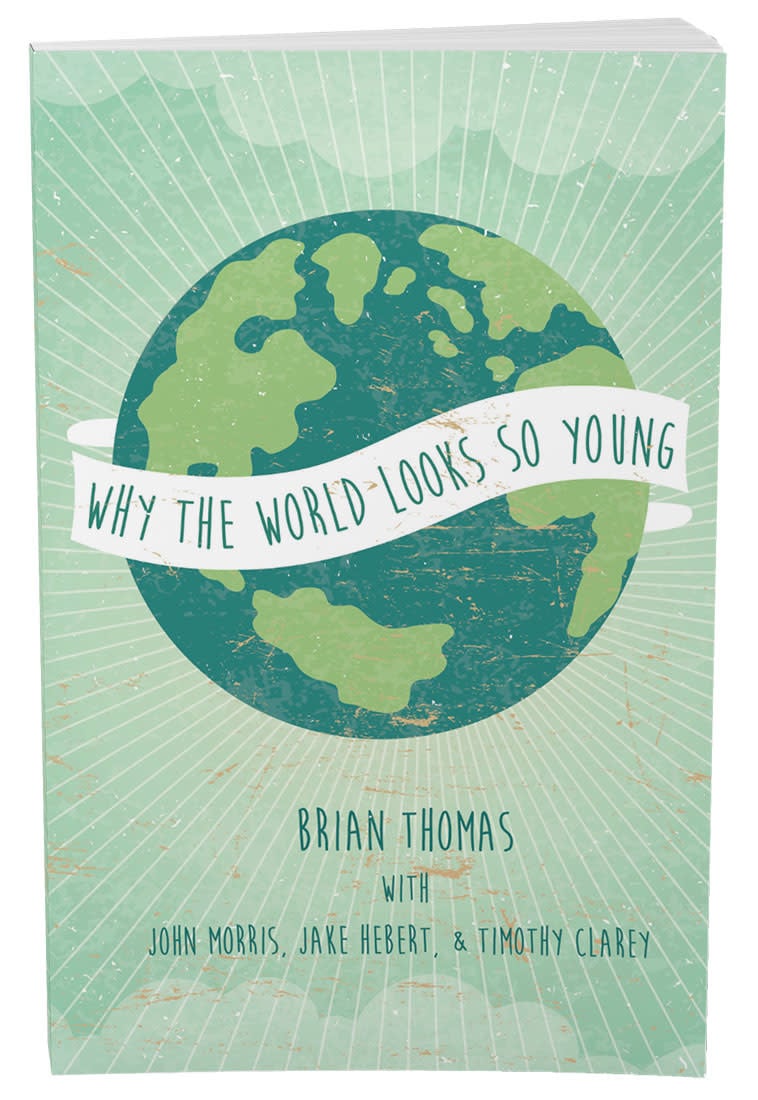
As in years past, 2013 presented some new and serious challenges to the entrenched dogma of a 4.6-billion-year-old Earth. The latest discoveries support Scripture’s eyewitness-verified presentation of a much more recent creation, Fall, and Flood.
Discoveries of human artifacts in rock layers below those containing dinosaur fossils, like a tooled aluminum gear piece from Pennsylvanian coal in Russia for example, fit biblical history from Genesis.1 Finds like this indicate that men and dinosaurs could have lived at the same time, even if not in the same places.
In other Earth-related news, secular geologists were embarrassed in 2013 when researchers found fresh evidence that magma moves much faster than they thought.2 Experts have long insisted on slow-moving magma to explain why giant igneous rock zones took thousands or even millions of years to form. But with magma seeping at over 20 miles in just four weeks, even large igneous bodies could form in merely hundreds of years.
Similarly, a 2013 experiment showed how gold deposits don’t require long ages but could have happened almost instantly by flash vaporization in cracks inside Earth’s crust.3
The faint young sun paradox also intensified within the past 12 months. If one could go back billions of years in hypothetical time, the sun would have been so faint that Earth would have been a lifeless ice ball, leaving no good explanation for algae fossils dated back to those times. One attempt to avert this paradox refers to greenhouse gases that may have generated Earth-warming nitrogen. Mineral analyses spoiled that story, revealing that ancient atmospheric nitrogen levels were really much closer to what they are today—insufficient to produce enough extra warmth from a greenhouse effect.4
Lastly, groundbreaking lightning studies demonstrated a recently created Earth. One reported that lightning strikes have torn apart exposed rocks in a South African mountain range, implying that mountaintops erode much more quickly than thought. Already, the current worldwide erosion rate would reduce all continents to sea level in about 50 million years, but updated erosion-rate estimates should add the effects of eons of this rock-splitting lightning. Rock breakup by lightning will only shorten the projected lifespan of Earth’s continents, making them even less compatible with the conventional wisdom that asserts they are billions of years old.5
Additional research revealed how millions of years of lightning would have left re-melted, tube-like artifacts called fulgarites—fossilized lightning strikes—piled high all over the globe. Where are they? Perhaps only a few thousand years’ worth of fulgarites litter the ground today.6
Solid science from 2013 showed that magma moves and gold forms fast enough to fit a young world. And cutting-edge research results continue to emphasize that the Bible’s narrative of a recently created Earth avoids the dilemmas of a faint young sun, lack of eroded continents, and missing fulgarites.
References
- Thomas, B. Possible Human Artifact Found in Coal. Creation Science Update. Posted on icr.org February 20, 2013, accessed December 11, 2013.
- Clarey, T. Express-Lane Magma Indicates Young Earth. Creation Science Update. Posted on icr.org September 13, 2013, accessed December 11, 2013.
- Clarey, T. Striking It Rich with ‘Instant Gold.’ Creation Science Update. Posted on icr.org April 17, 2013, accessed December 11, 2013.
- Clarey, T. Sun Paradox Challenges Old Earth Theory. Creation Science Update. Posted on icr.org October 23, 2013, accessed December 11, 2013.
- Thomas, B. Counting Earth's Age in Lightning Strikes. Creation Science Update. Posted on icr.org November 15, 2013, accessed December 11, 2013.
- DeYoung, D. B. 2013. A Survey of Lightning. Creation Research Society Quarterly. 49 (4): 281-286.
* Mr. Thomas is Science Writer at the Institute for Creation Research.
Article posted on December 30, 2013.