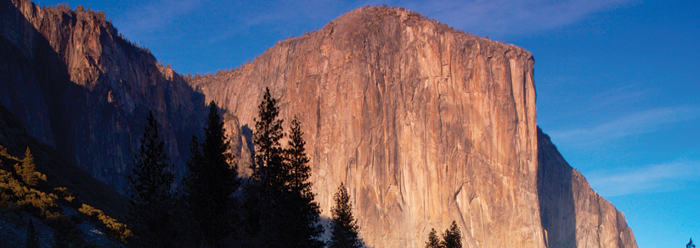
Glaciers once filled Yosemite Valley almost to the top of Half Dome, stretching over Tuolumne Meadows and to Tioga Pass near the top of the Sierra Nevada. Large fields of granite that are now exposed were planed down by the movement of the glaciers as they ground downhill, leaving behind evidence of their presence and direction of travel. But if glaciers occurred after the Genesis Flood, how did they form and why have they disappeared?
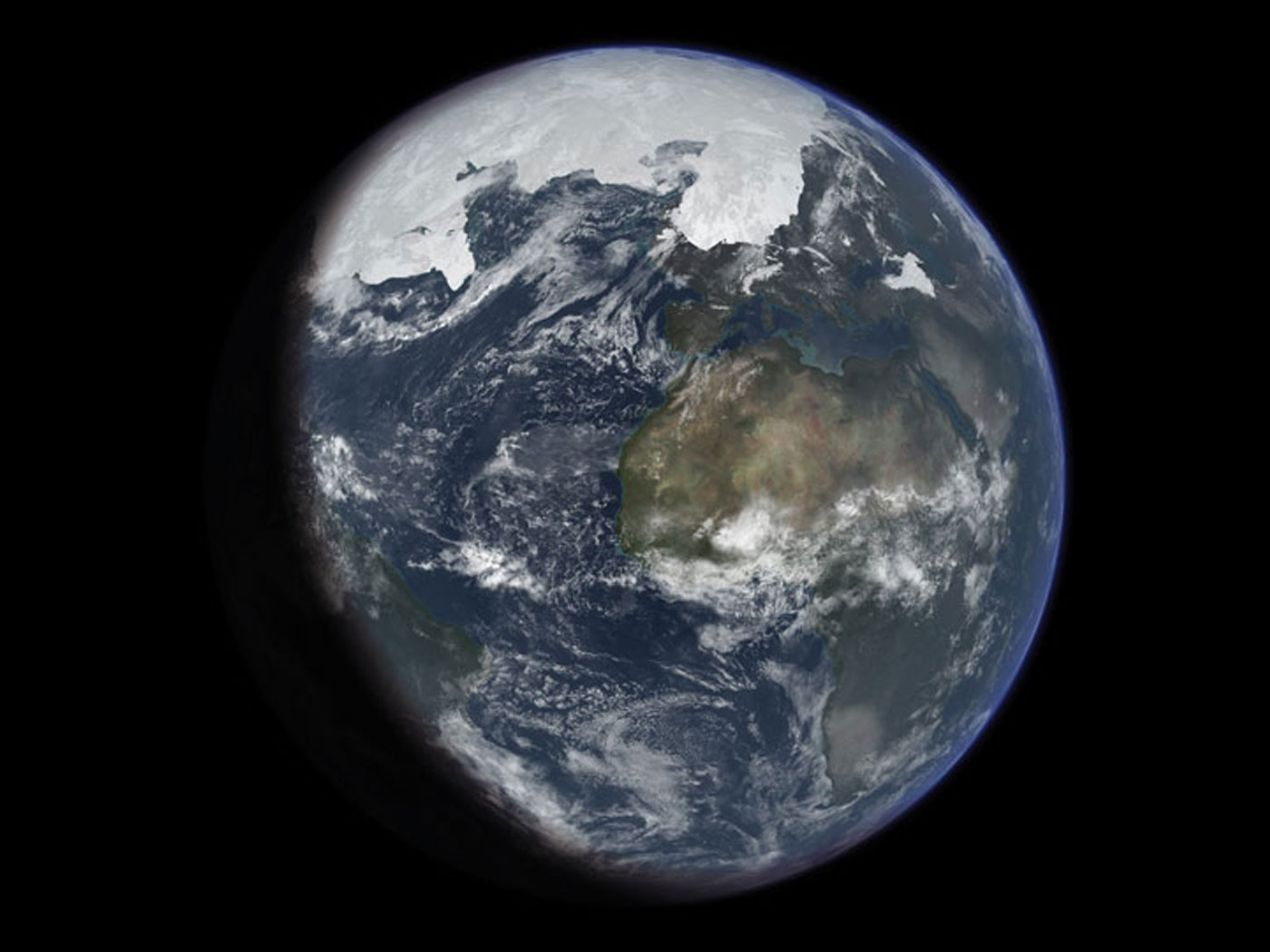
One scenario is that the Genesis Flood--which ended about 4,500 years ago--left the oceans as warm as 120°F in places, causing a large amount of evaporation. This moisture would have been gathered by winds and blown across the continents, producing heavy precipitation. In California, the Sierra Nevada mountains form a long north-south barrier perpendicular to the flow of air off the Pacific Ocean. Here, the warm, moist air would have been lifted to higher, colder elevations, resulting in large quantities of snow. Precipitation would have been enhanced by a strong jet stream that is believed to have tracked across the southwestern United States during the Ice Age, below its current position along the northern tier of states. These strong winds moving moist air over the area of Yosemite National Park would have produced glaciers. When the oceans cooled two to three thousand years ago, the precipitation would have decreased, permitting the glaciers to melt.
Today, Yosemite National Park generally sees snow only in winter, which then completely melts during summer. Because the sea-surface temperature of the Pacific Ocean off the coast of California dropped after the Flood from an estimated 120°F to a current average winter temperature of about 60°F, the Ice Age ended. Occasionally the sea-surface temperature along the California coast will warm by 1-3°F during what is called an El Niño event. Although these warmer temperatures lead to an increase in storminess and precipitation, the unsettled weather during these periods typically lasts only a year or two and doesn't produce enough snow to form permanent glaciers.
To facilitate the study of the Flood's meteorological impact, a weather and climate model called MM5 has been installed on ICR's Epiphany research computer. Numerical simulations will be conducted of conditions that would lead to more precipitation and glaciers in Yosemite National Park. Variations of the sea-surface temperature of the Pacific Ocean off California will be introduced to see what effects they have on the magnitude and distribution of snow, with a particular focus on short-term cold periods during generally warm sea-surface conditions.
One goal is to find an explanation for some of the short-period fluctuations in the distribution of glaciers at the end of the Ice Age. As the glaciers melted, cold water likely flowed into the ocean and chilled the surface water. This cold sea-surface temperature would have reduced the evaporation and may explain fluctuations in glacial coverage in Yosemite, like those of the Younger Dryas event on the east coast of the United States and Europe. The results of this research effort are scheduled to be presented at the upcoming International Conference on Creationism in August 2008, with a completion of the study over the next few years. Through science, we continue to learn of the works of our Creator, who "casteth forth his ice like morsels: who can stand before his cold? He sendeth out his word, and melteth them: he causeth his wind to blow, and the waters flow" (Psalm 147:17-18).
* Dr. Vardiman is Professor of Atmospheric Science and Director of Research.
Cite this article: Vardiman, L. 2008. Ice Age Glaciers at Yosemite National Park. Acts & Facts. 37 (3): 6.