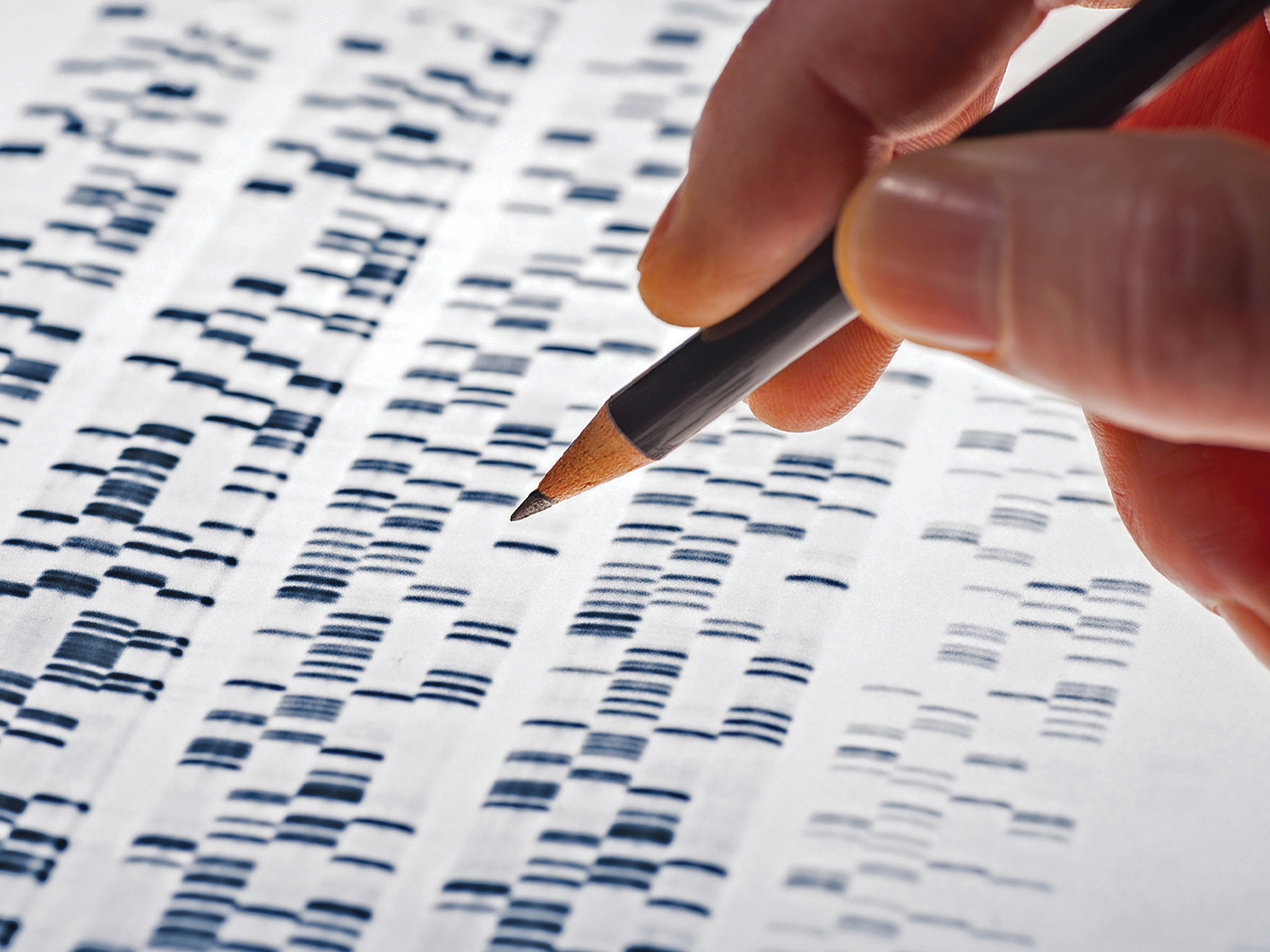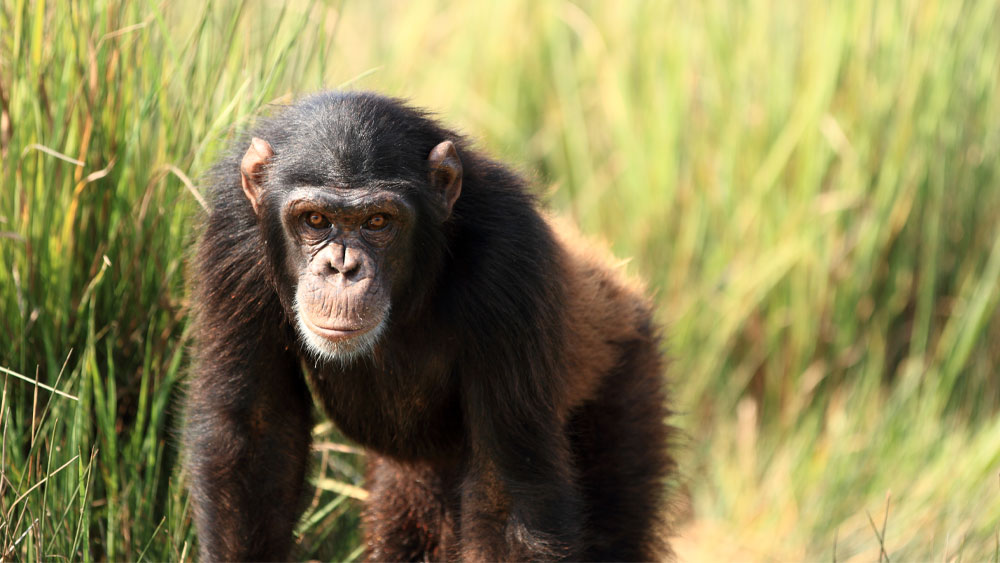
Research by ICR geneticist Dr. Jeff Tomkins was at the center of origins news in what has been called the “No. 1 Story for 2025.”1 The prestigious journal Nature confirmed (albeit grudgingly and belatedly) that the true genome-wide DNA similarity between humans and chimpanzees is no more than 85%,2 rather than the 98%–99% similarity that has long been touted in both the technical and popular science literature as evidence that humans and chimpanzees are related.3–5 The recognition that the true genetic dissimilarity is closer to 15% even found its way onto the popular news website Live Science.6 Yet over seven years ago, Dr. Tomkins published research papers on this subject, concluding the similarity between chimps and humans was only about 85%.7,8 These latest results in Nature have affirmed and vindicated his earlier work.
Tomkins’ detailed research into published evolutionary studies in chimp-human DNA comparisons demonstrated that the 98%–99% similarity was obtained by cherry picking genomic data known to be highly similar.9 And as early as 2018, Dr. Tomkins’s DNA comparison research results were confirmed by a conventional researcher using a completely different method,10 but these results were never picked up by mainstream science—that is until now!
One may naively think the conventional researchers who toppled this evolutionary icon would be shouting it from the rooftops, as it were. But instead, the authors seem to have buried this important result in the paper’s supplementary material.2 It is obviously embarrassing for evolutionists to be forced to admit that this textbook dogma was so badly in error and that—the horror!—a biblical young-Earth creationist was correct.
Some evolutionists may try to spin this new dissimilarity estimate to be no big deal. But evolutionists for decades have used this alleged 1%–2% similarity as strong evidence that humans and chimps share a common ancestor. And if it isn’t a big deal, then why the reluctance in acknowledging it? Why did Nature place this result in supplementary tables?2
The story of human evolution is rapidly unraveling on multiple fronts. Through copious documentation in their three most recent Evolution: The Grand Experiment books, Dr. Carl Werner and his wife Debbie have exposed enormous amounts of fraud and impropriety in the way evolutionary scientists have handled purported fossil evidence for human evolution.11–13 Even well-informed creationists may be surprised by what they have uncovered. ICR’s online bookstore (store.icr.org) carries resources explaining both Dr. Tomkins’ research and Dr. Werner’s.
At ICR we think this is a pretty big deal. Our science staff continues to lead the way on groundbreaking and big-picture research. Dr. Tomkins and our biology staff are currently conducting high-impact research on engineered biological systems, showing how biological adaptations are preprogrammed by our Lord Jesus and are not random. But it sure is nice to see conventional science finally catching up with us.
Click the image for ICR's podcast that features this research!

References
- Luskin, C. 2026. Happy New Year! No.1 Story for 2025: Bombshell Overturns Myth of 1 Percent Difference. Science and Culture Today. Posted on scienceandculure.com January 1, 2026, accessed January 8, 2026.
- Yoo, D. et al. 2025. Complete Sequencing of Ape Genomes. Nature. 641 (8062): 401–418. See Tables III.19 and III.20 (pp. 33–36) in the supplementary material of this open access paper. To read Dr. Tomkins's news report on this areticle, see Tomkins, J. P. Chimp Genome Markedly Different from Human. Creation Science Update. Posted on ICR.org May 29, 2025.
- What Does It Mean to Be Human? Genetics. Smithsonian Museum of Natural History. Last updated on humanorigins.si.edu July 9, 2024, accessed January 12, 2026.
- Deininger, P. What Does the Fact That We Share 95 Percent of Our Genes with the Chimpanzee Mean? And How Was This Number Derived? Scientific American. Posted at scientificamerican.com, accessed January 12, 2026.
- Gibbons, A. 2012. Bonobos Join Chimps as Closest Human Relatives. Science. Posted on science.org June 13, 2012, accessed January 12, 2026.
- Brincat, C. Do Humans and Chimps Really Share Nearly 99% of Their DNA? Live Science. Posted on livescience.com September 7, 2025, accessed January 12, 2026.
- Tomkins, J. 2016. Analysis of 101 Chimpanzee Trace Read Data Sets: Assessment of Their Overall Similarity to Human and Possible Contamination with Human DNA. Answers Research Journal. 9: 294–298.
- Tomkins, J. P. 2018. Comparison of 18,000 De Novo Assembled Chimpanzee Contigs to the Human Genome Yields Average BLASTN Alignment Identities of 84%. Answers Research Journal. 11: 205–209.
- Tomkins, J. and J. Bergman. 2012. Genomic Monkey Business - Estimates of Nearly Identical Human-Chimp DNA Similarity Re-valuated Using Omitted Data. Journal of Creation. 26 (1): 94–100.
- Buggs, R. How Similar Are Human and Chimpanzee Genomes? Posted on richardbuggs.com July 14, 2018, accessed January 12, 2026.
- Werner, C. 2024. Untold Stories of Human Evolution: Evolution: The Grand Experiment, vol. 3. St. Louis, MO: Audio Visual Consultants, Inc.
- Werner, C. 2024. Nine Categories of Overturned Ape-Men: Evolution: The Grand Experiment, vol. 4. St. Louis, MO: Audio Visual Consultants, Inc.
- Werner, C. 2024. Bibliography for Human Evolution: Evolution: The Grand Experiment, vol. 5. St. Louis, MO: Audio Visual Consultants, Inc.
* Dr. Jake Hebert is a research scientist at the Institute for Creation Research and earned his Ph.D. in physics from the University of Texas at Dallas.