Human evolution has always been hazy with seemingly as many attempted explanations for how we evolved from animals as there are paleoanthropologists.
Evolutionists make refreshing admissions about the tenuous nature of this field rather frequently, causing one to wonder why it’s treated as factual, “The origin of the hominine lineage—encompassing modern humans, chimpanzees, gorillas, and their ancestors—is one of paleoanthropology's most debated topics.”1
“When you look at the narrative for hominin [bipedal apes including modern humans] origins, it’s just a big mess—there’s no consensus whatsoever,” said Sergio Almécija, a senior research scientist in the American Museum of Natural History’s division of anthropology and lead author of the review.2
Some tree-dwelling mammals of the distant past are considered by evolutionists to be our ancient ancestors. For example, in 2015, Kevin Jiang of the University of Chicago reported on two mammal species (allegedly separated by five million years).
Agilodocodon [scansorius] and Docofossor [brachydactylus] provide strong evidence that arboreal and subterranean lifestyles evolved early in mammalian evolution, convergent to those of true mammals. These two shrew-sized creatures—members of the mammaliaform order Docodonta—have unique adaptations tailored for their respective ecological habitats.3
Docodonta is an extinct order of mammaliaforms (“mammalian forms”) suddenly appearing in the fossil record complete and fully formed as predicted by the creation model. Evolutionists state their complex dentition4 convergently5 evolved along with the teeth of therian mammals. But how did such complex docodontan teeth evolve from their simpler ancestors? Evolutionists don’t know. However, Jiang is correct when he states that the Docodonta “have unique adaptations tailored for their respective ecological habitats.”3 This is expected by the creation model because these mammals were designed to move in and fill such habitats.
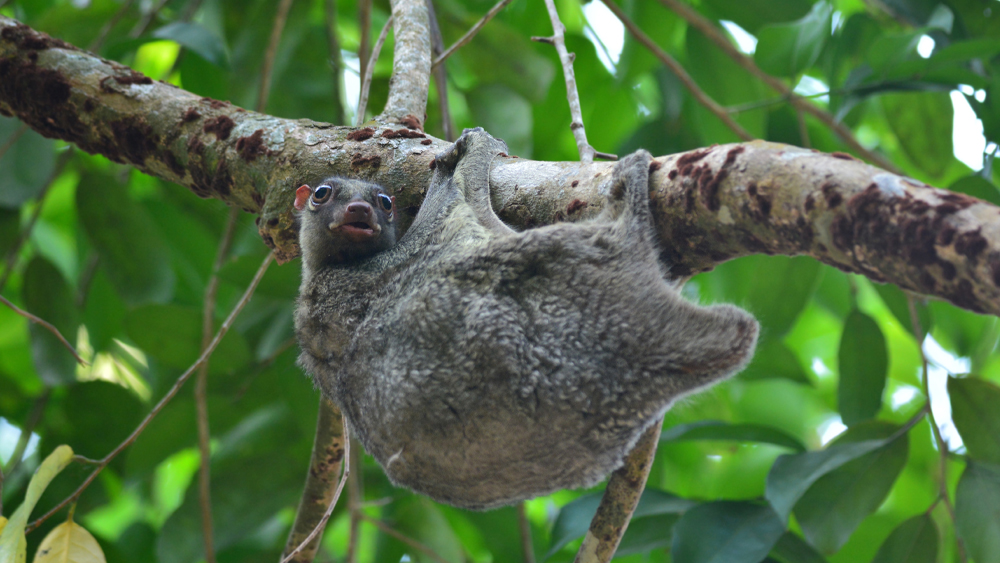
Now, a recent discovery has been made in the field of human evolution regarding creatures called mixodectids that “are a poorly defined group of enigmatic placental mammals.”6 Specifically, a fossil dubbed Mixodectes pungens was unearthed from the San Juan Basin in New Mexico. Mixodectes belonged to the extinct family (Mixodectidae) of three-pound, insectivorous animals of the order Dermoptera (colugos) and was supposedly arboreal (animals spending most of their life on trees), eating leaves.
Although the “poorly understood” mixodectids are placed within the Dermoptera order, their relationship is only hypothesized.6
Yale News stated that mixodectids and “humans occupy relatively close branches on the evolutionary tree.”7 “Relatively close branches” smacks of subjectivity, especially when the evolutionary community attempts to connect people and puzzling, extinct tree-dwelling mammals that supposedly lived 62 million years ago. The so-called tree of life is also rife with problems as evolutionists try to connect all living things—from dandelions to dinosaurs—to an unknown, unobserved common ancestor many millions of years ago.8,9
The New Mexico fossil of Mixodectes is surprisingly complete, showing arboreality in this primatomorphan mammal. Mixodectes may have had an omnivorous diet based on its dentition. Chester et al. admitted that more complete mixodectid specimens are needed to analyze their place in evolution.
Although fragmentary postcrania previously attributed to early Paleocene Mixodectes show similarities to those of other arboreal euarchontans, more complete mixodectid specimens are needed to assess their significance regarding the early evolution of this group.6
So, what was Mixodectes? Creationists see this animal (as well as Agilodocodon and Docofossor) as a tree-dwelling mammal that lived in the pre-Flood world. It was likely swept off the highest pre-Flood hills and buried in the receding phase of the Flood as part of the Tejas Megasequence.10
Man never came “up from the apes (or colugos)”—he was created in God’s image just thousands of years ago.11,12
References
- Shavit, J. 8.7 Million Year-Old Fossil Rewrites the Story of Human Evolution. Brighter Side of News. Posted on thebrigherside.news November 27, 2024.
- Review: Most Human Origins Stories Are Not Compatible with Known Fossils. American Museum of Natural History. Posted on phys.org May 6, 2021.
- Jiang, K. Earliest-Known Arboreal and Subterranean Ancestral Mammals Discovered. UChicago News. Posted on news.uchicago.edu February 16, 2015.
- Moeller, D. 2003. Dental Fossils and the Fossil Record. Technical Journal. 17 (2).
- Randy J. Guliuzza, P.E., M.D. 2017. Major Evolutionary Blunders: Convergent Evolution Is a Seductive Intellectual Swindle. Acts & Facts. 46 (3): 17–19.
- Chester, S. et al. 2025. New Remarkably Complete Skeleton of Mixodectes Reveals Arboreality in a Large Paleocene Primatomorphan Mammal Following the Cretaceous-Paleogene Mass Extinction. Nature Scientific Reports. 15, article 8041.
- Cummings, M. A 62-Million-Year-Old Skeleton Sheds Light on an Enigmatic Mammal. Yale News. Posted on news.yale.edu March 11, 2025.
- Morris, J. 2001. What Grows on Evolution's Tree? Acts & Facts. 30 (6).
- Tomkins, J. and J. Bergman. 2013. Incomplete Lineage Sorting and Other ‘Rogue’ Data Fell the Tree of Life. Journal of Creation. 27 (3): 84–92.
- Clarey, T. 2023. Arctic Lemur-like Fossils were Transported During Flood. Creation Science Update. Posted on ICR.org February 13, 2023, accessed March 18, 2025.
- Morris, J. 1999. Evolution and the Image Of God. Acts & Facts. 28 (4).
- Thomas, B. 2019. What Is the Image of God? Acts & Facts. 48 (11): 20.
Stage image: Photo of a flying lemur
* Dr. Sherwin is a news writer at the Institute for Creation Research. He earned an M.A. in invertebrate zoology from the University of Northern Colorado and received an honorary doctorate of science from Pensacola Christian College.