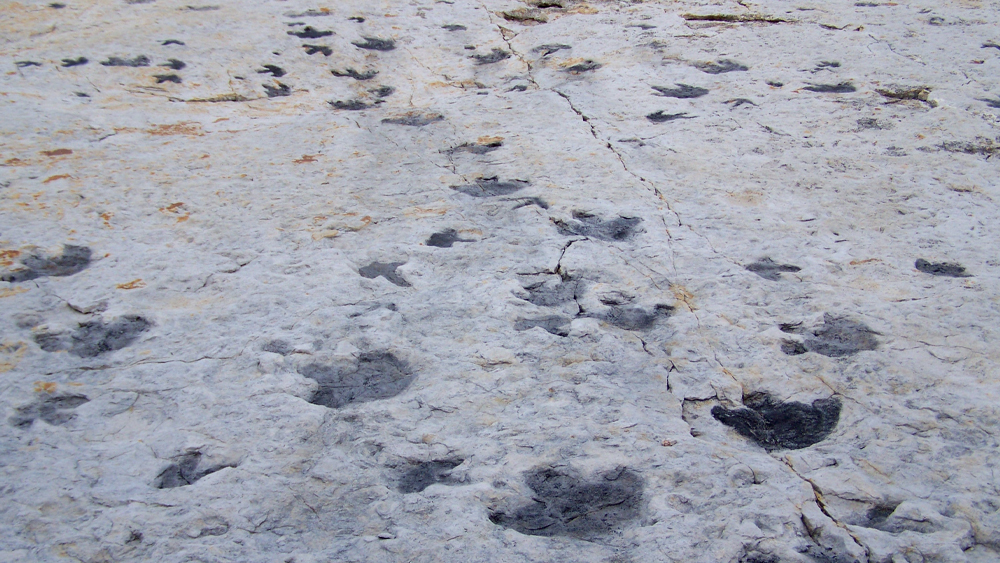
Uncovering animal tracks and trackways in sedimentary rocks is a testament to the Genesis Flood.1–4 Fascinating discoveries continue to be made with the latest trackway (200 footprints) being unearthed in Oxfordshire, England.5 The longest trackway is estimated to be 492 ft (150 m) in length and is probably longer. And therein lies the problem.
Many who are involved with uncovering these incredibly old footprints do not realize this remarkable physical evidence is a two-edged sword. Yes, they are beautifully preserved prints of extinct animals, but they cannot be as old as evolutionary theory states due to multiple catastrophic agents of erosion. If the earth is 4.6 billion years old, virtually every square inch of the Earth’s surface would experience a host of erosive events.
Earthquake and tectonic activity…no doubt would have occurred [on dinosaur trackways] many millions of times. Earthquakes of all magnitude on the Richter scale would have happened over and over again. In addition, there would also be many millions of years’ worth of meteorites, tsunamis, bitter cold, hail, volcanoes, climate change patterns, Ice Ages, tornadoes, flooding, windstorms, drought, lightning, hurricanes and meteorological activity of all sorts.6
In addition, English paleobiologist Richard Butler made an interesting statement regarding the formation of this trackway, “We don’t know exactly what, but it might be that there was a storm event that came in, deposited a load of sediments on top of the footprints, and meant that they were preserved rather than just being washed away.”5 Storm event? A load of sediments? This observation certainly supports the Flood as described in the early chapters of Genesis. The article also stated,
The prints are so beautifully preserved that the team have been able to work out which animal passed through first - they believe it was the sauropod, because the front edge of its large, round footprint is slightly squashed down by the three-toed megalosaurus walking on top of it.5
The footprints are so pristine that even after the supposed 166 million years scientists were able to identify which dinosaurs the prints belonged to. Evolutionist Emma Nicholls, a vertebrate paleontologist from Oxford University, said the three toes “are very, very clear in the print.”5 Perhaps it’s because they were made only 4,500 years ago.
The creatures making these fascinating tracks were 100% dinosaurs created on Day 6. The tracks are well-preserved like one would expect from catastrophic flood deposits. And finally, their amazing preservation rather than being totally destroyed isn’t what one would expect after supposedly 166 million years of nonstop erosive forces.
References
- Thomas, B. and T. Clarey. 2018. Dinosaur Tracks Back Noah’s Flood. Acts & Facts. 47 (2): 11–14.
- Clarey, T. Dinosaur “Superhighway” Explained by Global Flood. Creation Science Update. Posted on ICR.org August 28, 2018.
- Sherwin, F. Fossil Amphibian Footprints. Creation Science Update. Posted on ICR.org April 13, 2023.
- Thomas, B. Pterosaur Tracks Show Traces of the Great Flood. Creation Science Update. Posted on ICR.org September 2, 2009.
- Morelle, R. UK’s Biggest Ever Dinosaur Footprint Site Unearthed. BBC. Posted on bbc.com January 2, 2025.
- Sherwin, F. Another Arch Collapse at a National Park. Creation Science Update. Posted on ICR.org September 26, 2024.
Stage image: Tracks in rock at Dinosaur Ridge, Morrison Fossil Area, Jefferson County, Colorado (example of dinosaur trackway, not the same location mentioned in text)
Stage image credit: Copyright © CC BY-SA 3.0, Footwarrior. Used in accordance with federal copyright (fair use doctrine) law. Usage by ICR does not imply endorsement of copyright holder.
* Dr. Sherwin is a news writer at the Institute for Creation Research. He earned an M.A. in invertebrate zoology from the University of Northern Colorado and received an honorary doctorate of science from Pensacola Christian College.