Purpose
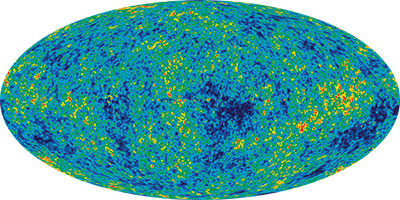
Taking the Hebrew text of Scripture at face value without inserting gaps or revising the meanings, the universe is only about 6,000 years old. Creationists have proposed various theories to explain how we can see distant heavenly bodies with such a short time available for the light to get here. Creationist cosmologies should also explain three other observed features of the universe: (1) the increasing red shift of light with increasing distance, (2) the cosmic microwave background radiation, and (3) the seemingly great age of the distant cosmos. Some creationist theories only explain a few of these additional features.
Many of the recent theories build upon Einstein’s general theory of relativity, particularly the idea of gravitational time dilation. I have offered two such theories, one in 19941 and one in 2008.2 But I have never been satisfied with such theories, even my own, because they did not rest upon a firm biblical foundation. Most of the authors, including myself, seem to have first gotten a physics idea and then tried to see if the idea could fit into Scripture. I wanted to find a more scriptural explanation.
Methods
In search of this, I studied Scripture, prayed, and made some theoretical calculations with pencil and paper.
Results
I noticed that Genesis 1 contains three strong clues that the speed of light in the heavens was extremely high during the first four days of creation. Relativity says the speed of light controls the speed of time. Earth days were of normal length (Exodus 20:11), so the speed of light on Earth was normal.
The high speed of light in the heavens means that billions of years’ worth of events would occur there before the end of the fourth day on Earth. Also, light from the most distant galaxy would arrive on Earth within that day. If at the end of the fourth day the speed of light in the heavens dropped suddenly to normal, then we would see no difference between things closer or farther than 6,000 light-years away. Events would happen at their normal rate but would also look as if they had been happening a long time.
In a recent paper, I pointed out the above.3 I did not develop the physics (if it was not completely miraculous) of how God did what He said, so I am looking into that question. I have a scripturally based idea about the physics behind those things and hope to publish it soon. Some elements of my first two cosmologies remain, including the idea that the earth is approximately at the center of the cosmos. Some creationists are calling this work Starlight and Time 3.0.
Impact
I hope my work will increase understanding of how God got the light from distant galaxies to the earth by the end of the fourth ordinary-length day of creation as well as how the universe could appear to be old while really being young. It should increase faith in the Word of God.
References
- Humphreys, D. R. 1994. Starlight and Time. Green Forest, AR: Master Books.
- Humphreys, D. R. 2008. New time dilation helps creation cosmology. Journal of Creation. 22 (3): 84-92.
- Humphreys, D. R. 2022. A more biblical cosmology. Journal of Creation. 36 (3): 114-122. This article will become available to nonsubscribers in December 2023.
* Dr. Humphreys earned his Ph.D. in physics from Louisiana State University.