In Genesis 1 we read the land plants were created on Day 3 of the creation week, and living creatures were created on Days 5 and 6. This would include aquatic, flying, and terrestrial invertebrates such as insects.
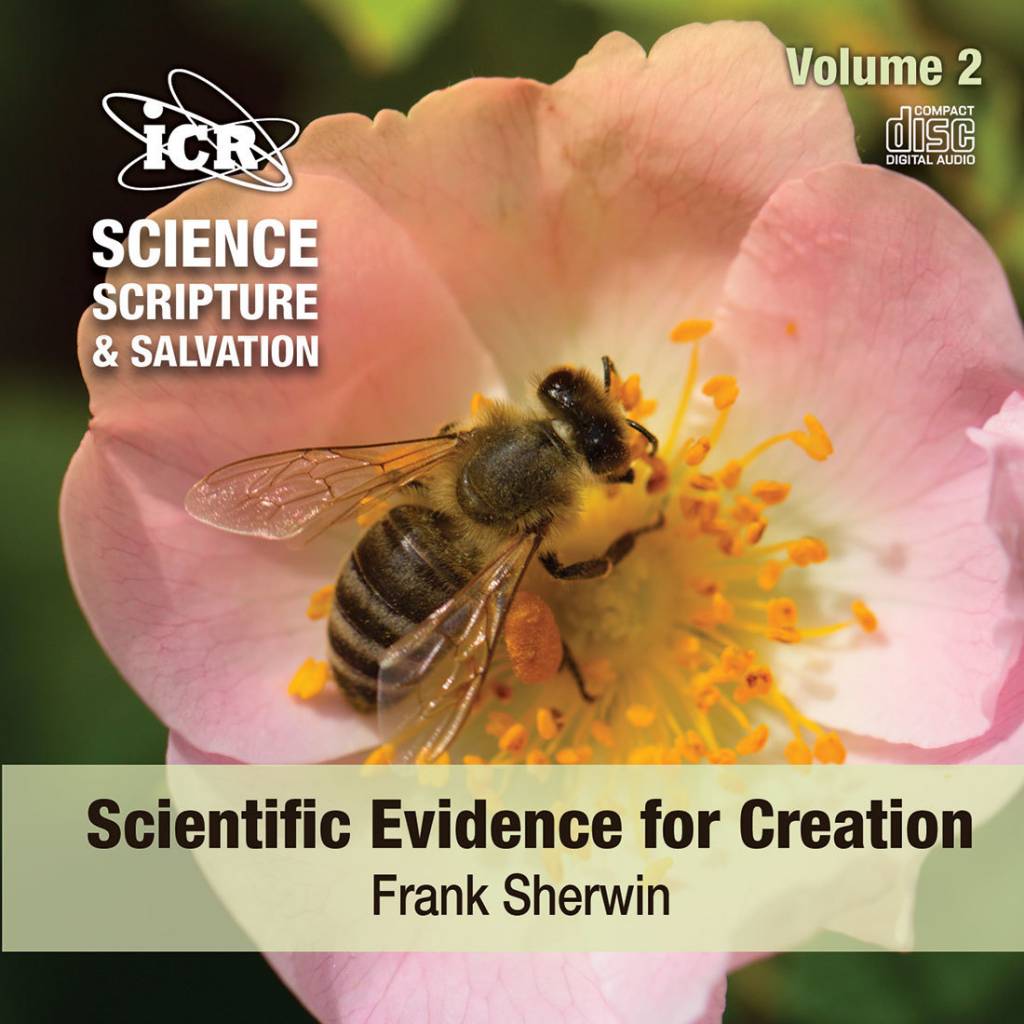
So the creationist infers that insects and plants engaged in a common type of ecological interaction called mutualism from the beginning. Specifically, the plants provide food for the insects while the insects pollinate the plants. Both organisms benefit. As an evolutionary publication stated,
Most of today’s flowering plants rely on insects for pollination. The plant’s flowers have evolved to attract insects via colour, scent and even sexual mimicry, and most reward them with nectar, pollen, oils or other types of food, making the relationship beneficial to both parties.1
Evolutionists dismiss biblical history, stating that if one goes back far enough they would find plants and insects had a common ancestor. Such a common ancestor has, of course, never been found. Furthermore, creationists predict this hypothetical (and bizarre!) organism–called the Last Universal Common Ancestor (LUCA), supposedly living over 4 billion years ago–never will be found.
The fossil record of flowering plants (angiosperms) extends back without a hint as to how they evidently evolved from non-flowering plants (gymnosperms). Such radical change would be an example of macroevolution. However, “the origin of angiosperms has been a long-standing botanical debate. The great diversity of angiosperms in the Early Cretaceous makes the Jurassic a promising period in which to anticipate the origins of the angiosperms.”2
Creationists use a theory of ecological zonation (or eco-sedimentary zones) to explain the fossils of angiosperms. The first fossils of flowering plants are found in “Early Cretaceous” Flood sediments, when the water rose high enough to inundate their environment. Then, later in the “Cretaceous” and following, larger numbers of flowering plant fossils would be found as these higher elevation environments were sequentially destroyed. In other words, the remains of flowering plants (and animals) once living in different ecological zones at the same time were buried in rapid succession as the floodwaters rose. These fossil flowering plants are a record not of their evolution, but of the order of burial in the Genesis Flood.3
Insects, too—such as the common beetle—have no evolutionary history.4,5 They appear in sedimentary (Flood) rocks as 100 percent insects.
Not only is there no evidence of flowering plants or insects evolving, there is also no evidence that insect pollination of plants evolved. The University of New South Wales describes this recent research:
While early evidence suggests it was probably insects, until now this has never been tested across the full diversity of flowering plants–their full evolutionary tree. To find an answer, [Stephens, et al] used a “family tree” of all families of flowering plants, sampling more than 1,160 species and reaching back more than 145 million years. This tree shows us when different plant families evolved. We used it to map backwards from what pollinates a plant in the present to what might have pollinated the ancestor of that plant in the past.1
Such “tree thinking” is not only extremely subjective (mapping backwards 145 million years) but is dependent on the alleged evolution of plants and insects of which there is no evidence.
Indeed, Stephens et al. admit that, “Precisely how the first angiosperms were pollinated, and how pollination modes have evolved through time, remains a key question in angiosperm macroevolution.”6
They went on to state,
Though most evidence suggests insect pollination is ancestral in angiosperms, ancestral pollination is yet to be explored on the full angiosperm phylogeny. Questions persist about the timing and tempo of pollination mode evolution: for instance, it is not yet known when shifts to wind pollination occurred, and whether these were as common as shifts between insect and vertebrate pollinators. Yet to be explored also is the frequency of reversals from wind back to animal pollination, and how the ancestors of all major angiosperm clades may have been pollinated.6
It must be challenging to imagine pollination in an imaginary world where insects had not yet evolved.
Even a “99-million-year-old beetle trapped in amber served as pollinator to evergreen cycads.”7 Evergreen (naked-seeded) cycads are not angiosperms, but these too have a long (evolutionary) history of insect pollination with very specialized pollinators. “Our find indicates a probable ancient origin of beetle pollination of cycads at least in the Early Jurassic, long before angiosperm dominance and the radiation of flowering-plant pollinators, such as bees, later in the Cretaceous."7
To conclude, evolution theory states, “While pollinators such as bees and butterflies provide crucial ecosystem services today, little is known about the origin of the intimate association between flowering plants and insects.”8 But according to Genesis, such a crucial ecosystem service was put in place in the Creation Week just thousands of years ago.
References
- Stephens, R. et al. The world’s first flowers were pollinated by insects. UNSW Sydney. Posted on newsroom.unsw.edu.au June 6, 2023, accessed June 18, 2023.
- Fu, Q. et al. An unexpected noncarpellate epigynous [sic] flower from the Jurassic of China. eLife. Posted on elifesciences.org December 18, 2018, accessed June 14, 2023.
- Clarey, T. Sudden Appearance of Flowering Plants Fit Flood Model. Creation Science Update. Posted on ICR.org July 29, 2020, accessed June 16, 2023.
- Thomas, B. Amazing Ant Beetle Same Today as Yesterday. Creation Science Update. Posted on ICR.org Dec. 18, 2014, accessed June 16, 2023.
- Sherwin, F. No Sign of Beetle Evolution. Creation Science Update. Posted on ICR.org April 7, 2022, accessed June 16, 2023.
- Stephens, R. et al. Insect pollination for most of angiosperm evolutionary history. New Phytologist Foundation. Posted on nph.onlinelibrary.wiley June 5, 2023, accessed June 16, 2023.
- Science Writer. 99-million-year-old beetle trapped in amber served as pollinator to evergreen cycads. Phys.org. Posted on phys.org August 16, 2018, accessed June 17, 2023.
- Science Writer. Unusual fossil reveals last meal of prehistoric pollinator. Phys.org. Posted on phys.org June 25, 2012, accessed June 17, 2023.
* Dr. Sherwin is science news writer at the Institute for Creation Research. He earned an M.A. in zoology from the University of Northern Colorado and received an Honorary Doctorate of Science from Pensacola Christian College.