ICR Discovery Center Update | The Institute for Creation Research

ICR Discovery Center Update

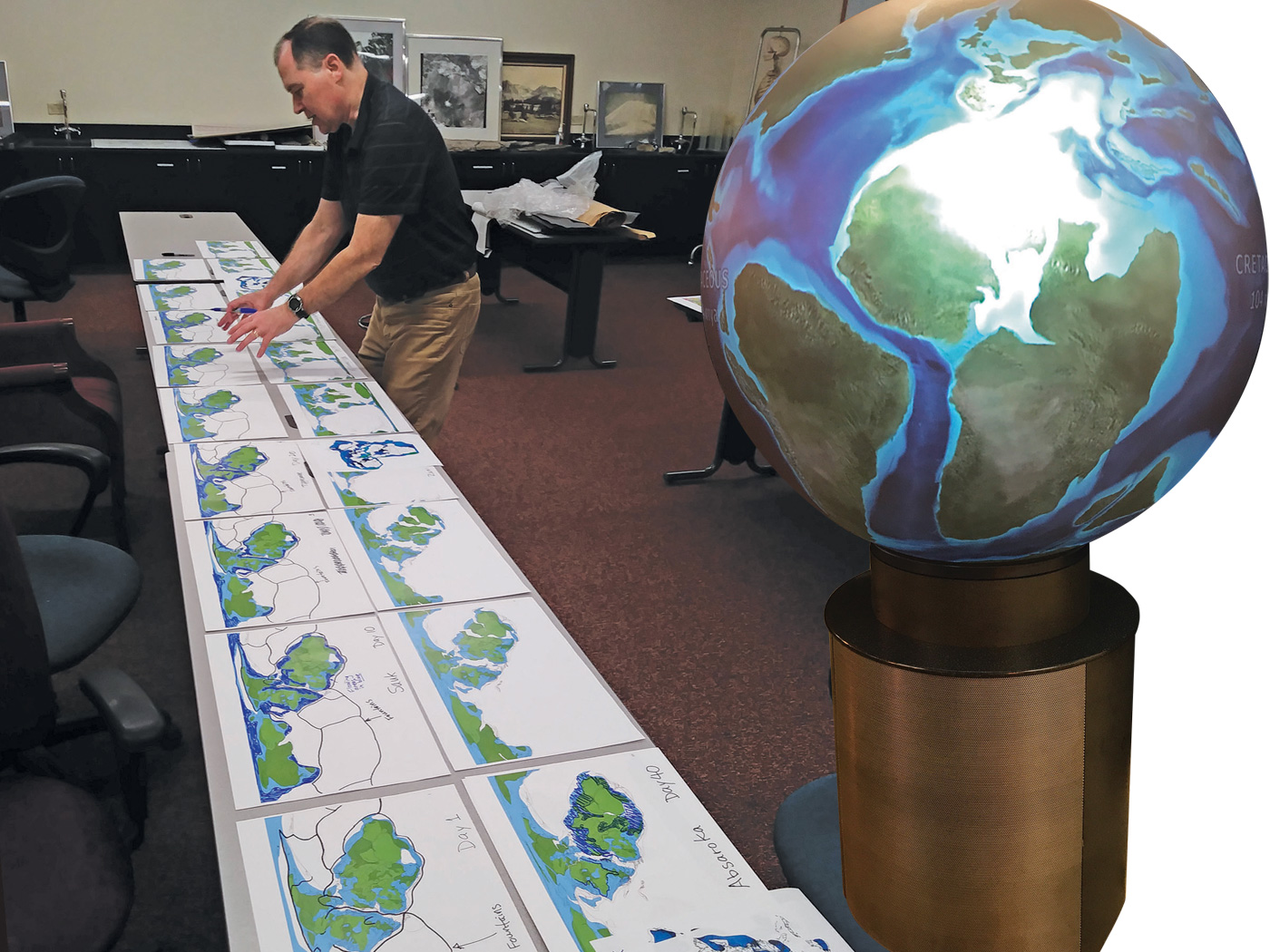
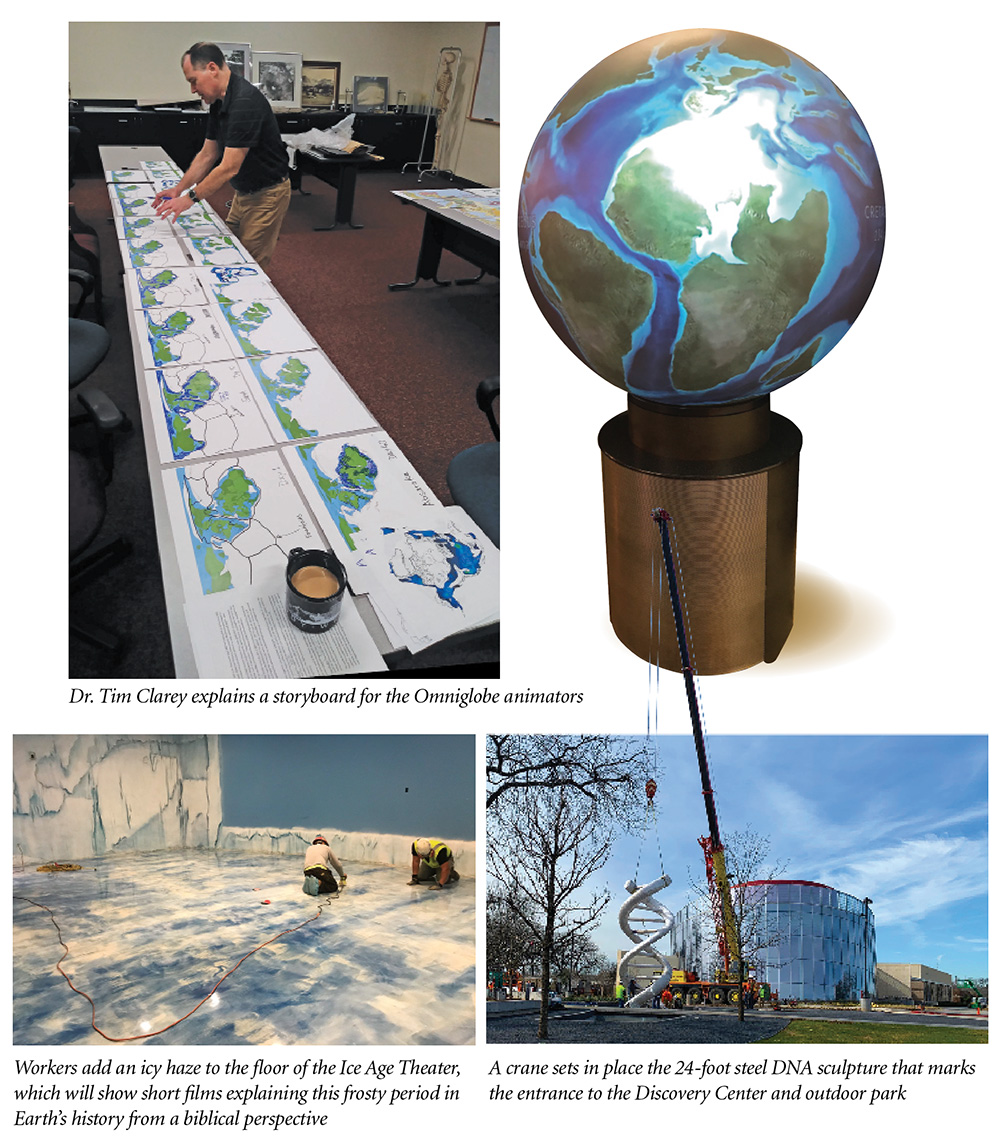
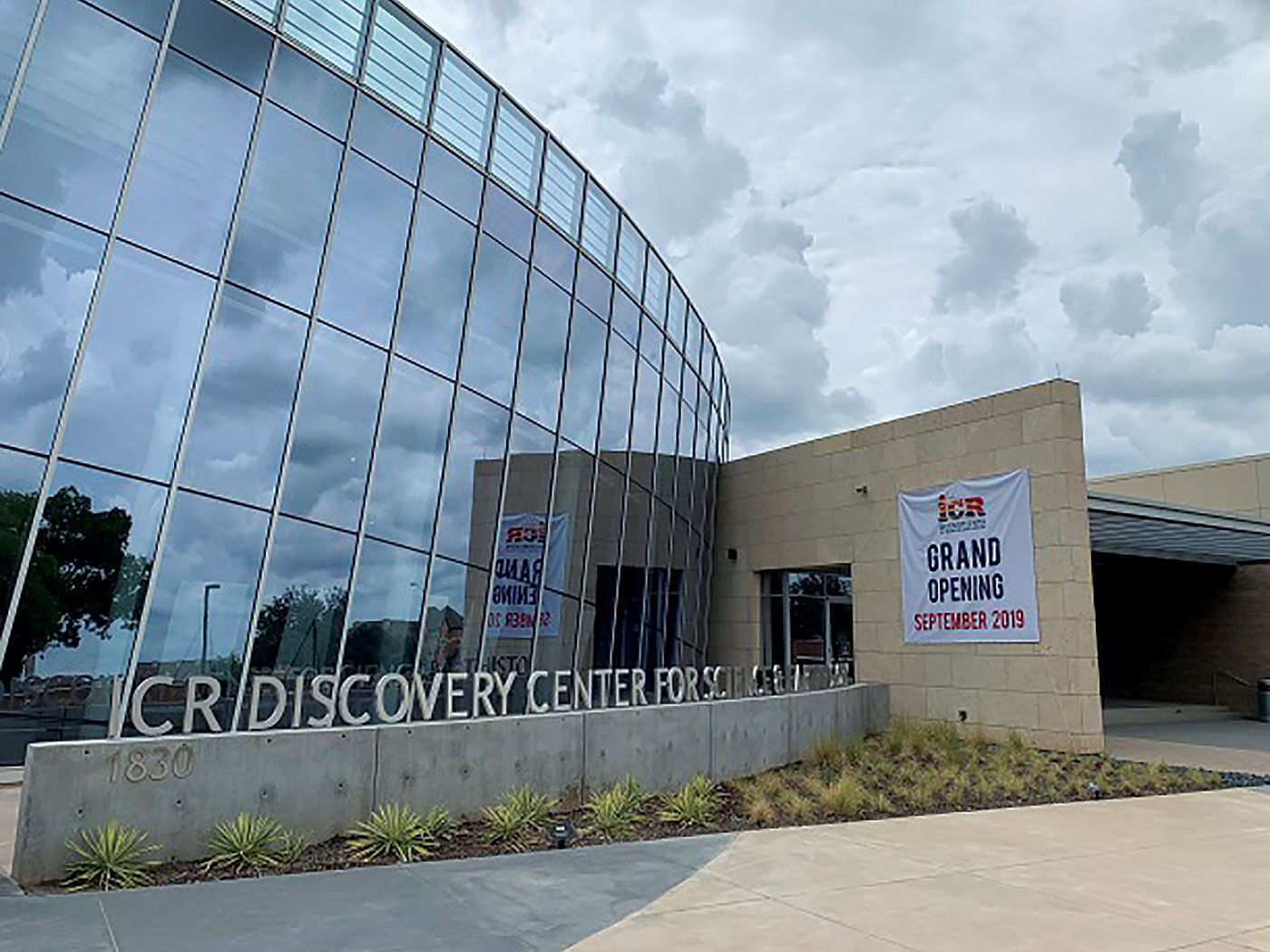
How can you wrap your mind around the idea of a worldwide flood that covered all the highest hills and mountains? Wouldn’t it be helpful—and fascinating—to see the global Flood year in fast-forward? The Omniglobe attraction at the ICR Discovery Center for Science and Earth History will bring ICR geologist Dr. Tim Clarey’s Flood discoveries to life. His team is mapping the coverage of each major sedimentary sequence that the Flood deposited across the continents. Among his findings the globe will show:

  1. The first three sequence layers only partially covered the land as floodwaters rose.
  2. As floodwaters inundated farther, the last three layers completely covered the land as the supercontinent was breaking into the continents we see today.
  3. Toward the end of the Flood, floodwaters draining off the continents produced offshore deposits that include land animal fossils.

Dr. Clarey says, “It takes a global cause to pro-duce a global effect.” So far, his research has revealed these same sedimentation patterns on three continents: North America, South America, and Africa. You can read more about the research team’s findings on page 9. The Omniglobe exhibit will help visitors see how geological evidence confirms the Genesis Flood as a real catastrophic event in Earth’s history.
The Latest
NEWS
Wings of Beauty: Designed Detail in Butterflies
A butterfly wing may look like painted glass, but beneath its beauty is a living control system. A recent study on South American butterflies and a...

NEWS
Jupiter's Moons Io and Ganymede: Still Problematic for ''Billions...
Two of Jupiter’s four Galilean moons, Io and Ganymede, were recently featured in science news stories—stories that remind us that these...

NEWS
Can Ice Build Life?
Can a freezer make life? A recent paper in Chemical Science suggests that freezing and thawing may have helped early “protocells” grow,...

NEWS
Conventional Scientists Still Struggle to Explain Saturn’s...
Saturn is famous for its beautiful rings, which are composed mostly of water ice particles. A team of scientists recently proposed that the rings were...

NEWS
Centipede-Like Fossil Walked on Land, Not the Ocean Bottom
A new species of what appears to be a fossil centipede was found in sediments that conventional scientists believe were deposited offshore.1...

NEWS
Rewriting the Origin of Spiders and Horseshoe Crabs . . . Again
According to the fossil record, arthropods—in all their complexity—have always been arthropods.1,2 They belong to the phylum...

NEWS
June Wallpaper
"But seek first the kingdom of God and His righteousness, and all these things shall be added to you."  (Matthew 6:33, NKJV) ICR's...

NEWS
Rapid Change, Fixed Design: Rethinking Genetic ''Accelerators''
What if so-called rapid evolution is not a process of building something new, but it simply reveals what was already there? A recent peer-reviewed study...

NEWS
Designed to Adapt: Examining Plankton After Chicxulub
What if new species could appear in just a few thousand years? A recent study reports that many new plankton species showed up quickly after the supposed...

NEWS
A Call To Remembrance
I have considered the days of old, the years of ancient times. I call to remembrance my song in the night: I commune with mine own heart: and my spirit...