A team of scientists from Australia and the USA recently studied the ejecta from a subsea volcano, gaining new insights into how magma can explode to the surface from deep underwater.1 This discovery also gives important insight into volcanic activity during the Flood year when many volcanoes originated while still underwater.
In 2012, a relatively unnoticed eruption occurred beneath the ocean at Havre volcano. The volcano is about 500 miles northeast of the north island of New Zealand. Its summit is about 3000 feet below sea level.
"The common theory is that underwater eruptions, particularly in deep water such as at Havre, cannot be explosive and instead make lava flows on the seafloor," lead author Joseph Knafelc told Science Daily.2
"The problem is that it was an underwater eruption that had to push up through nearly 1 km [3000 feet] of ocean. The only way it can do this is if the eruption was very powerful and able to punch through the ocean water and produce an eruption column in the air,” Knafelc added.2
The team, publishing in Communications Earth & Environment, found that the minerals in the ejecta suggest a “short-lived but powerful explosive eruption phase penetrated the water column [3000 feet] allowing hot pyroclasts to oxidise in air.”1
Knafelc and his colleagues found that the eruption created a powerful jet that shielded the hot material from the cooling effects of the water column until it reached the atmosphere. They concluded that their results challenge the known depth limits for underwater eruptions.
"An explosive eruption column could get hot pumice into the atmosphere in as little as a few seconds. This was a very powerful eruption. The problem is that previous studies had not recognised or downplayed the explosive potential of submarine eruptions even in very deep water and thus the hazards posed by submarine eruptions,” co-author Scott Bryan told Science Daily.2
Flood geologists are not as surprised by these findings. We suspect that many volcanoes erupted while still under the cover of the Flood waters. Many of the volcanoes around the Pacific Ring of Fire originated underwater and were equally as explosive as Havre. Even the supervolcano at Yellowstone, with its massive outpourings, had its beginnings underwater while the Flood was beginning to recede and continued into the Ice Age.3
The eruption of Havre volcano gives us a glimpse into the catastrophic activity that was occurring all over the earth during the global Flood. Deep-sea volcanoes were exploding everywhere. They didn’t merely produce lava flows on the seafloor as conventional scientists have previously believed. Instead, their powerful eruptions of pyroclastic material blasted to the surface and spread ash and cinders for many miles in all directions and contributed to the destruction of the pre-Flood world. And they also were major contributors to the post-Flood Ice Age.4
References
1. Knafelc, J., et al. 2022. Havre 2012 pink pumice is evidence of a short-lived, deep-sea, magnetite nanoliter-driven explosive eruption. Communications Earth & Environment. 3 (1).
2. Queensland University of Technology. Pink pumice key to revealing explosive power of underwater volcanic eruptions. ScienceDaily. Posted on sciencedaily.com February 8, 2022, accessed March 3, 2022.
3. Clarey, T. 2020. Carved in Stone: Geological Evidence of the Worldwide Flood. Institute for Creation Research, Dallas, TX, pp. 312-377.
4. Hebert, J. 2013. Was There an Ice Age? Acts & Facts. 42 (12).
*Dr. Clarey is Research Scientist at the Institute for Creation Research and earned his doctorate in geology from Western Michigan University.
Image: Digital map of Havre volcano.
Image Credit: Copyright © University of Tasmania / WHOI. 2022. Adapted for use in accordance with federal copyright (fair use doctrine) law. Usage by ICR does not imply endorsement of copyright holder.
Deep-Sea Volcano Gives Glimpse of Flood Eruptions
More The Global Flood Is the Key to the Past

Dinosaur Washed Out to Sea with Its Last Meal
In 2017, a large dinosaur was discovered washed out to sea,1 similar to the dinosaur bone found 70 miles off Norway’s coast.2...
Venus May Be Geologically Active
Using computer simulations, a team of researchers has concluded the planet Venus could still be geologically active.1,2 The scientists used...
First Land Bug Buried in the Flood
The Scottish island of Kerrera has produced the earliest known bug in the fossil record, a millipede.1 It was found in Silurian System rocks...
More Much Evidence Exists for a Worldwide Flood

Dinosaur National Monument: Fossil Graveyard of the Flood
Straddling the border of Utah and Colorado, Dinosaur National Monument (DNM) is one of the richest exposures of dinosaur fossils in the world.1...
Flood Buried Dinosaurs with a Bang
Scientists from the University of Bath have found that dinosaurs were thriving up to the end of the Cretaceous.1 This discovery conflicts with...
North Cascades National Park: Assembled During the Floo.,.
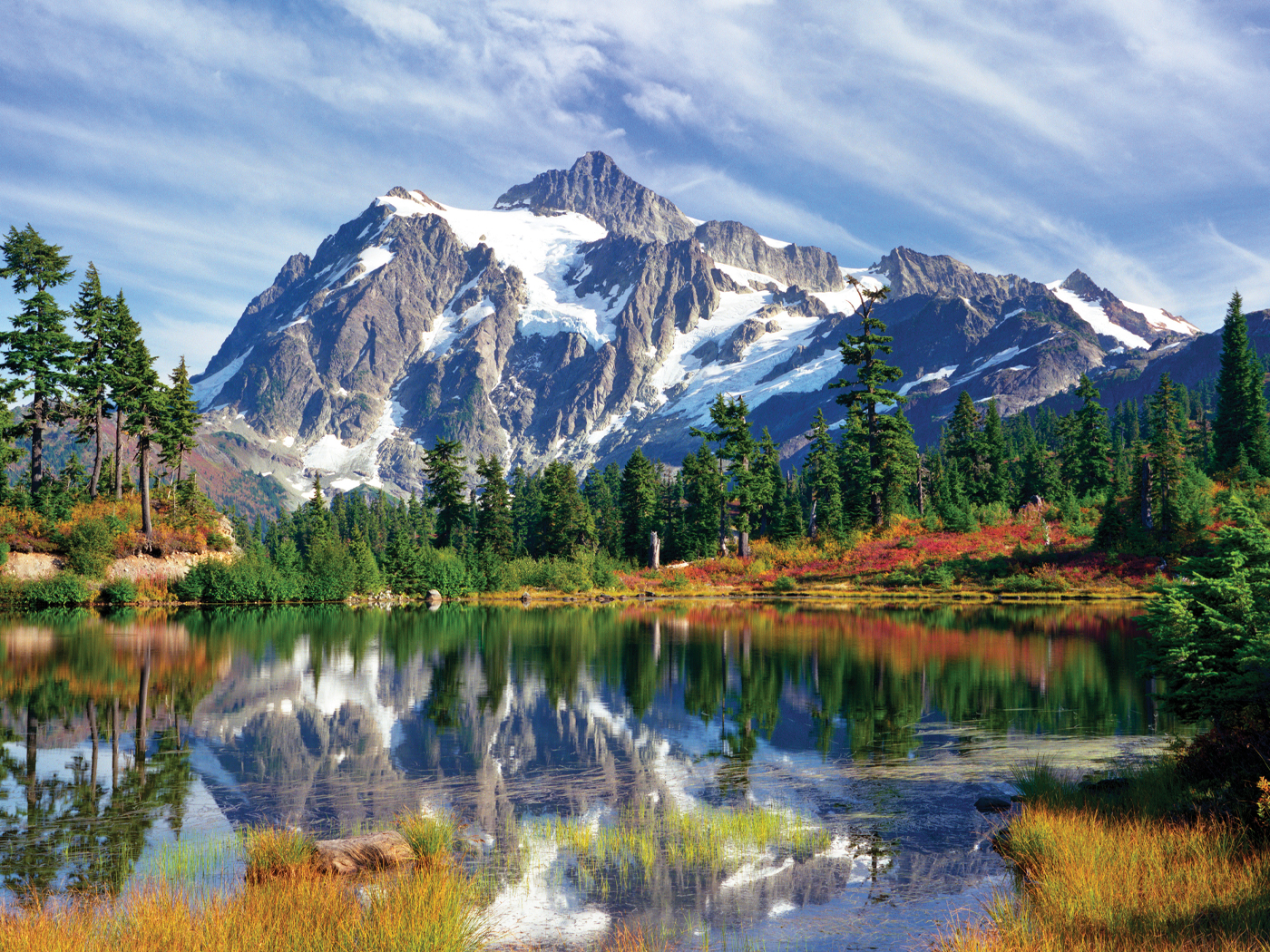
North Cascades National Park is sometimes called “the American Alps” for its stunning vistas that average about 5,000 feet above sea level,...
More Geological Evidence Indicates Rapid Formation
New Evidence of Flood in Grand Canyon
The Coconino Sandstone, famously exposed near the top of Grand Canyon’s splendid sedimentary layers, remains a controversial rock. Two counterclaims...
Eroding Hillside Reveals Dinosaur Skin Pattern
Recently, a fossil believed to be a juvenile duck-billed dinosaur was found in a hillside in Dinosaur Provincial Park, Canada. The scientists discovered...
Plates Wobble Before Big Quakes
A new study published in Nature has found that tectonic plates may change directions rapidly, or “wobble,” several months before a massive...
More The Global Flood Explains the Ice Age
Bible May Solve Colossal Ancient Iceberg Riddle
What is the recipe for making an iceberg? Scientists know the basics from watching polar-ice sheets. Huge chunks calve, slide off, and float away as...
Glaciers Can Melt in a 'Geologic Instant'
Many geological processes can happen much more quickly than is conventionally thought. For instance, mainstream science believes that coal, diamonds,...
Scientists Late to Recognize Human and Giant Mammal Coe.,.
Giant mammals roamed North America during the Ice Age, but were humans among them? A site in Vero Beach on Florida's East coast contains mammoth,...
More Noah's Ark and Flood
New Australian Dinosaur Surprises Evolutionists
A new study published in the journal Gondwana Research has identified a rather out-of-place bone from a theropod dinosaur called an elaphrosaur that apparently...
Greenland: Ice-Free Not That Long Ago
Preserved leaves and twigs in a tube of soil show Greenland was largely ice-free in the relatively recent past.1 This discovery has important...
Is Newfound Dinosaur Fossil the Biggest Ever?
Whether dealing with athletes, sports teams, skyscrapers, or animals, we always want to know who or what takes the top spot. Researchers just published...
More Creation Science Update
Jellyfish Can Learn Directions
Like all animals, “simple” invertebrates such as the jellyfish continue to amaze zoologists.1,2
Recently, scientists have...
Trilobite Demise
One of the more amazing animals of God’s creation was the trilobite. This strange-looking creature was an ocean bottom-dwelling animal that remains...
Distant Barred Spiral Galaxy Shouldn't Exist?
Conventional theories have a difficult time accounting for the existence of a distant galaxy whose existence has been revealed by the James Webb Space...
The Latest
Watching PBS: Don’t Think Too Hard About the Brain’s Origin!
This past summer, the British Broadcasting Corporation (BBC) addressed the subject of origins in the five-part television series Evolution.1...
The Engineering Behind Every Heartbeat
The human heart does not beat like a perfect clock. The time between beats changes as the body breathes, moves, rests, and reacts to the world around...
Blood Vessels: Built to Sense and Respond to Force
Blood vessels do more than carry blood. As tissue grows or heals, new vessels must form in the right place and direction, through a process called angiogenesis....
Hummingbird Hawkmoth Exhibits Astonishing Abilities
The incredible hummingbird hawkmoth (Macroglossum stellatarum), and other insects of the Lepidoptera order, continue to amaze entomologists.1,2...
More Than Just Parts: The Networking of Cells
An engineer can list every part in a system and still miss how it works. Think of a radio. Its parts matter, but so does the wiring that joins them....
Living Centenarian Sturgeon: Extreme Genesis Longevity Is Plausible
Native American oral tradition contains stories of sturgeon living for centuries. While this was largely seen as folklore among conventional scientists,...
Brainy Bees Solve Pollen Problem
The uncanny abilities of the honeybee cause entomologists to shake their heads in wonder.1,2
Scientists have long known that honeybees...

October Wallpaper
"Be anxious for nothing, but in everything by prayer and supplication, with thanksgiving, let your requests be made known to God; and the peace...
Possible Ark Site Has Mainstream Media Hopping
An organization named Noah’s Ark Scans is investigating a site called Durupinar, almost 20 miles from Mount Ararat in Turkey. Could it contain...
ANNOUNCEMENTS
Heroes of Creation Science: Henry M. Morris
“The creation/evolution issue is, in a very real sense, the most fundamental issue of all.” —Henry M. Morris
Many people believe the...
Shop Related Products