



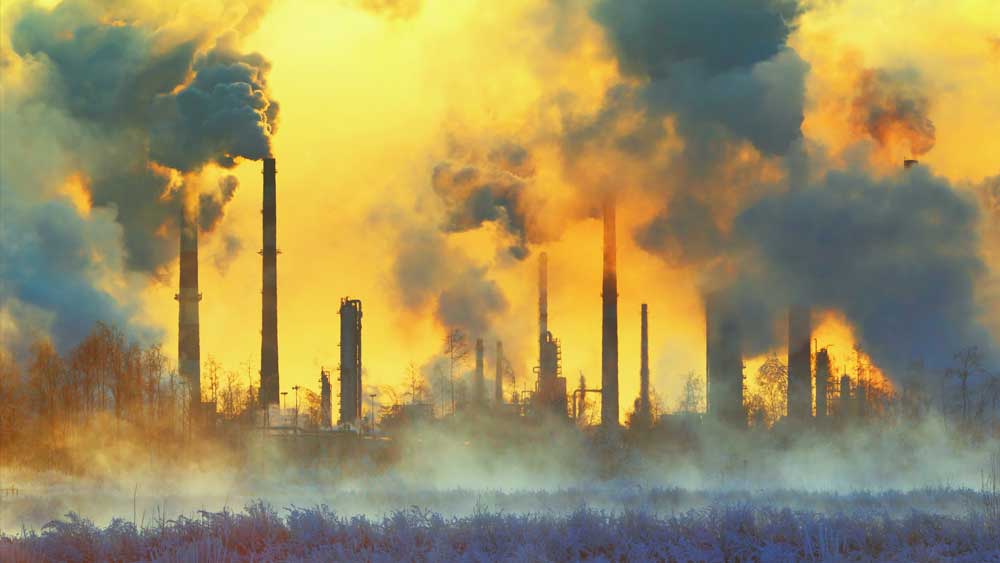
Shutdown: Chance to Test Climate Change Assumption
Some are pointing out that the coronavirus shutdown presents an opportunity to test a major climate change assumption.1-3 Because global industrial activity has been curtailed due to the pandemic, pollution in certain urban areas has decreased dramatically.4 This decrease in industrial activity should also theoretically decrease global carbon dioxide emissions.

Pork, Produce, and Planting for the Future
You probably have noticed over the last several weeks that your visits to the local store have demonstrated a new phenomenon—empty shelves in many parts of the grocery department.

Are Danish Schoolchildren Being Treated like Guinea Pigs?
As the world faces the need to speedily (yet safely) recover from quarantine-like lockdowns, some fear the danger of over-delayed returns to normal, while others fear the opposite and assume that the coronavirus is still a greater evil than hunkering down at home. Denmark began reopening its country, but faced its share of controversy among its citizens.

Did Our Brains Evolve Language Pathways?
A Newcastle University press release title reads, “Origins of language pathway in the brain at least 25 million years old.”1 How can science measure the origins of brain pathways that supposedly happened so long before scientists could observe them? And how defensible is the 25 million-year figure? Two unscientific assumptions unwittingly deflate this title’s confident tone.
Deepwater Oil Fields Have Small Environmental Footprint
Recently, geologist Harry S. Pettingill has found that deepwater oil and gas fields may be more environmentally friendly than first thought.1 In this day and age of trying to find an energy source that makes the smallest environmental impact, we may have overlooked a solution right below our feet…or actually, deep beneath the ocean.
Pages
