



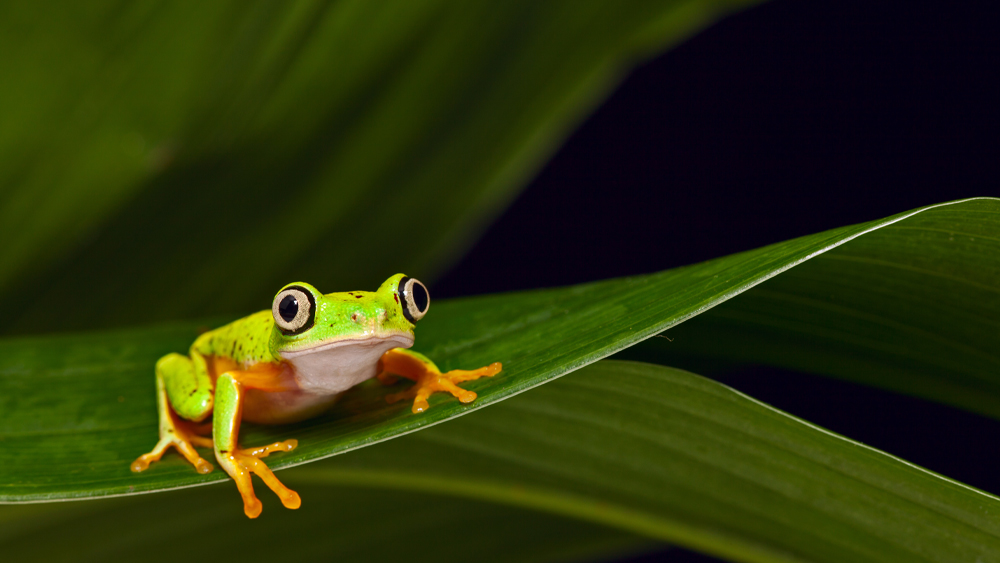
55-Million-Year-Old Tree Frog…Is Still a Tree Frog
In the 1990s, Australian paleontologists discovered fossil frog bones during a dig in Murgon, Queensland.1 This new species of frog—Litoria tylerantiqua—was subjectively dated to be 55 million years old.

Where Paleontology Fails, Paleo-Robots Avail
A Phys.org science article begins with what could be read as a religious story that occurred a long, long time ago.
The Tail of Man’s Supposed Ancestors
Although it has been known for decades and despite insistence to the contrary from the evolutionary community, man—Homo sapiens—has never had a tail.1–3
Allometric and Metabolic Scaling: Arguments for Design... and Clues to Explaining Pre-Flood Longevity?
In Proceedings of the International Conference on Creationism. 9: 206-227, article 18.
Testing the Cavefish Model: An Organism-focused Theory of Testing the Cavefish Model: An Organism-focused Theory of Biological Design Biological Design
by Michael J. Boyle, Ph.D., Brian Thomas, Ph.D., Jeffrey P. Tomkins, Ph.D., and Randy J. Guliuzza, P.E., M.D.
In Proceedings of the International Conference on Creationism. 9: 120-143, article 17.
Abstract
Pages
