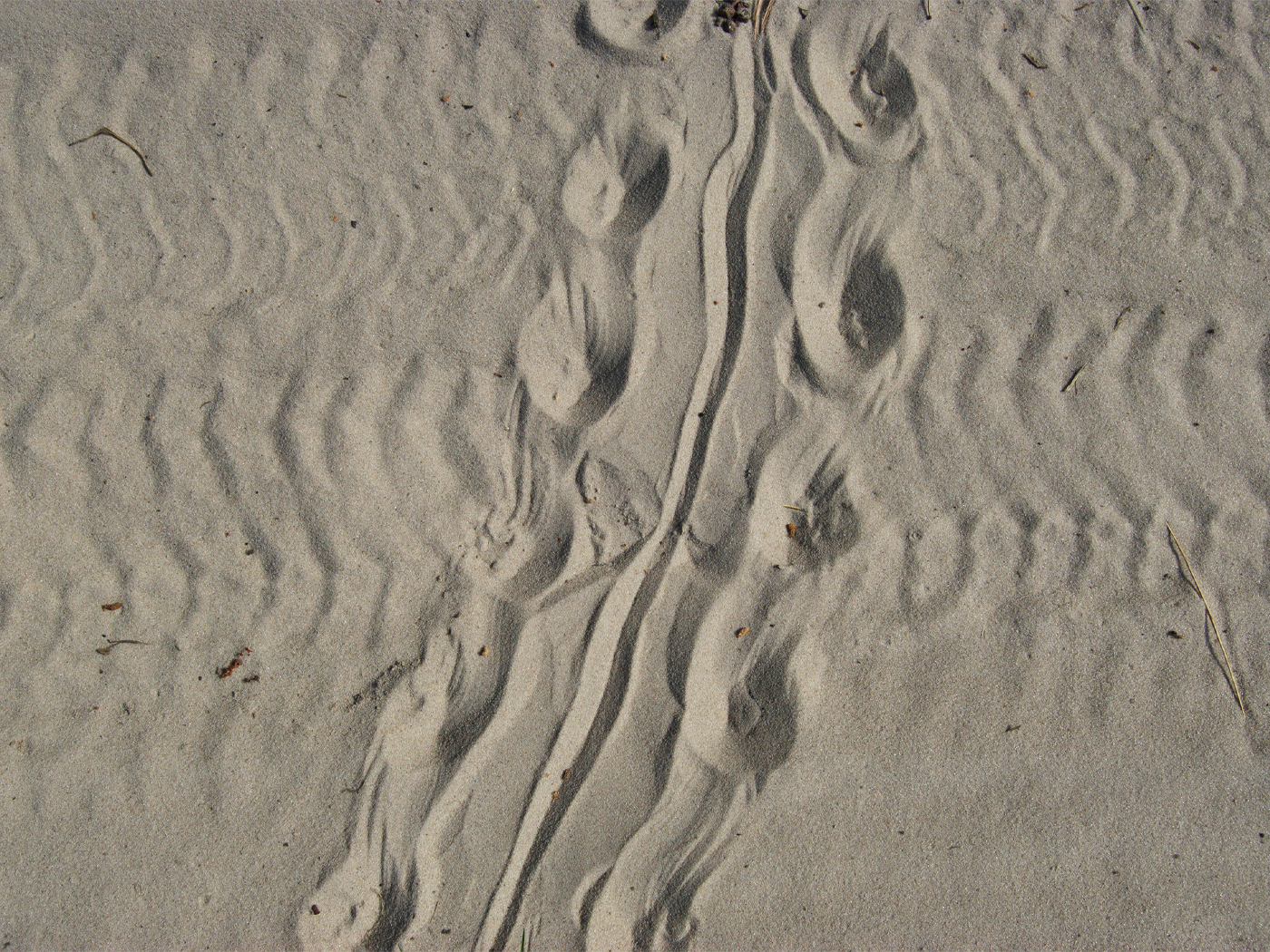
A Bobbit worm is an omnivorous predatory sea worm that, while only a few fingers thick, can grow 10 feet long. It submerges its many segments beneath sandy sea bottoms. Lying still with its fanged jaws ready, it waits for any creature to trip its disguised antennae. In an instant it grabs, drugs, and drags its prey underground to digest it. New evidence supports the idea that special creation, not evolution, explains this unique worm's body construction.
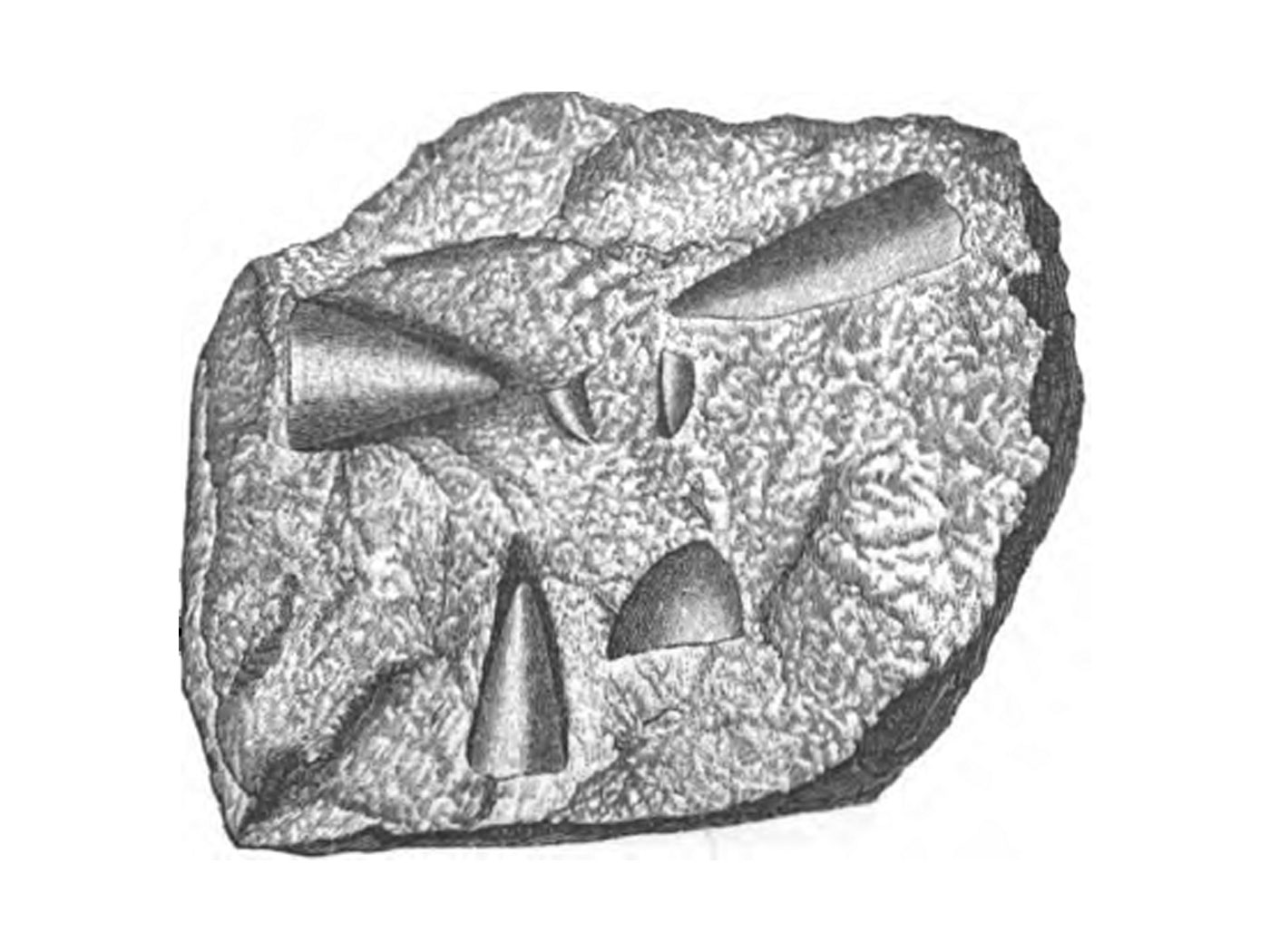
Fossil experts described big Bobbit-worm jaws in Devonian rocks from Ontario. Living examples of this creepy creature are called "polychaete" worms. The study authors wrote, "This demonstrates that polychaete gigantism was already a phenomenon in the Palaeozoic, some 400 million years ago."1
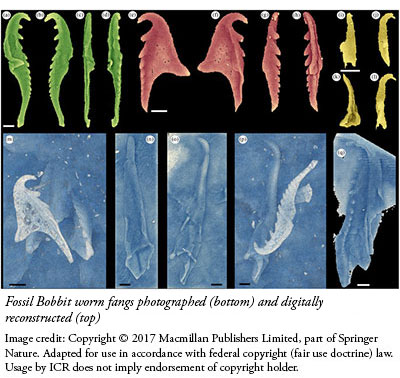 In the evolutionary view, Bobbit worms have not evolved in 400 million years. How could it have avoided relentless and inevitable mutation accumulation? Mutations should have obliterated or at least altered this wacky worm. How could no evolution occur in Bobbit-worm jaw structure during the same time span that supposedly saw such dramatic body reorganization as armored fishes transforming into air-breathing armadillos?
Flood geologists attribute this and similar fossils from low-lying strata to the early stages of Noah's Flood only thousands of years ago. The first creatures that died in the Flood were marine animals. Many of them were slow-moving, like the Bobbit-worm. Possibly the fossilized heavily armored fish, clams, crinoids (sea lilies), and trilobites could not escape the Flood waters that continued their tumultuous torrents month after month during the Flood year.2
An utterly catastrophic Flood explains fossil formation in general with sediments that completely bury sea creatures on top of continents all over the world. And a recent Flood explains why fossils have none of evolution's expected body changes. Living Bobbit worms are virtually identical to their fossil counterparts. These new fossils from Canada show that Bobbit worms never evolved. It's just as though God created them to reproduce according to their well-designed but creepy kind.
References
- Ericksson, M. E., L. A. Parry, D. M. Rudkin. 2017. Earth's oldest 'Bobbit worm'—gigantism in a Devonian eunicidan polychaete. Scientific Reports. 7 (43061).
- Clarey, T. 2017. South America Shows the Flood Progression. Acts & Facts. 46 (3): 9.
*Mr. Thomas is Science Writer at the Institute for Creation Research.
Article posted on March 13, 2017.