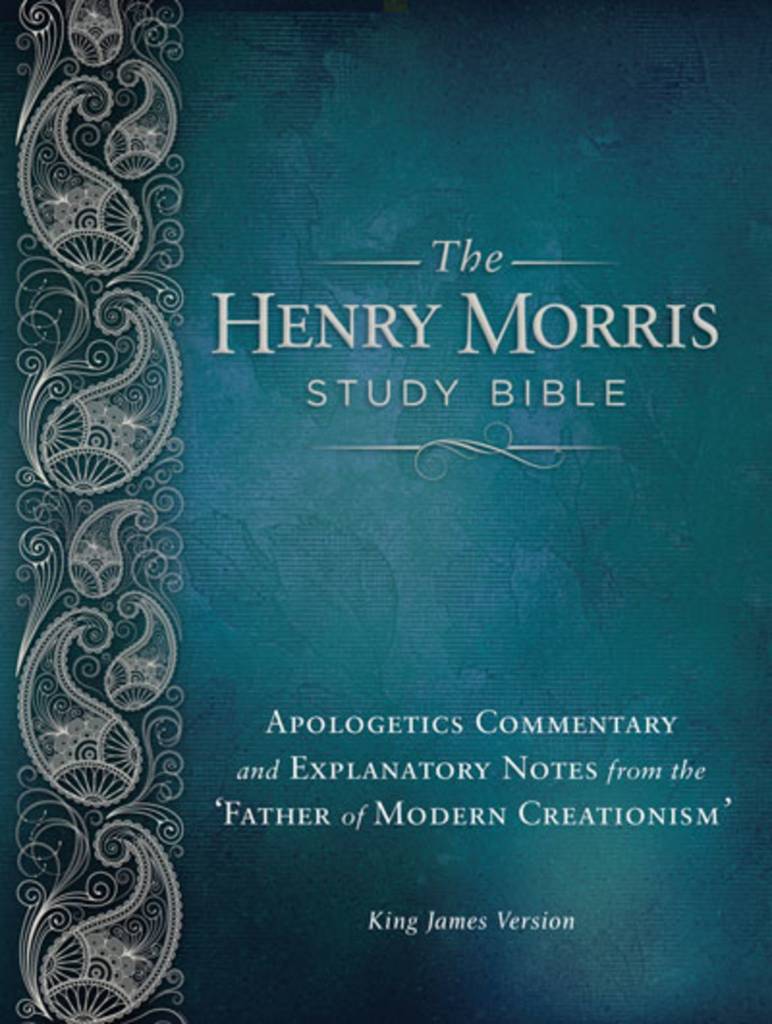
Those Thees and Thous | The Institute for Creation Research

Those Thees and Thous

"And thou shalt speak unto him, and put words in his mouth: and I will be with thy mouth, and with his mouth, and will teach you what ye shall do." (Exodus 4:15)

These words of God, spoken to Moses concerning the mission he and his brother Aaron were to undertake at Pharaoh's palace, are one of numerous examples in Scripture where the King James translation uses several different forms of the second-person pronoun. In this one verse, we see the words "thou," "thy," "you," and "ye," all fulfilling this function. Most modern translations would translate this sentence: "You shall speak to him . . . and I will be with your mouth . . . and will teach you what you shall do." Why would the King James translators use four different forms of the pronoun when only "you" and "your" are used in modern versions?

The fact is that the Elizabethan-age English was able to make much finer distinctions than modern English. That is, "thou," "thee," "thy," and "thine" were used for the second person singular, where as "ye," "you," "your," and "yours" were the corresponding words for the plural. Different words also were used for subject, object, and possessive modifier, as is still true for first and third-person pronouns.

In our text, God was telling Moses that he (Moses) was to speak to Aaron, and that He (God) would then teach both of them, not just Moses, what they were to do. This distinction is clear in the King James English, but not in modern English. This is one of numerous examples where such fine points in the King James language are lost in modern translations. In the Lord's Prayer, for example, "yours is the kingdom" could suggest that many will possess the kingdom, where "thine is the kingdom" clearly recognizes one God alone. Clear words are important for clear meanings, and Jesus said, "My words shall not pass away" (Matthew 24:35). HMM


The Latest
NEWS
Tiny Dinosaur, Big Design: What a New Fossil Really Shows
A new dinosaur fossil from Patagonia (the southern tip of South America) is making headlines. Conventional scientists say it shows how a group of strange...

NEWS
Life Can Rebound “Ridiculously Fast”
In the beginning, God created plants and animals to multiply and fill the earth (Genesis 1:11–13, 20–25). So, when areas are devastated,...

NEWS
Under the Alerce Trees: A Hidden Fungal Ecosystem
Some of the oldest living trees on Earth are in the temperate rainforests of the Chilean Coast Range. Second only to the bristlecone pine in age, these...

NEWS
God’s Architecture: The Hidden Biology in a Paris Icon
In 1889, Paris hosted the Exposition Universelle, a world’s fair celebrating the hundredth anniversary of the French Revolution. To mark the occasion,...

NEWS
Chemical Clues Raise Questions About Early Animals
What if a simple sea sponge could spark a debate about the origin of animal life? A recent study suggests that some of Earth’s earliest animals...

NEWS
Alive with Christ
“Now if we be dead with Christ, we believe that we shall also live with him: knowing that Christ being raised from the dead dieth no more; death...

NEWS
April 2026 Wallpaper
"Ask the Lord for rain in the time of the latter rain. The Lord will make flashing clouds; He will give them showers of rain, Grass in the field...

NEWS
Does Earth Have a Twin?
A possible Earth-like planet 146 light-years away has recently been discovered by citizen scientists.1 The evolutionary community is cautiously...

CREATION PODCAST
Christian PhDs: 5 New Discoveries That Have Atheists SCRAMBLING
From the depths of outer space to the microscopic strands of our DNA, recent scientific discoveries are telling a story secular scientists are scrambling...

NEWS
Giant Virus, Big Claims: Does Ushikuvirus Explain Complex Life?
A newly discovered giant virus called ushikuvirus has been described by conventional scientists as a possible clue to how complex cells evolved. But...