Joseph—the Fruitful Bough | The Institute for Creation Research

Joseph—the Fruitful Bough

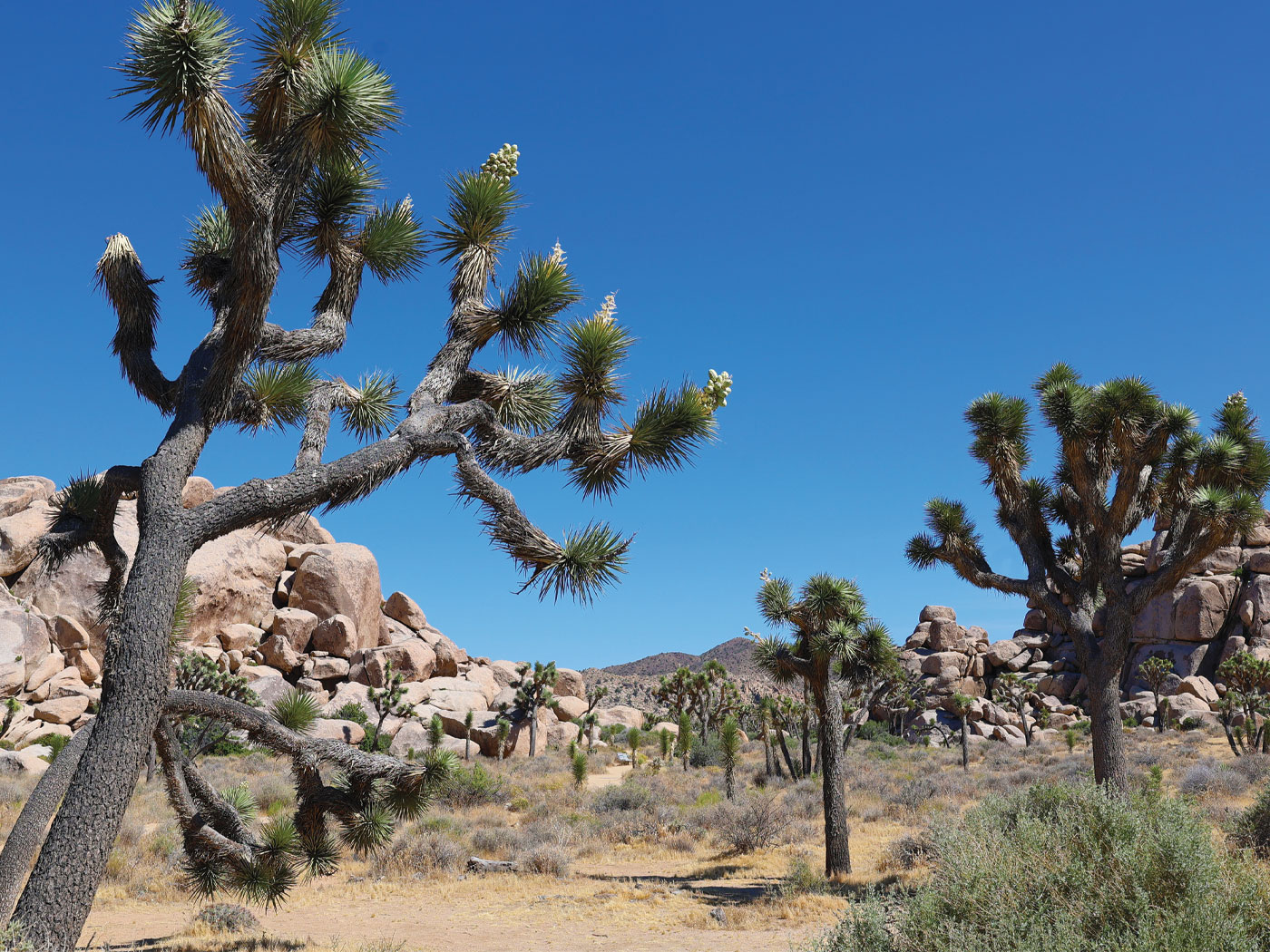
“Joseph is a fruitful bough, even a fruitful bough by a well; whose branches run over the wall” (Genesis 49:22).

This is part of Jacob’s dying prophetic blessing on his twelve sons. Each of the twelve prophecies has been fulfilled, including this prediction of Joseph’s fruitfulness.

Joseph actually received a double inheritance in the future land of Israel, with the two tribes of Ephraim and Manasseh both descended from him. The name Joseph means “increasing,” so that even his name was prophetic of the great multitudes who would be his descendants.

There is another interesting and intriguing fulfillment of this prophecy. More men were named after Joseph than any other man in the Bible, with no less than eleven different “Josephs” mentioned in Scripture. This may not seem so remarkable until it is realized that no one else in the Bible was named after Adam or Noah, Abraham or Isaac, or even Moses or David or Solomon. No one was named after Paul or Peter. Why, then, so many Josephs (except to fulfill prophecy)? One would normally think that Abraham or Moses or David would provide the most favored names for Hebrew children, but not so.

Among all the namesakes of Joseph, the most important were Joseph (the husband of Mary) and Joseph of Arimathea. One provided legitimacy to the birth of Jesus, taking the virgin Mary as his wife and giving Jesus the legal right to David’s throne. The other provided a legitimate burial to Jesus, falsely condemned and crucified as a criminal.

Two Josephs—both descended from Judah rather than from their namesake—thus played key roles at the beginning and end of the earthly ministry of the true “Increaser,” the “Child born” and the “Son given.” He is the most fruitful Branch of all, for “Of the increase of His government and peace there shall be no end” (Isaiah 9:6,7). HMM


The Latest
NEWS
Jupiter's Moons Io and Ganymede: Still Problematic for ''Billions...
Two of Jupiter’s four Galilean moons, Io and Ganymede, were recently featured in science news stories—stories that remind us that these...

NEWS
Can Ice Build Life?
Can a freezer make life? A recent paper in Chemical Science suggests that freezing and thawing may have helped early “protocells” grow,...

NEWS
Conventional Scientists Still Struggle to Explain Saturn’s...
Saturn is famous for its beautiful rings, which are composed mostly of water ice particles. A team of scientists recently proposed that the rings were...

NEWS
Centipede-Like Fossil Walked on Land, Not the Ocean Bottom
A new species of what appears to be a fossil centipede was found in sediments that conventional scientists believe were deposited offshore.1...

NEWS
Rewriting the Origin of Spiders and Horseshoe Crabs . . . Again
According to the fossil record, arthropods—in all their complexity—have always been arthropods.1,2 They belong to the phylum...

NEWS
June Wallpaper
"But seek first the kingdom of God and His righteousness, and all these things shall be added to you."  (Matthew 6:33, NKJV) ICR's...

NEWS
Rapid Change, Fixed Design: Rethinking Genetic ''Accelerators''
What if so-called rapid evolution is not a process of building something new, but it simply reveals what was already there? A recent peer-reviewed study...

NEWS
Designed to Adapt: Examining Plankton After Chicxulub
What if new species could appear in just a few thousand years? A recent study reports that many new plankton species showed up quickly after the supposed...

NEWS
A Call To Remembrance
I have considered the days of old, the years of ancient times. I call to remembrance my song in the night: I commune with mine own heart: and my spirit...

NEWS
2,200-Year-Old Roman Ship Reveals True Nature of ''Pitch''
What was the pitch that covered the Ark? Many have wondered what this could have been. Was it oil or some type of tree resin? A newly discovered Roman...