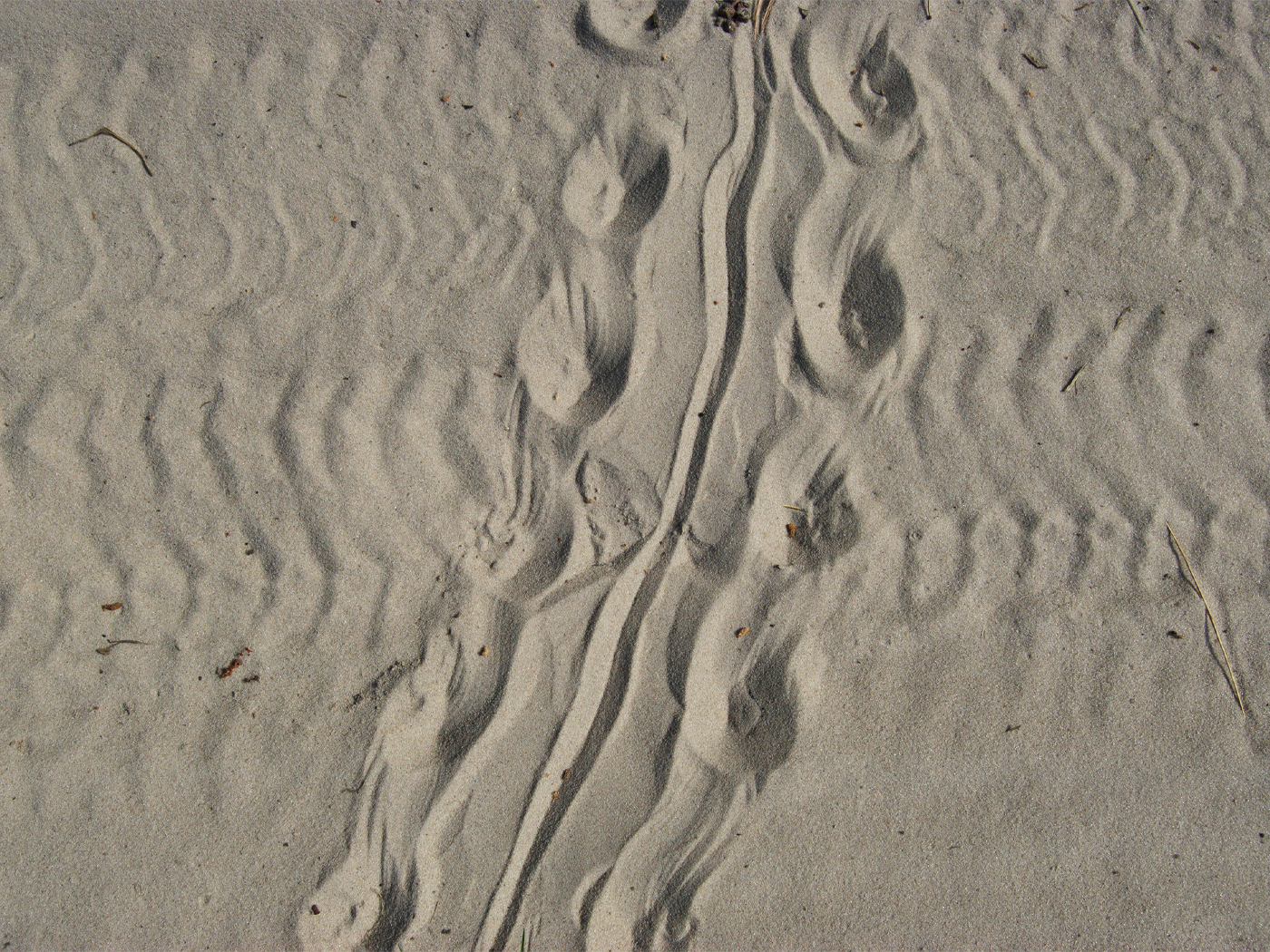
The pre-Flood world had some truly massive dinosaurs, and the largest of them were in the group Sauropodomorpha.1 Within this group were titanosaurs, which include the gigantic Argentinosaurus that is estimated to have weighed over 100 tons. Not only were the titanosaurs the largest dinosaurs, but they also had a unique design showing “a characteristic ‘wide-gauge’ limb posture, in which the forelimbs and hindlimbs were angled out from the side of the body and the hands and feet planted on the ground far apart.”2
Titanosaurs were the most extensive of the sauropods, but where did they come from? According to the fossil record, dinosaurs have always been dinosaurs. They have no evolutionary history. New species of dinosaurs are regularly unearthed, but never their evolutionary ancestors.3
The late Barbara Stahl, who was very much opposed to creation science, said, “There has also been controversy concerning the origin of the other division of saurischians, the Sauropodomorpha [e.g., titanosaurs].”4 Over thirty years later, evolutionists can only say they originated in the Late Triassic about 230 million years ago. Of course, as creationists, we do not accept these great ages.
Evolutionary paleontologist Michael Benton stated sauropod “phylogeny [evolutionary history] has been much debated.”5 This includes titanosaurs.
In 2019, an article was written that supposedly sheds light on titanosaur beginnings. But a careful reading simply reveals new places where they suddenly appear—as titanosaurs.
“Although titanosaurs became one of the most successful dinosaur groups before the infamous mass extinction capping the Age of Dinosaurs, their early evolutionary history remains obscure, and Mnyamawamtuka helps tell those beginnings, especially for their African side of the story,” says Gorscak.6
Recently, scientists have unearthed several new species of titanosaur in Uruguay and Argentina.
Science writer Enrico de Lazaro reported that, “Paleontologists have announced the discovery of a new genus and species of saltasauroid [a type of sauropod] titanosaurian dinosaur, based on the fossilized remains found in the Paysandú Department of Uruguay.”7
This new titanosaur fossil revealed a unique combination of characters, such as a biconvex first caudal centrum. Paleontologists proposed this to be a new genus and species of titanosaur (Udelartitan celeste), but it’s still a titanosaur.
In addition, de Lazaro also reported “a remarkable new genus and species of small-sized titanosaurian sauropod [that] has been unearthed in Patagonia, Argentina.”8 The fossil—Inawentu oslatus—was found in sedimentary deposits reminiscent of enormous flooding
“The recovered skeletal remains were found articulated in a horizon of massive, reddish-colored, edaphized mudstones which are covered by a thin sandy layer (30 cm thick) linked to river overbank flooding deposits,” the researchers explained.8
In their Cretaceous Research article, Filippi et al. stated,
Here, we provide a preliminary description of a nearly complete new titanosaurian sauropod from the Upper Cretaceous of Patagonia, Inawentu oslatus gen. et. sp. nov., that shows remarkable convergent anatomical traits with rebbachisaurid sauropods.9
Convergent evolution, mentioned above, is
the fabricated conjecture evolutionists invoke to explain very similar characteristics between creatures that could not have been inherited from a common ancestor and that evolutionists will never accept as having been produced by an intelligently designed internal programming that is specified for common purposes.10
Filippi et al. also addresses the rapid speciation of titanosaurs.9 But rapid speciation is not evolution per se, nor is it driven by nature. Instead, it is an example of pre-programmed, engineered adaptation, just as finches on the Galápagos Islands, for example, still remain finches after undergoing rapid adaptation.
The magnificent titanosaur is a testimony of the Master Engineer’s creative design. We give the Lord Jesus glory for such awesome creatures, not the creation.11
References
- Thomas, B. Is Newfound Dinosaur Fossil the Biggest Ever? Creation Science Update. Posted on ICR.org February 4, 2021, accessed April 26, 2024.
- Benton, M. 2015. Vertebrate Paleontology. Hoboken, NJ: Wiley Blackwell, 218.
- Thomas, B. ‘Demon Reptile’ Is Not a Missing Link. Creation Science Update. Posted on ICR.org April 27, 2011, accessed April 26, 2024.
- Stahl, B. 1985. Vertebrate History: Problems in Evolution. Mineola, NY: Dover Publications, Inc., 332.
- Benton, 217.
- Page, S. New fossil sheds light on dino evolution. Cosmos. Posted on cosmosmagazine.com February 13, 2019, accessed April 23, 2024.
- de Lazaro, E. New Titanosaur Species Uncovered in Uruguay. Sci.News. Posted on sci.news April 1, 2024, accessed April 23, 2024.
- de Lazaro, E. New Titanosaur Species Identified in Argentina. Sci.News. Posted on sci.news April 12, 2024, accessed April 23, 2024.
- Filippi, L. et al. 2024. A rebbachisaurid-mimicking titanosaur and evidence of a Late Cretaceous faunal disturbance event in South-West Gondwana. Cretaceous Research. 154 (3): 105754.
- Guliuzza, R. 2017. Major Evolutionary Blunders: Convergent Evolution Is a Seductive Intellectual Swindle. Acts & Facts. 46 (3): 17–19.
- Romans 1:25.
Stage image: Rapetosaurus skeleton on display at the Field Museum of Natural History, Chicago, IL
Stage image credit: Copyright © Zissoudisctrucker. Used in accordance with federal copyright (fair use doctrine) law. Usage by ICR does not imply endorsement of copyright holder.
* Dr. Sherwin is a science news writer at the Institute for Creation Research. He earned an M.A. in invertebrate zoology from the University of Northern Colorado and received an Honorary Doctorate of Science from Pensacola Christian College.