Creationists marvel that God has designed creatures both small and big to inhabit a variety of punishing habitats. These examples include the bacteria called Thermocrinis (in the geysers of Yellowstone) and bar-headed geese reaching extreme altitudes of 23,851 feet (7,270 meters). They can survive and flourish because the Lord Jesus has placed within their genome the specifications for traits that let them fill various ecological niches.1
We know this is true for other creatures as well, like deep-sea fish.
Recently, scarce fish fossils were found in the Apennine Mountains of Italy and dated at supposedly 130 million years old. "When I first found the fossils, I could not believe what I was seeing," stated paleontologist Andrea Baucon of the University of Genova.2 He was amazed because evolution theory states that the “extremely rare fossils, representing the earliest evidence of deep-sea fishes, [pushed] back the invasion of the abyssal plain [wide, flat areas of the ocean beyond the continental shelf] by 80 million years.”2
The “ancient” fossils may be unusual and rare, but they are still fish buried by the Flood about 4,500 years ago and are not “a missing evolution puzzle piece.”2 Finding “trace fossils from abyssal plain turbidites” [sedimentary rock deposited by turbidity currents] does not document vertebrate macroevolution.
In fact, scientists found that structures produced by these “ancient” fish are like fish today. Baucon et al stated in the Proceedings of the National Academy of Sciences,
The new fossils are identical to structures produced by modern fishes that feed by either scratching the sea floor or exposing their bottom-dwelling prey by suction. This is similar to the behavior of Neoteleostei, the group of vertebrates that includes modern jellynose fishes and lizard fishes.3
Creationists maintain that this is a discovery of 100% demersal fish (fish occupying the sea floor). That’s why they look just like fishes found in deep water today. The fossils left traces of similar behavior as well as structures identical to modern fishes.
Indeed, the “trace fossils do not include body fossils such as fish bones, but they record ancient behavior.”2
Thousands of meters below the surface of the Tethys Ocean—an ancient ocean that existed between 250 and 50 million years ago, precursor of present-day Mediterranean Sea—the earliest deep-sea fishes faced extreme environmental conditions relative to their shallow water origins: total darkness, near-freezing temperatures and enormous pressures challenged the survival of these pioneers of the abyss. Such extreme conditions required adaptations for deep-sea life that are evolutionary innovations as significant as those that allowed the colonization of the land and the air, such as wings and limbs, for example.2
How did these required adaptations arrive in these ancient fish?
According to the Bible, this ancient ocean did not exist “between 250 and 50 million years ago.” However, the capabilities of the fish do align with a configuration of the pre-Flood world.4 The earliest deep-sea fishes are hardly the result of evolutionary innovations but demonstrate design-based adaptations. They have the innate ability placed there by the Lord Jesus to endure and proliferate in “total darkness, near-freezing temperatures and enormous pressures.”
Baucon summarized by saying, “The newly discovered fossils contain fundamental clues about the very beginnings of vertebrate evolution in the deep sea, having profound implications for both Earth and life sciences."2 But how could this discovery “contain fundamental clues about the very beginnings of vertebrate evolution in the deep sea” if the fossils are so similar to modern demersal fishes?
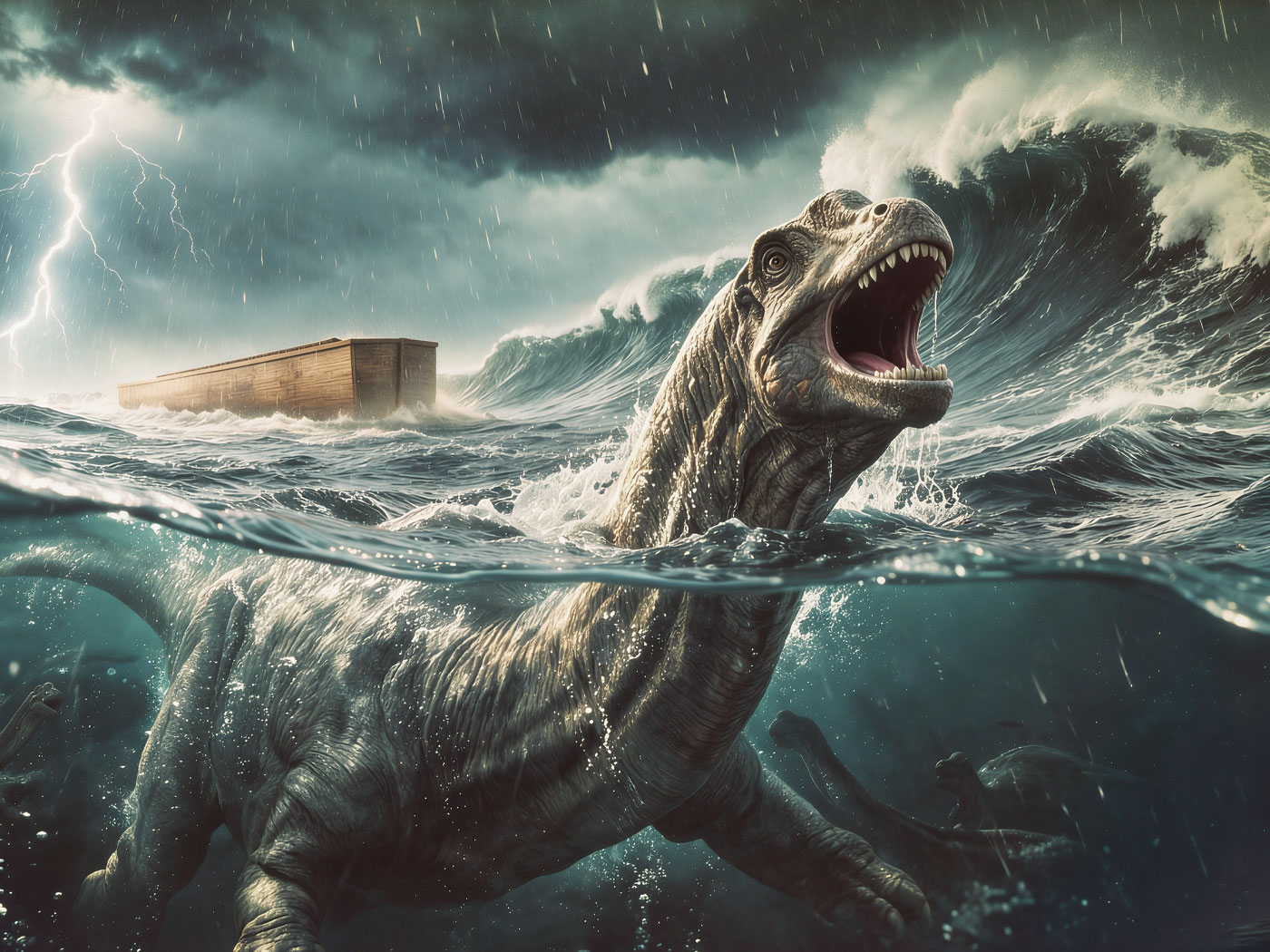
It looks like no evolution has happened at all—and that the Lord crafted these fishes to do what they did back then—and what they still do today. Once again, the discovery of deep-sea vertebrate fossils is graphic evidence of fish being caught up and buried by the Genesis Flood about 4,500 years ago.
References
- Guliuzza, R. Engineered Adaptability: Continuous Environmental Tracking Wrap-Up. Acts & Facts. 48 (8).
- University of Lisbon. The earliest deep-sea vertebrates revealed by unusual trace fossils. Phys.org. Posted on phys.org September 12, 2023, accessed September 14, 2023.
- Baucon, A. et al. The earliest evidence of deep-sea vertebrates. Proceedings of the National Academy of Sciences. Posted on pnas.org September 5, 2023, accessed September 14, 2023.
- Clarey, T. 2020. Carved in Stone. Dallas, Texas. Institute for Creation Research.
* Dr. Sherwin is science news writer at the Institute for Creation Research. He earned an M.A. in zoology from the University of Northern Colorado and received an Honorary Doctorate of Science from Pensacola Christian College.