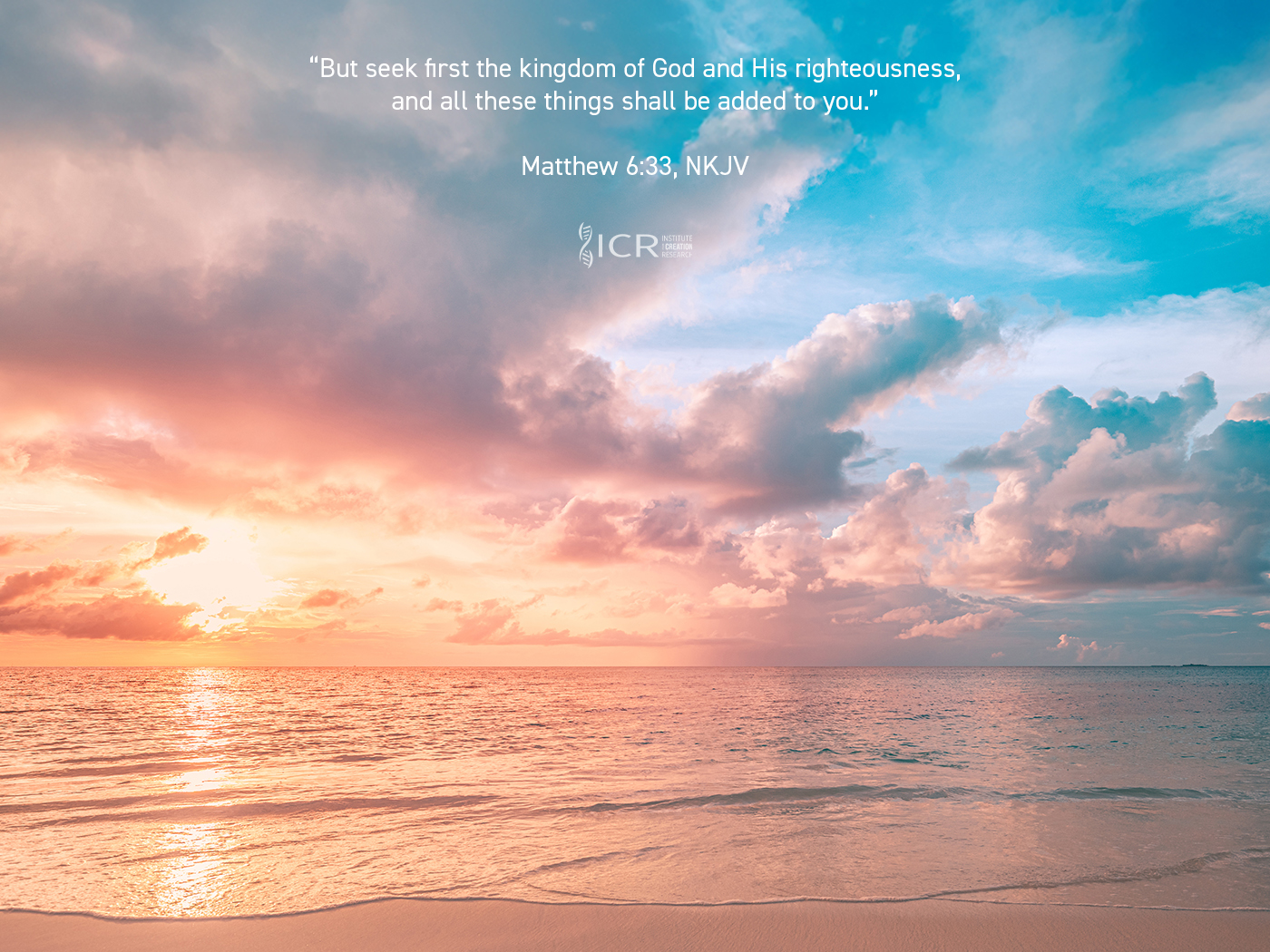
Have you ever wondered why a sunset on a beach is captivating, snowcapped mountains are breathtaking, and a valley filled with wildflowers is enchanting?
Scripture, as a whole, teaches that God brought the universe and everything in it into existence to magnify His own glory. The creation of all these things serves as a testament to His glory, love, grace, mercy, wisdom, power, and goodness (see Psalm 8:1; 19:1; 50:6; 89:5, among other verses). Jonathan Edwards expressed it this way:
It appears reasonable to suppose, that it was God’s last end, that there might be a glorious and abundant emanation of his infinite fullness of good ad extra, or without himself; and that the disposition to communicate himself, or diffuse his own fullness, was what moved him to create the world.1
On this topic, Proverbs 16:4 succinctly states, “The LORD has made all for Himself.” In other words, God’s glory is the reason He created (see Romans 11:36; Colossians 1:16; and Hebrews 2:10). If God created for His glory, naturally He would find His creation beautiful since it is a reflection of His glory. Historic Christianity asserts that the origin of all beauty can be attributed to God, either through direct acts of creation or through the creative endeavors of human beings, who are considered to be bearers of the divine image.
Why, then, does mankind collectively find these aspects of nature beautiful? Because, per Genesis 1:27, man was created in God’s image (imago Dei).2 What He finds beautiful, we would also find beautiful since the concept of objective beauty and the human capacity to perceive beauty can only be comprehended in relation to the objective criteria of beauty and value that are inherent in God. As the Christian historian William C. Davis has noted:
Values like these [artistic beauty] are what we would expect if humans (and the human environment) were created by a personal, loving, and beauty-valuing God. God’s existence is a much better explanation for the existence of nonutilitarian value than any explanation without God.3
When we observe nature, we can recall that God created it. The concept of God as the Creator encompasses not only the role of a Designer and Engineer responsible for the intelligibility of the universe but also that of a skilled Artist. Nature can be amazing, almost to the point of incomprehensibility. The splendor of a sunset, the radiance of the stars, and the variety of animals are all evidence of a Creator and Designer.
Observing God’s creation can inspire greater reverence for God and His handiwork. The splendor of nature serves as a reminder of God, and in nature, encircled by His creation, we might feel more connected to God. When we venerate any aspect of God’s creation, whether it be nature or another person, we recognize the significance of what God created and admire the Creator. In the end, “all of creation will see God enthroned in majesty. Holy, Holy, Holy is the Lord!”4
As Romans 11:36 declares, “For of Him and through Him and to Him are all things, to whom be glory forever.” Here, Paul declares unequivocally that God is the source, sustainer, and owner of all creation, and glory will be His for all eternity. It is a blessing to be a part of it and beneficiaries of its immense beauty.
References
- Edwards, J. 1765. A Dissertation Concerning the End for Which God Created the World. The Works of Jonathan Edwards, Vol 1, Chapter I, Section II. Boston, MA: S. Kneeland, 23-24.
-
See Corrado, J. Imago Dei: Man’s Designed Role as Image-Bearer. Creation Science Update. Posted on ICR.org April 25, 2022. https://www.icr.org/article/mans-designe
d-role - Davis, W. C. 1999. Theistic Arguments. In Reason for the Hope Within. M. J. Murray, ed. Grand Rapids, MI: W. B. Eerdmans, 39.
- Corrado, E. Throne Room. Posted on open.spotify.com 2023, accessed August 15, 2023.