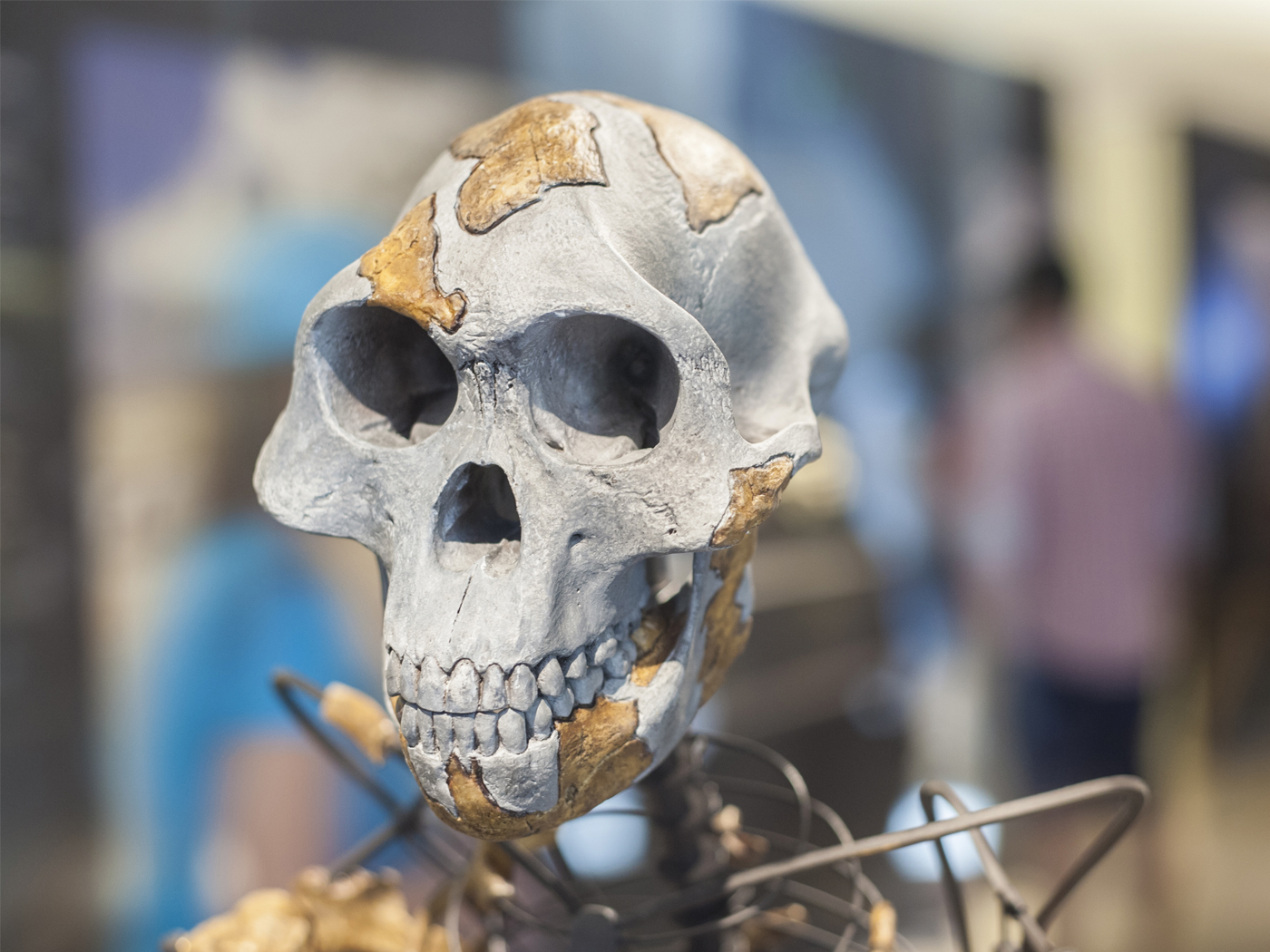
Do chimpanzees have their own culture? If so, some researchers would connect their behaviors to aspects of human culture, which they believe supports an evolutionary relationship. But current developments shed doubt on that idea.
Perhaps the strongest--and certainly the most prolific--supporter of the chimp culture concept is Harvard evolutionary psychologist Marc Hauser. On average, he has authored or co-authored one technical paper a month for four years. Now, some of his research has been deemed in need of a recall. Harvard completed an investigation in January regarding scientific misconduct by Dr. Hauser, although its full findings have yet to be released.
The inquiry began when three graduate students expressed concern over the way Hauser interpreted certain results they had gathered. Later, some of his experimental results proved irreproducible. As is typical in scientific research, most were never double-checked. So far, eight of Hauser's prior studies have been found to contain "instances of scientific misconduct," according to sources close to the investigation.1 Researchers in the field are unhappy both with Harvard officials' silence on this matter and with the idea that Hauser's published results have been untrustworthy.
The upshot is that nobody is currently sure which of Hauser's results to trust. Thus, doubts grow about his theories that religion, morality, and math (logic) somehow emerged from supposed chimpanzee cultural behaviors.2
A new study appearing in the Proceedings of the Royal Society B examined chimpanzee genes, and the results add to those doubts. Lead author Kevin Langergraber, a molecular ecologist at the Max Planck Institute for Evolutionary Anthropology in Leipzig, Germany, showed evidence that genes, rather than "chimp culture," may still offer better explanations for chimp behaviors.
His results illustrate that science has not determined exactly what causes chimpanzees to act the ways they do. Frans de Waal of Emory University told ScienceNOW that Langergraber's research added "a complication to the picture" that chimp behavior results from some kind of group culture.3
Clearly, evolutionists are anxious to establish a sense of relatedness between chimps and humans. Almost all scientific and popular publications on the issue emphasize only the similarities between the two groups and not the overwhelming differences, testifying to a lopsided perspective. But the only detailed, base-for-base DNA comparison so far compiled of corresponding chimpanzee and human chromosomes revealed that they were totally different.4 Whole classes of DNA were unique to mankind, and unique chromosomal arrangements characterized each separate kind.
From detailed DNA comparisons that demonstrate widespread discrepancies, to a failure to rule out genes as causes for "culturally derived" chimp behaviors, to possibly fraudulent research used to prop up supposed human-chimp similarities, the overall "evidence" that supports the perceived relatedness of humans to chimps is eroding. These observations would be expected, however, if chimps and man don't share common ancestry, but instead represent distinct creations.
References
- Ledford, H. 2010. Harvard probe kept under wraps. Nature. 466: 908-909.
- Thomas, B. Did Religion 'Emerge' through Evolution? ICR News. Posted on icr.org March 5, 2010, accessed August 19, 2010.
- Cohen, J. Are Some Chimp 'Cultural' Behaviors Actually in the Genes? Science NOW. Posted on news.sciencemag.org August 17, 2010, accessed August 19, 2010, reporting on research published in Langergraber, K. E. et al. Genetic and 'cultural' similarity in wild chimpanzees. Proceedings of the Royal Society B. Published online before print August 18, 2010.
- Tomkins, J. and Thomas, B. 2010. New Chromosome Research Undermines Human-Chimp Similarity Claims. Acts & Facts. 39 (4): 4-5.
* Mr. Thomas is Science Writer at the Institute for Creation Research.
Article posted on August 25, 2010.