In 2020, Hungarian zoologists described the hybridization of a Russian sturgeon and American paddlefish.1 Some sources have reported the scientists created a “franken-fish”—as indeed it looks quite bizarre.2 Researchers, however, are calling it the sturddlefish—with sharp fins and an elongated nose.3
A hybrid in zoology is an offspring produced from a cross between parents of different genotypes (the precise genetic constitution of a cell or individual).4 For example, a zonkey results from a donkey crossed with a zebra; a liger results from a male lion and female tiger producing. This is not evolution, of course—they belong to the horse and cat kind respectively.
How did this recent hybridization happen? The scientists were attempting a type of asexual reproduction between the two species of fish. Gynogenesis is a unique condition whereby a female must copulate before she can produce eggs that will need no fertilization and can develop normally into an individual. In this case, the fish develops from maternal DNA (the egg or oocyte). But the scientists were shocked to discover that fusion did happen via union of the sturgeon and paddlefish, producing about a hundred “sturddlefish” hybrids.3
The Russian sturgeon (Acipenser gueldenstaedtii) is a fascinating “prehistoric” fish that can live up to a century and achieve a length of seven feet. Evolutionists call sturgeons “living fossils” that existed alongside dinosaurs supposedly millions of years ago.3 They live in the waterways of Russia, Bulgaria and Romania. Sturgeons are said to appear in the early Silurian period, over 400 million years ago as 100 percent sturgeons.5
American paddlefish (Polyodon spathula) have always been paddlefish, dating back “millions of years”—as secular scientists would say—yet, like sturgeons, showing no evidence of evolution. Commercial and academic laboratories have found carbon-14 in cartilaginous paddlefish fossil samples.6 Any carbon-14 discovered in samples directly challenges evolution’s millions of years.
Not surprisingly, the American paddlefish is closely related to the Russian sturgeon. They both belong to the order Acipenseriformes but to different families—Acipenseridae and Polyodontidae. Evolutionists are surprised these two fish are so similar as they view them as “separated by 184 million years of evolution” and as coming from an unknown “common ancestor.”3 Creationists see them as having been created only thousands of years ago, belonging to the same created kind.
About 100 of the strange sturddlefish hybrids were accidently produced—not created. Only God can create. The aforementioned Hungarian zoologists worked with what was already present: a Russian sturgeon and American paddlefish, both 100 percent fish (and closely-related). Under the right conditions, facilitated by at least 13 advanced-degree scientists, two fish of the same order can hybridize into bizarre forms such as the fearsome franken-fish (sturddlefish).1 It’s not evolution, just hybridization of God’s created creatures.
Stage image: The sturddlefish has a mix of genes from the Russian sturgeon and the American paddlefish.
Stage image credit: Genes 2020, 11(7), 753; https://doi.org/10.3390/genes11070753, CC BY 4.0. Copyright © 2020. Adapted for use in accordance with federal copyright (fair use doctrine) law. Usage by ICR does not imply endorsement of copyright holders.
References
1. JenÅ‘ Káldy et al., “Hybridization of Russian Sturgeon (Acipenser gueldenstaedtii, Brandt and Ratzeberg, 1833) and American Paddlefish (Polyodon spathula, Walbaum 1792) and Evaluation of Their Progeny,” Genes 11, no. 7 (July 2020): 753.
2. Dino-Franken-Fish Created Accidentally By Scientists in Hungary. The Weather Channel. Posted on msn.com July 23, 2020.
3. Pappas, S. Scientists accidentally create 'impossible' hybrid fish. LiveScience. Posted on livescience.com July 20, 2020.
4. Johnson, J. 2018. Norway's Redchat Defies Evolutionary Speciation. Acts & Facts. 48 (1).
5. Hickman, C. et al. Integrated Principles of Zoology. (New York: McGraw-Hill Education, 2017), 518.
6. Thomas, B. Carbon-14 Found in Dinosaur Fossils. Creation Science Update. Posted on ICR.org July 6, 2015.
*Mr. Frank Sherwin is Research Associate at the Institute for Creation Research and earned his master’s degree in invertebrate zoology from the University of Northern Colorado.
Was a Franken-Fish "Created"?
More Fossil Record
Frog Fossils Found in Antarctica!
Can you imagine frogs in snow-covered, frigid Antarctica? A recent fossil discovery has significant implications for Earth’s climate history as well...
Soft Dinosaur Eggs Deflate Bird-Dinosaur Evolution
A pair of new studies found that some dinosaurs, and possibly some marine reptiles, laid squishy eggs. One study discovered that many dinosaurs, like turtles...
Massive Releases of CO2 from Volcanism Rival Humans
Recently, a new study published in Nature Communications has suggested that pulses of massive amounts of lava can release as much CO2 as humanity will...
More DNA Was Created as a Reservoir for the Information of Life
Human High-Altitude Habitation Reveals Adaptive Design
Humans have the remarkable ability to inhabit high altitudes where living conditions are especially harsh and challenging. A new study in Genome Biology...
More Unique Human Genes Defy Evolution Narrative
Researchers recently scanned a region of the smallest human chromosome and found three previously undiscovered families of genes that are uniquely human...
RNA Editing in Corals Stupefies Evolution
Coral reefs are a key component of ocean ecology, providing homes and habitats for a wide diversity of life. While a head of coral may look like a single...
More Problems with Evolution
A Strange and Mysterious Hypercarnivore Discovered
In 1988 a fossil jaw was discovered by paleontologists in San Diego County, California. Decades later the scientists determined it belonged to a relatively...
Neanderthal DNA Muddles Evolutionary Story
Neanderthals are classified by evolutionists as archaic humans given that both their DNA and bones are essentially human. Yet, new stories constantly hit...
New Evidence Hurts Feathered Dinosaur Theory
Is a dinosaur still a dinosaur if it has flight feathers? A new study points to some fascinating evidence that contradicts the idea of feathered dinosaurs...
More Zoology
Maine Lobsters Make International News
The life of a Maine lobster is mostly a matter of crawling around on muddy continental shelf seafloors, not far from a coastline. Benthic scavenging is...
Coast Guards and Corvids: Flying to the Rescue!
Days ago, a fishing boat near the Shetland Islands needed emergency help, and received it in a timely manner. So, a fearful predicament had a happy ending.1
In...
Steller’s Jays, Dumpster-Diving, and Comparing Wh.,.
Springtime, in many places—especially Texas—is a very active time for birds.1 Nests are built. Mating and egg incubation leads to...
More Contrasting Worldviews
Great American Outdoors Act, Signed into Law by President
In a bipartisan legislative achievement to promote better stewardship of American public lands, U.S. Senators and Representatives finalized their bill...

Chaplains and COVID-19
With social distancing measures in place, it may be tempting to think that the work of Christian missions has ceased. After all, most people are limited...

The Low-Tech Life of Green Bank, West Virginia
Many aspects of American life have been stopped, suspended, or at least slowed down in recent times.1-3
Yet for Green Bank, West Virginia,...
More Living Fossils Display No Signs of Evolution's Long Ages
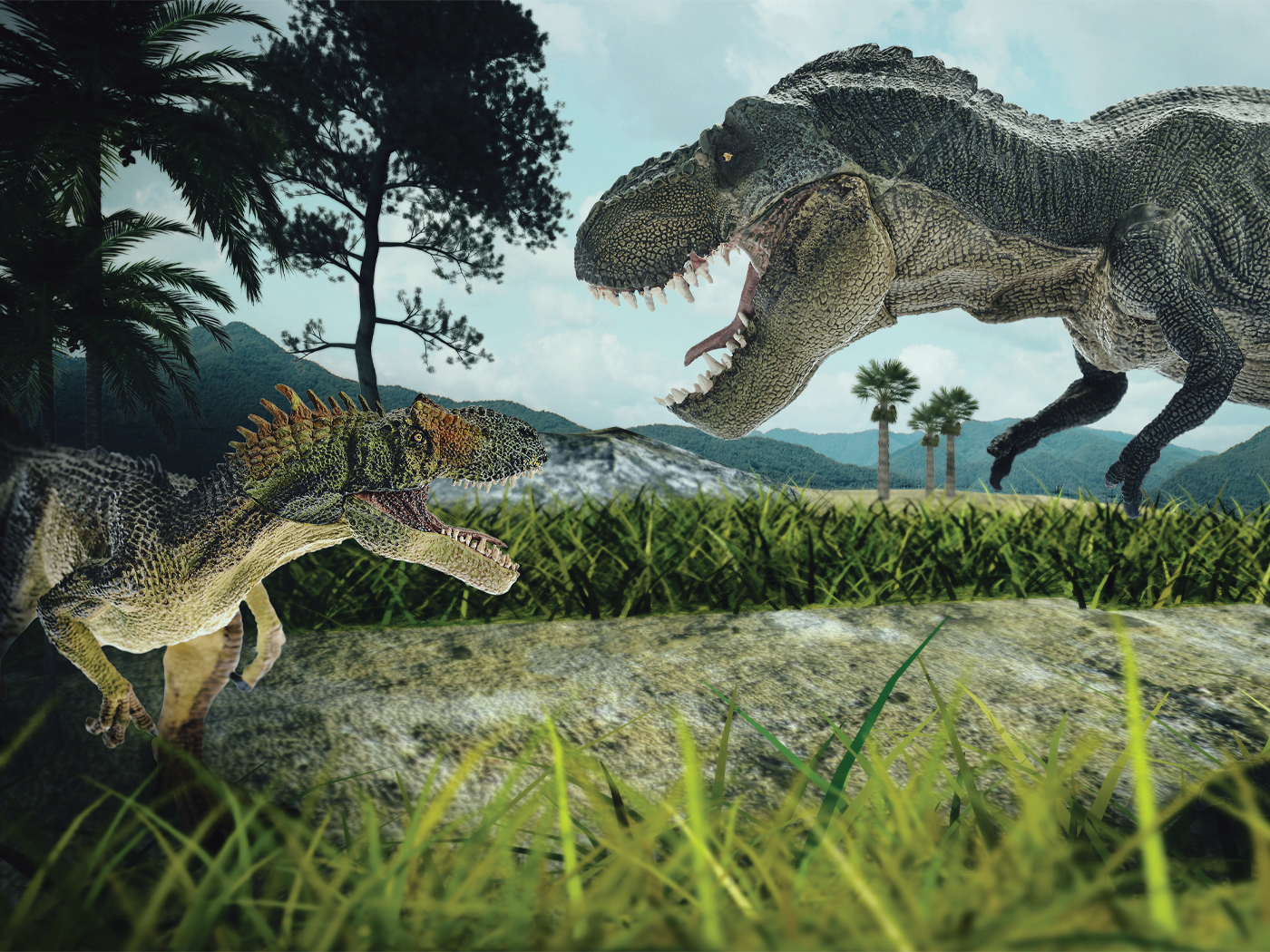
The Age of Reptiles Myth
We hear about the Age of Reptiles, also called the Age of Dinosaurs, almost as early as we can understand the idea. Even kindergarteners might be taught...
Insect Fossil Flies in the Face of Gradual Evolution
Never before had the fossil of a flying insect been discovered in Carboniferous rocks, which are said to be over 300 million years old. But now, amazing...
Spectacular Spider Is a Long-Living Fossil
A fossilized spider was found in China with such perfectly preserved features that researchers were able to identify it down to its species name. Only...
More Living Creatures Were Equipped to Adapt

Novel Orphan Genes Aid in Regulated Adaptation
Orphan genes (OGs) are genes that are unique to a specific kind of creature. This is especially significant when creatures that are considered evolutionary...

Quietly ''Devolving'' Tomatoes?
Apparently, evolution (and natural selection) can do almost anything:
If new forms appear, the credit goes to creative natural selection; if old...
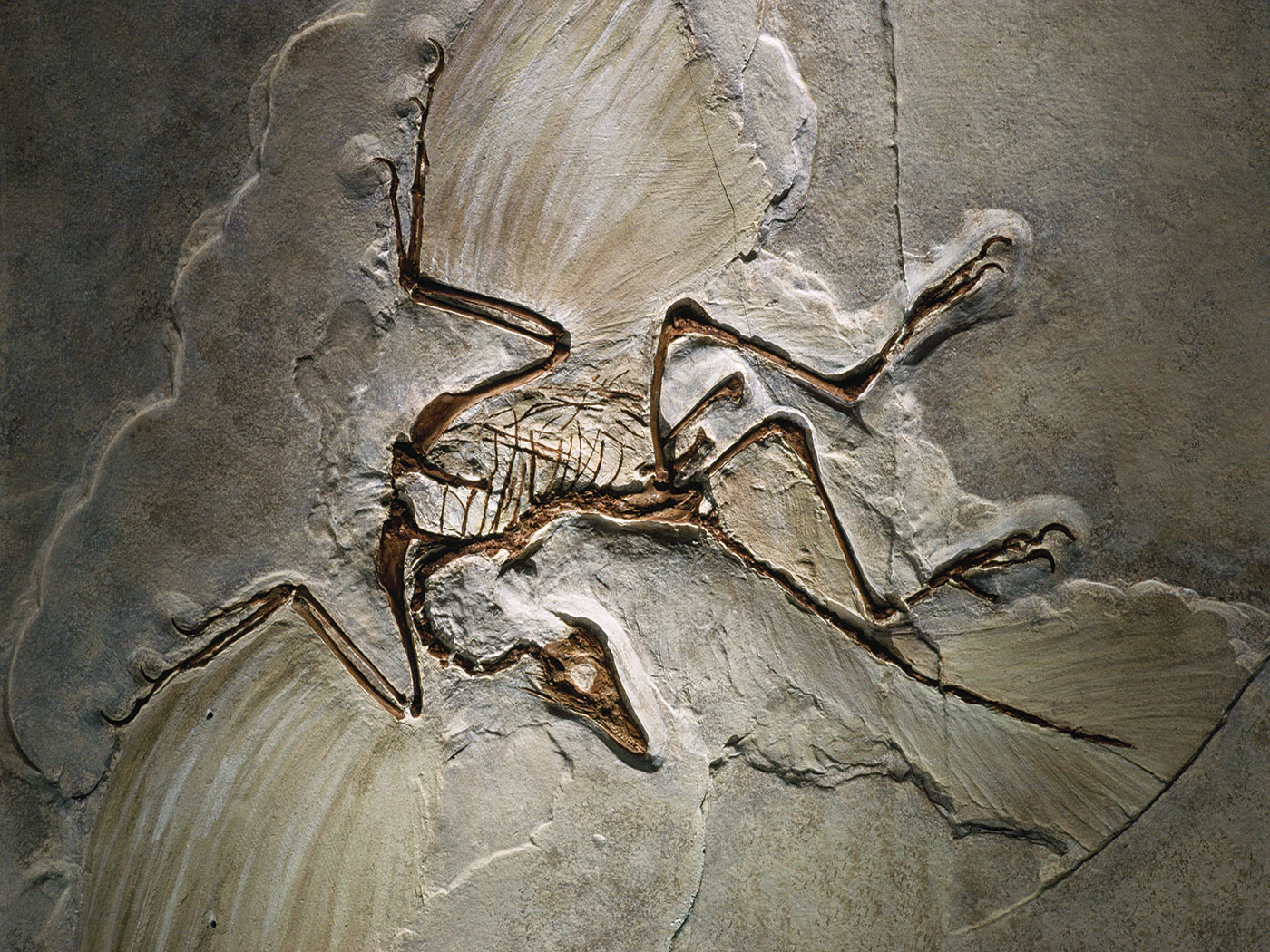
Did Fossil Birds Live Longer than Today's Birds?
The Bible matter-of-factly states that humans living before and shortly after the Genesis Flood had centuries-long lifespans (Genesis 5 and 11). Yet...
More Creation Science Update
Cliff Collapse Collapses 'Deep Time'
Recently, video footage captured the spectacular collapse of an estimated 11,000 tons (22 million pounds) of rock, as a section of England’s Broadchurch...
Eight-Armed Anomaly
Octopi are incredible and intelligent creatures—they are mesmerizing to observe and study. Some of octopi’s interesting features include...
CET Model in Plants Is Clearly Seen
Plant scientists have known for decades that plants aren’t just static entities. The half-million or more species of plants in the world display...
The Latest
Can Metals Explain the Origin of Life?
A spark plug can make a spark, but no one would say a spark plug can build a car. In much the same way, a chemical reaction can do one useful job without...
Jumping Genes: Engineered to Move
Scientists recently found a “jumping gene” in an odd place. An RNA molecule from a tiny predatory bacterium had entered the cells of a very...
Institute for Creation Research Partners with Louisiana Baptist...
The Institute for Creation Research (ICR) announced today a strategic handover of its School of Biblical Apologetics (SOBA) educational content to Louisiana...
A Tangled Human Tree—or One Human Family?
What if the “ghosts” in our DNA are not lost steps in human evolution? A new Science study found DNA patterns that may point to two unknown...
Mapping the Sense of Smell
Your sense of smell involves much more than enjoying a hike through an aromatic pine forest or appreciating delicious foods.1,2
Our ability...
September 11, 2001: We Will Never Forget
“Fret not thyself because of evil men, neither be thou envious at the wicked: for there shall be no reward to the evil man; the candle of the...
What Can Fossil Teeth Really Tell Us?
A few tiny fossil teeth have been asked to carry a very large story. Researchers used them to name a new order of marsupials, Keeunamorphia, and to...
Man and His Labor
“Man goeth forth unto his work and to his labour until the evening.” (Psalm 104:23)
The 104th Psalm is a beautiful psalm of creation and...
Changing Climates, Stable Primates
What do you picture when you think of the first primates? Conventional scientists have long proposed warm forests, thick vines, and tropical heat as...

September Wallpaper
"[Cast] all your care upon Him, for He cares for you." (1 Peter 5:7, NKJV)
ICR's September 2026 wallpaper is now...
Shop Related Products

The New Ocean Book
$16.99