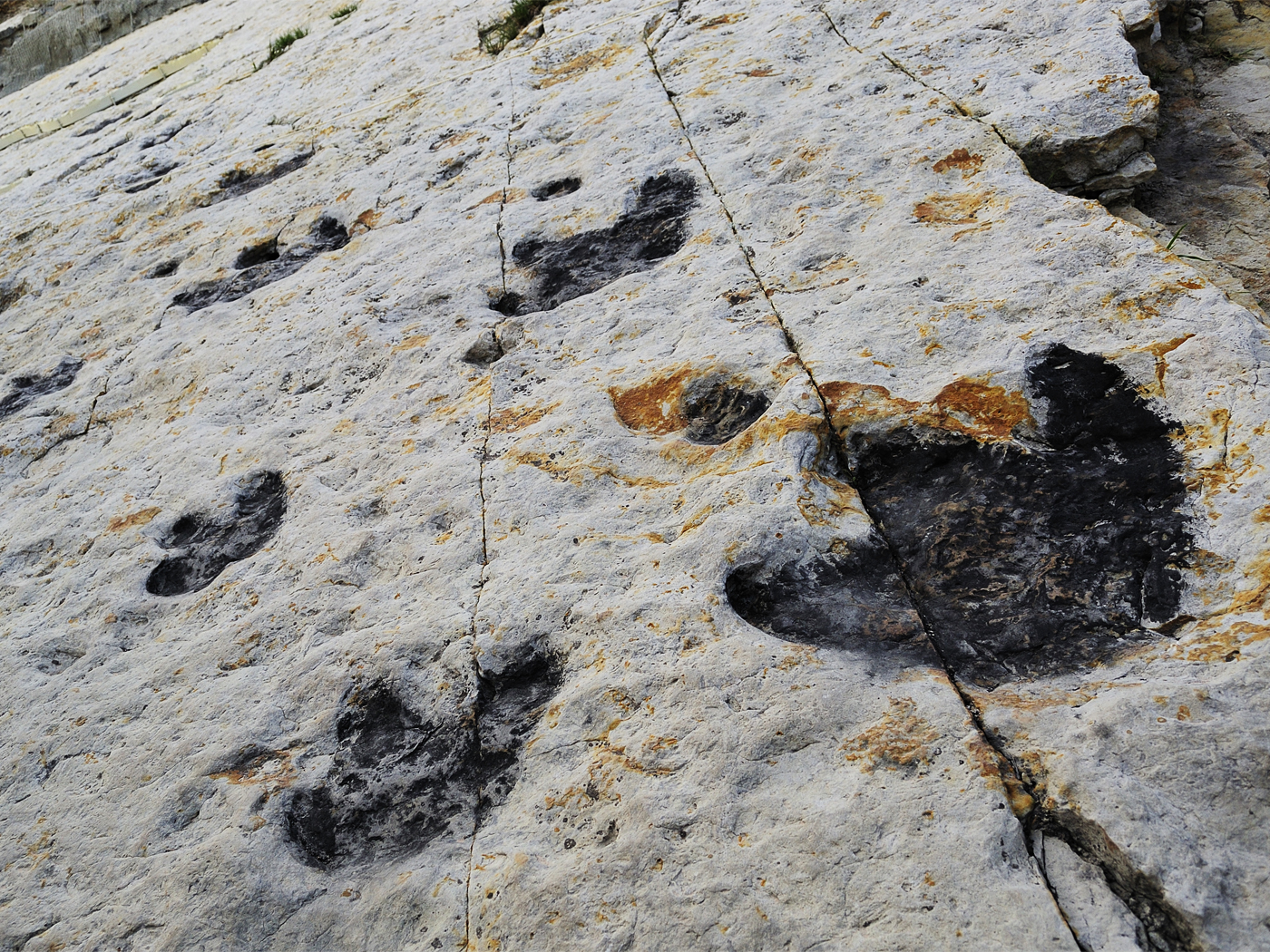
 We hear about the Age of Reptiles, also called the Age of Dinosaurs, almost as early as we can understand the idea. Even kindergarteners might be taught that dinosaurs lived in some lost era long before humans came on the scene. However, compelling reasons indicate that this supposed Age of Reptiles is imposed upon the fossils rather than derived from them.
Historically, the Scriptures show no hint of such an age. The time between creation and the Flood is 1,656 years according to biblical chronology, and roughly 4,500 years have passed since the Flood to today. This leaves no space for vast ages.
At first, early naturalists in Western culture had a high view of Scripture. They were happy to think of fossils as resulting from Noah’s Flood after sin and death marred God’s good creation (Genesis 3). But by the nineteenth century, some scientists were determined to thwart God and His Word by taking the opposite of an objective scientific approach and insisting on fossils having formed over ancient eons.1
For example, geologist Charles Lyell wrote in an 1830 letter, “I conceived the idea five or six years ago that if ever the mosaic geology could be set down without giving offence, it would be in an historic sketch.”2 So he concocted that historical sketch. It spoke of vast ages that “set down” prior ideas that fossils have resulted from the Flood’s stages. Darwin followed Lyell, and geology followed both, heedless of contrary evidence.
Aside from impacting science and historical interpretations, this also had theological implications. Can we say God happily oversaw this Age of Reptiles that involved mass deaths leaving countless fossils clustered around the globe? If so, then three unbiblical conclusions follow: God made mistakes in His history (contradicting His perfection), permitted eons of pointless animal deaths (contradicting His goodness), and offered a false threat to Adam by saying that if he sinned then death would begin (contradicting His gospel).
Good news—evidence from fossils themselves erases the Age of Reptiles and thus any need to pay the heavy price of these conclusions. One clear evidence supporting the Flood is the presence of fossils themselves. Today, dead creatures rot or are scavenged. Where do organisms fossilize now? Almost nowhere.
Vertebrates in particular, like alligators, birds, and sharks, don’t fossilize after dying. But these creatures—plus turtles, water birds, crayfish, gar fish, and wetlands plants—did fossilize alongside now-extinct creatures like pterosaurs, dinosaurs, and mosasaurs in the same layers around the world.3 Noah’s Flood buried them too deep and fast for decay to take effect or for scavengers to reach them. As receding floodwaters poured into today’s oceans, sediments cemented into rocks to quickly preserve remains as fossils.

Another clear evidence against an Age of Reptiles comes from original biochemicals and even intact tissue fragments still found in many fossils. Our curated list now includes 130 technical descriptions of such finds, showing they occur worldwide and in any strata that have fossils.4 If the Flood formed these layers only thousands of years ago, then it’s no wonder they still contain original biomaterials.
The fact fossils exist worldwide, plus the youthful organics still within them, relegate any Age of Reptiles to myth and confirm the Flood as history.
References
- Thomas, B. 2020. The Plan to Replace God. Acts & Facts. 49 (1): 14–15.
- Lyell, C. 1881. Life, Letters, and Journals of Sir Charles Lyell. Bart. K. M. Lyell, ed. London: ohn Murray, 271.
- Clarey, T. 2020. Carved in Stone: Geological Evidence of the Worldwide Flood. Dallas, TX: Institute for Creation Research, 301–304.
- Thomas, B. and J. Tay. List of Biomaterials in Fossils. Google Doc. Posted on tinyurl.com/4htm54w9, accessed May 29, 2025.
Stage image credit: para827 | iStock. Used in accordance with federal copyright (fair use doctrine) law. Usage by ICR does not imply endorsement of copyright holder.
Dr. Thomas is a research associate at the Institute for Creation Research and earned his Ph.D. in paleobiochemistry from the University of Liverpool.