Paleontologists in Australia have recently discovered a treasure trove of amber with trapped insects, spiders, and fungi.1 These new fossils are revealing some animal behavioral secrets and are creating some baffling mysteries.
Amber is ancient tree resin. And many times what is trapped in the amber can provide us with a glimpse of life in the past—like a time capsule. This new discovery, published in Scientific Reports, is the first time amber deposits from the southern continents have been found with animals and plant inclusions in Mesozoic and Early Cenozoic strata.1
These discoveries, ranging from the Triassic System to the Neogene System, were found in southeastern Australia, Tasmania, New Zealand, and even a few nearby offshore locations. Some of the amber samples were even extracted from oil well-drilling cores.
Many of the specimens showed near perfectly-preserved insects, including ants and flies. One of the Upper Eocene amber pieces showed two long-legged flies in the act of copulation.
"This is one of the greatest discoveries in palaeontology for Australia," says lead author Jeffrey Stilwell of Monash University, Australia. He added that this may be the first example of “frozen behaviour” in the fossil record of the continent.2
However, these exciting discoveries are also causing some paleo-environmental (interpretations of ancient climates) concerns. The lush foliage is pushing the limits of evolutionary science’s explanation.
Secular scientists have created various continental configurations throughout deep time in accordance with their evolutionary worldview. During part of the Cretaceous (claimed to be 92-96 million years ago), they place the southeastern part of Australia close to the South Pole at about 70-80 degrees south latitude.1 And yet within these same Cretaceous strata, the scientists found fossil ginkgos, ferns, conifers, and other flowering plants.1 They offered no explanation of how these plants managed to thrive in an environment that experienced low levels of sunlight and months of total darkness each year.1
Stilwell and his colleagues also examined Paleogene (Lower Eocene) strata in Tasmania. These rocks were assigned a paleo-latitude of 66-64 degrees south latitude, close to the Antarctic Circle.1 The amber and fossils in these rocks were interpreted to be from an ancient freshwater swamp, with mangroves and conifers.1 And again, no explanation was given to explain the occurrences of these temperate climate plant fossils this far south and with this little sunlight, other than pleading for “a global and protracted greenhouse climate.”1
In contrast, the paleo-latitude conundrum is not an issue in a global Flood interpretation. Flood geologists recognize that these plants grew only about 4,400 years ago on lands that were much farther north. In fact, the pre-Flood continental configuration we have developed at ICR places southeastern Australia and Tasmania about 35-40 degrees south latitude at the time these plants were fossilized, providing a temperate climate similar to the continental United States.3 No special global greenhouse pleading is necessary to explain these fossils.1
In another recent and related article, scientists reported a baffling discovery of another lush, temperate rainforest that supposedly grew even closer to the South Pole.4 These discoveries of lush plant life and active insect behavior are not mysterious if the book of Genesis is considered to be an accurate, historic document. Instead, the plants that produced these ambers in Triassic, Cretaceous, and Cenozoic rocks grew in a temperate latitude, much farther from the South Pole, as part of the pre-Flood Pangaea.3
None of these amber-producing plants ever grew close to the South Pole as uniformitarian scientists insist. They simply moved to their present position during the rapid plate motion of the Flood year. Both the amber and the flora and fauna within them are best explained by the Flood account.
References
1. Stilwell, J. D., Langendam, A., Mays, C. et al. 2020. Amber from the Triassic to Paleogene of Australia and New Zealand as exceptional preservation of poorly known terrestrial ecosystems. Scientific Reports. 10(5703).
2. Cassella, C. 2020. Scientists discover two mating flies in amber 40 million years ago. Science Alert. Posted on sciencealert.com April 4, 2020, accessed April 8, 2020.
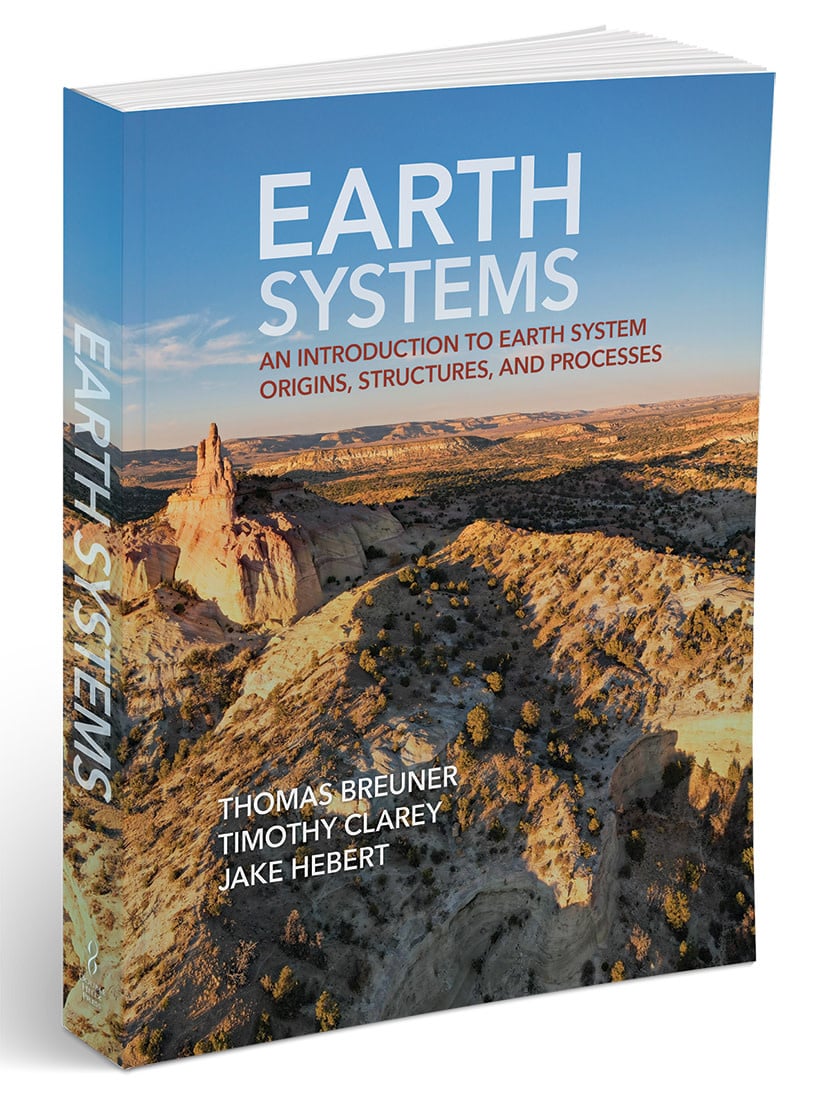
3. Clarey, T. 2020. Carved in Stone. Dallas, TX: Institute for Creation Research, 152-178.
4. Klages, J. et al. 2020. Temperate rainforests near the South Pole during peak Cretaceous warmth. Nature. 580: 81-86.
*Dr. Clarey is Research Associate at the Institute for Creation Research and earned his doctorate in geology from Western Michigan University.
New Amber Discoveries Down Under
More Fossils Reflect Life's Original Diversity

New Australian Dinosaur Surprises Evolutionists
A new study published in the journal Gondwana Research has identified a rather out-of-place bone from a theropod dinosaur called an elaphrosaur that apparently...
Massive Cache of Dangerous Carnivores Found
Recently, a new study published in the journal ZooKeys has claimed to have found the most dangerous location to live in Earth’s history.1...
New Whale Fossil Harpoons Evolution
by Frank Sherwin and Jeffrey Tomkins
According to the evolutionary mantra, whales evolved from a dog-like land creature.1 And as the...
More Fossil Record
New Evidence Hurts Feathered Dinosaur Theory
Is a dinosaur still a dinosaur if it has flight feathers? A new study points to some fascinating evidence that contradicts the idea of feathered dinosaurs...
First Land Bug Buried in the Flood
The Scottish island of Kerrera has produced the earliest known bug in the fossil record, a millipede.1 It was found in Silurian System rocks...
No Evidence T. rex Hatchlings Had Feathers
The recent discovery of a tiny tyrannosaur jaw bone fragment and a claw has some scientists again pushing dinosaurs as birds.1 But is there...
More Creation Science Update
Spider Silk Properties Ideal for Nerve Repairs
Big doesn’t always mean strong. Most of the time, strength comes from what something is made of. The proteins forming spider silk make that silk...
Cliff Collapse Collapses 'Deep Time'
Recently, video footage captured the spectacular collapse of an estimated 11,000 tons (22 million pounds) of rock, as a section of England’s Broadchurch...
Blinking Fish Transitioned to Land?
The mudskipper (Boleophthalmus caeruleomaculatus) of the order Perciformes, is a fascinating fish whose evolutionary origins are quite unknown. They...
The Latest
Watching PBS: Don’t Think Too Hard About the Brain’s Origin!
This past summer, the British Broadcasting Corporation (BBC) addressed the subject of origins in the five-part television series Evolution.1...
The Engineering Behind Every Heartbeat
The human heart does not beat like a perfect clock. The time between beats changes as the body breathes, moves, rests, and reacts to the world around...
Blood Vessels: Built to Sense and Respond to Force
Blood vessels do more than carry blood. As tissue grows or heals, new vessels must form in the right place and direction, through a process called angiogenesis....
Hummingbird Hawkmoth Exhibits Astonishing Abilities
The incredible hummingbird hawkmoth (Macroglossum stellatarum), and other insects of the Lepidoptera order, continue to amaze entomologists.1,2...
More Than Just Parts: The Networking of Cells
An engineer can list every part in a system and still miss how it works. Think of a radio. Its parts matter, but so does the wiring that joins them....
Living Centenarian Sturgeon: Extreme Genesis Longevity Is Plausible
Native American oral tradition contains stories of sturgeon living for centuries. While this was largely seen as folklore among conventional scientists,...
Brainy Bees Solve Pollen Problem
The uncanny abilities of the honeybee cause entomologists to shake their heads in wonder.1,2
Scientists have long known that honeybees...

October Wallpaper
"Be anxious for nothing, but in everything by prayer and supplication, with thanksgiving, let your requests be made known to God; and the peace...
Possible Ark Site Has Mainstream Media Hopping
An organization named Noah’s Ark Scans is investigating a site called Durupinar, almost 20 miles from Mount Ararat in Turkey. Could it contain...
ANNOUNCEMENTS
Heroes of Creation Science: Henry M. Morris
“The creation/evolution issue is, in a very real sense, the most fundamental issue of all.” —Henry M. Morris
Many people believe the...
Shop Related Products