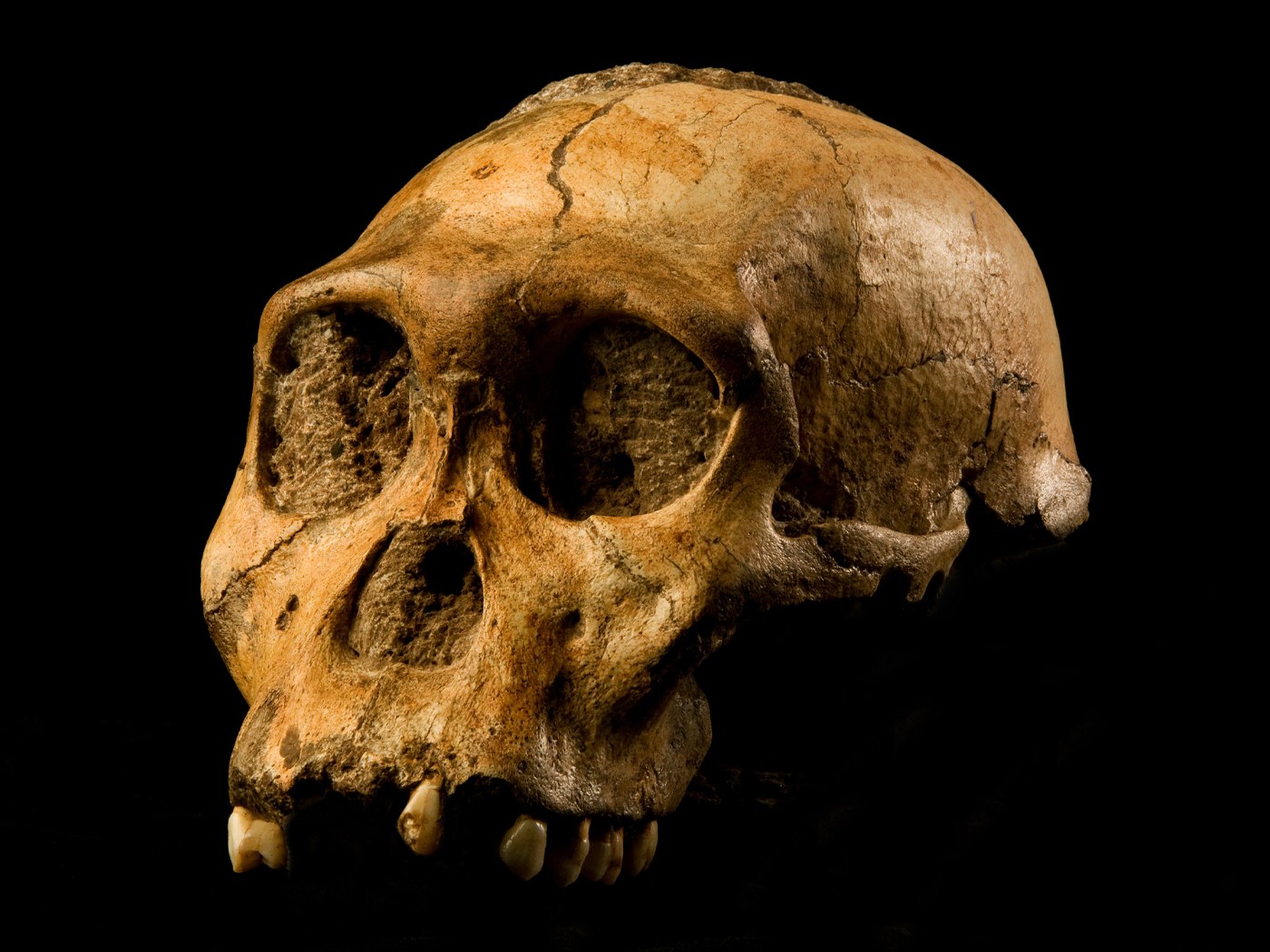
Papers published in the 12 July, 2001 issue of Nature including, "Return to the Planet of the Apes," has led several widely read magazines to write articles relevant to human origins. This has prompted many to question the significance of the find to creation. The authors claim that a group of hominids older than Lucy (the famous Australopithicus fossil) has been found giving us evidence that bipedalism evolved earlier and for different reasons than had been thought. The fossils found include 11 tooth and bone fragments (one of which was a toe bone) thought to represent five individuals. The associated fossil flora and fauna indicate that the animals lived in a forest habitat. The primary researcher claims that, based on tooth shape wear patterns, the animals were more primitive (i.e., more ape-like) than Australopithecus, but more like a hominid (ancestor of man) than like a chimp. These fossils have been tentatively classified Ardipithecus ramidus kadabba.
What are the facts? First, there was nothing really anatomically new reported this find. Paleontologists have found remains of several ape-like animals…including the Australopithecines, which evolutionists generally believe walked somewhat upright, at least part of the time. However, there are some evolutionists, such as Charles Oxnard and Lord Zuckerman, whose studies convinced them the Australopithecines did not walk upright in the human manner and thus were not human ancestors. The significance seems to be more in the supposed age of this find and the evidence of the climate in which the animal lived. We do not think that dating method is reliable (for reasons discussed in other articles), and the evidence of living in a wooded area, while interesting, is insignificant to creationists’ interpretation.
An article in Time magazine (July 23, 2001) written about this find mentions comments by Donald Johanson (discoverer of Lucy) in which he questions whether the toe bone, which is the most significant bone mentioned in this find, was even associated with the other fossils listed, because it was found 10 miles away and was assigned an age of several hundreds of thousands of years younger than other bones and teeth. But it is this bone which leads to the conclusion of upright posture.
Bernard Wood, professor of human origins at George Washington University, said that maybe we should not think of bipedalism as that which separates man from apes. His example is that "birds have wings, but not all creatures with wings are birds." ( Time by Lemonick and Dorfman, page 61.) Though not a creationist, his idea fits well in a creationist’s interpretation. Even if Ardipithecus walked upright (an idea for which the evidence is both scanty and questionable), it still does not prove an ape ancestry for humans.