The Ice Age has been a longstanding problem for uniformitarian thinking, with many unsolved mysteries. No mere tweaking of today's climate conditions would cause such a catastrophe. A creationist model based on the revealed events of Scripture, however, offers a possible answer.
The great Flood of Noah's day accomplished a complete reworking of earth's surface and an alteration of all its hydrologic and meteorlogic systems. The Ice Age likely occurred soon after the Flood, perhaps in the days of Job, for references to ice and snow abound in his book (see, for example, Job 38:29). Job didn't live in a glaciated area, but he evidently knew about icy conditions farther north.
The key to the Ice Age was temperature--not cold, but warm. Ice comes from snow, and snow from moisture in the air, which in turn comes through evaporation, which comes from warm water. The Flood oceans were quite warm due to the introduction of huge volumes of superheated water from the "fountains of the great deep" (Genesis 7:11) and frictional heating by shifting continents, etc.
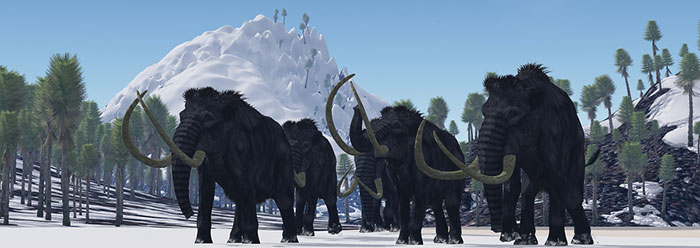
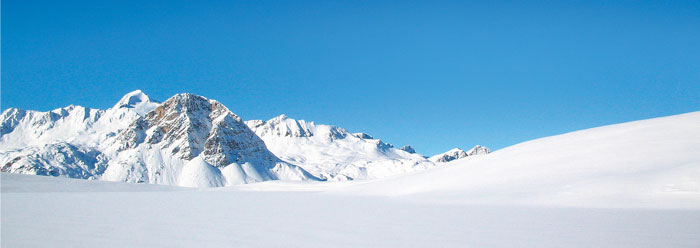
Warmer water evaporates much more rapidly than cold. The immediate post-Flood time was marked by frequent major storms fed by excessive evaporation. Polar ice caps built up as water vapor condensed and fell as snow. Pressure packed it into ice, which spread as glaciers. The earth was not completely frozen, but the polar ice caps were much larger then. Large-scale volcanism in the Flood's latter stages clouded the atmosphere with volcanic dust, reflecting solar radiation back into space. This prohibited snow and ice from melting.
The Ice Age commenced and continued until the oceans gave up their excess heat and the atmosphere cleared. Water trapped as ice on the continents lowered the sea level by an estimated four to six hundred feet, no doubt exposing the continental shelves. During the Ice Age, all the continents were probably connected by land bridges.
What happened when the Ice Age ended? The volume of ice returned to liquid form and reentered the ocean, raising sea level and drowning all areas near the ocean. Today, we find numerous remains of civilizations that evidently had been built in coastal areas soon after the Flood.
In recent years such ruins were found in the Black Sea, leading many to speculate that Noah's Flood was responsible. But this could not be. Ignored were waterborne sediments thousands of feet thick underneath the Black Sea that are the legacy of Noah's Flood. The ruins were built after Noah, but were inundated by major flooding as the rising Ice Age meltwater overtopped the natural dam near today’s Istanbul. A similar scenario explains the Mediterranean Sea. The rising waters breeched the "dam" at Gibraltar and flooded a low-lying floodplain with inland lakes. Great Britain was part of Europe. The Hudson Bay was dry. Large islands in the Pacific were connected with the mainland.
Genesis 10:25 states that in Peleg's day "was the earth divided." This certainly could not imply that in Peleg's day the Atlantic Ocean was opened up, for this would have caused another flood to rival Noah's. Perhaps what Scripture is saying is that in Peleg's day the Ice Age ended, increasing the volume of water in the oceans, raising sea level, drowning land bridges, and "dividing" the continents.
As the great Flood of Noah's day ended, God instructed the animals and man to multiply and occupy the entire planet. Man's refusal was overcome at Babel as God enforced migration, graciously working through nature, for at this time the Ice Age connected all the land, facilitating travel. As the globe filled with occupants, the ice melted, dividing the continents and trapping the migrants in place. God made it possible for both animals and man to obey His command.
* Dr. Morris is President of the Institute for Creation Research.
Cite this article: Morris, J. 2009. The Ice Age: Causes and Consequences. Acts & Facts. 38 (8): 15.