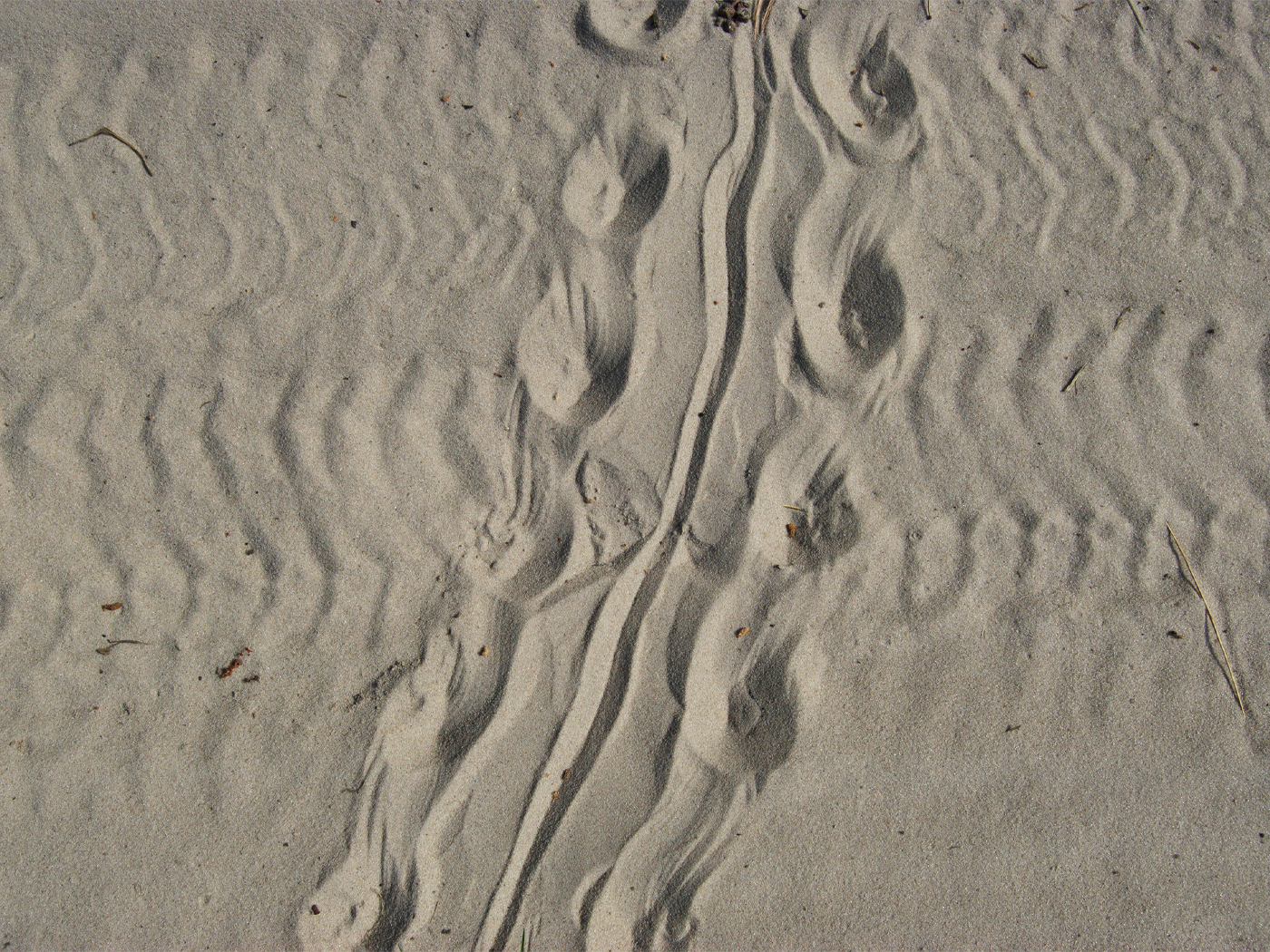
Sand and other sediments can be transported by rivers and floods, but what kind of forces—and how much water—would it take to move thousands of cubic miles of sand from one side of a continent to the other?
Recently, a team of researchers explored transcontinental sedimentation in Siberia. As described in their study in the journal Geology, the scientists traced uranium signatures in zircon crystals from a remote area called Verkhoyansk back to their original southern sources east of Lake Baikal. These crystals and their surrounding sediments had traveled over 1,200 miles to the northeast to form an “immense wedge” of strata.1
Creation researchers are interested in transcontinental sedimentation because this kind of deposition would be expected from a worldwide flood. Geologist Andrew Snelling recently reported that the Coconino Sandstone, visible in the walls of the Grand Canyon, is part of a vast slab containing a colossal 10,000 cubic miles of cemented sand.2 Where did all this sand come from? The first clue is that “cross beds within the Coconino Sandstone (and the Glorieta Sandstone of New Mexico and Texas) dip toward the south, indicating that the sand came from the north.”3 The nearest northern source of similarly colored sand was likely from far away Utah, and must have been washed down by a widespread sheet of water.
In another instance, the Navajo Sandstone, exposed in portions of Utah, appears bright white because of the purity of its sand grains. Again, where could these sediments have come from? Researchers found that radioactive uranium within the sand has a signature that matches rocks from the Appalachian mountains, about 1,250 miles away.2 Another study verified the direction of water flow that formed many of these sedimentary layers. Scientists “accumulated data from over half a million paleocurrent vectors” across North America that “verified the “stable southwesterly pattern” that had been documented by other researchers.4 Although park rangers and posted signs tell area visitors that all this sand was blown in by wind, the evidence strongly indicates water deposition.5
So how, in all these examples, did these massive amounts of sand move from one side of a continent to another? The Siberian research team proposed that the “zircons originated from the southern margin of Siberia …and were transported to the Verkhoyansk margin by a major transcontinental river system that existed for ~200 million years, the paleo–Lena River.”1 However, there is no evidence of channels or deltas from such a river. Today’s rivers do not build anything like the massively thick sedimentary layers observed in Siberia and North America. Indeed, “how could water be flowing across the North American continent consistently for hundreds of millions of years? Absolutely impossible!”2
Only an event as cataclysmic as the worldwide Flood that is recorded in Genesis could have done this kind of continent-wide rearranging of sediments.6
References
- Prokoviev, A.V. 2008. The paleo–Lena River—200 m.y. of transcontinental zircon transport in Siberia. Geology. 36 (9): 699-702.
- Snelling, A. 2008. Sand Transported Cross Country. Answers. 3 (4): 96-99.
- Austin. S. 1994. Grand Canyon, Monument to Catastrophe. Santee, CA: Institute for Creation Research, 36.
- Chadwick, A. V. 2000. Megatrends in North American Paleocurrents. Posted on origins.swau.edu
- Hoesch, B. 2008. Marketing the Navajo Sandstone. Acts & Facts 37 (6): 14.
- 2 Peter 3:6.
Photo taken by Daniel Mayer in August 2004.
* Mr. Thomas is Science Writer.
Article posted on November 5, 2008.