Modern earth science owes quite a debt to both Flood geology and intelligent design. According to some, both movements had their start in the twentieth century, but actually these movements played a big role in the history of geology centuries ago and serve to inspire us today.
To make sense of the earth's past requires a linear view of history. Prior to the seventeenth century such thinking was considered rebellious, for it questioned the authority of the "Ancients," especially Aristotle (384-322 BC). Though brilliant, Aristotle had wrong ideas about geology. These included geo-centrism, the spontaneous generation of fossils, and an eternal earth that was governed only by naturalistic and gradual forces. The Roman Catholic Church gave official sanction to these ideas and had the impossible task of trying to square them with Scripture. Galileo (1564-1642) is an example of someone who got in big trouble for questioning Aristotle's authority. It took a Biblical literalist to found the science of earth history and Nicolas Steno (1638-1686) was this watershed figure. His success earned him the title of "founder" of the sciences of crystallography, paleontology, stratigraphy, and earth history, if not the father of geology itself. Steno grew up in northern Europe during the Protestant Reformation but made his mark in geology while in northern Italy, where he followed on the heels of Galileo. Steno was first and foremost a Flood geologist, who saw the earth as having a finite history dominated by creation, the flood, and coming judgment. For him there were no "prehistoric ages," for earth and man were both created during the same six-day span only a few thousand years ago. Although it may come as a surprise to geology students, Flood geology gave to scientists what they didn't have before -- a linear view of Earth history.
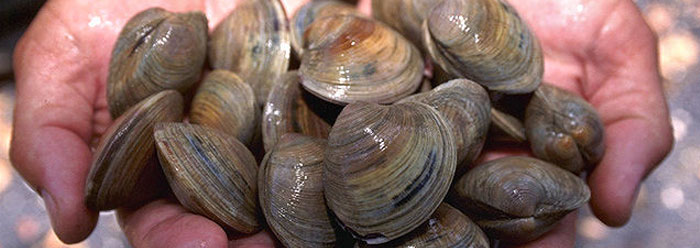
Steno's geology was politically incorrect for another reason -- he incorporated intelligent design into his reasoning. He observed the remarkable similarity between the natural (inorganic) growth of crystals in the laboratory and the growth of the mineral that composes the shells of living organisms. Shell growth is controlled by an ordering principle, a teleonomy, by which the calcium carbonate conforms exactly to the form of the soft-bodied creature it contains; i.e., a clam shell grows in such a way as to perfectly enclose the creature inside. No such ordering principle is found in inorganically formed crystals, only repetition. When he demonstrated apparent design and purpose in fossil shells, Steno demonstrated (contra-Aristotle) that fossils are the remains of once-living organisms. He used intelligent design to do it.
In Steno's day it was considered scientific to think fossil shark's teeth "grew" within the earth and were invested with magical powers. Called "tongue stones" for their shape, Steno noted that they often showed signs of abrasion or decay. From this he implied they were not being formed at the present time but were relics of an earlier period. Processes currently acting on them were not creative but destructive. He saw what Darwin and so many others have missed. Again, he invoked intelligent design to do it.
How odd that Steno is universally praised today for his accomplishments in geology, yet spurned (on two counts) for his methods of arriving at them. Steno believed a literal Genesis.
*William A. Hoesch, M.S. geology, is research assistant in Geology.
Cite this article: Hoesch, W. 2007. Flood Geology and Intelligent Design. Acts & Facts. 36 (3).