Neanderthal Dentistry | The Institute for Creation Research

Neanderthal Dentistry

How human-like were Neanderthals?1 Apparently human enough to try some dentistry, but it didn’t work too well.
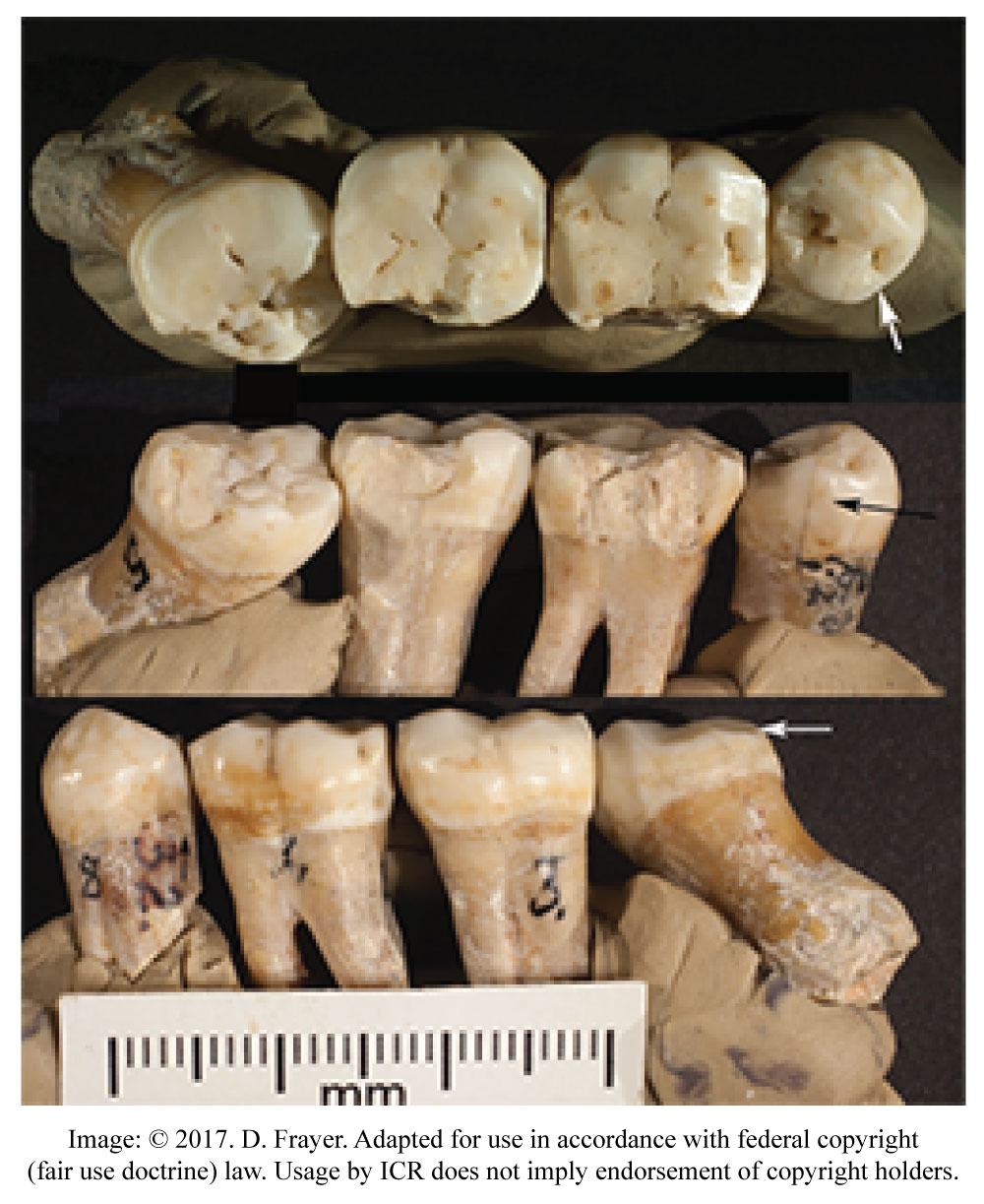
University of Kansas anthropologist David Frayer led a study of a Neanderthal’s teeth. Toothpick grooves, breaks, and scratches show that the owner was trying to treat a terrible toothache. Frayer told KU News, “It was an interesting connection or collection of phenomena that fit together in a way that we would expect a modern human to do.”2

This suffering Neanderthal died long ago in what we today call Croatia. Frayer and colleagues had already described Neanderthal eagle claw jewelry from the same site at Krapina.3

If someone or something scratched those teeth after the person had died, then the tooth marks would not have ended up on the tongue side like they did.

Neanderthal men and women were fully human genetically.4 Their jewelry, genetic similarity to modern humans, and now dentistry all fit the Bible-based contention that Neanderthals were fully human—descended from Noah like the rest of us.

References

  1. Neanderthal with an “h” and Neandertal without an “h” are used interchangeably in scientific literature.
  2. Diepenbrock, G. Analysis of Neanderthal teeth marks uncovers evidence of prehistoric dentistry. KU News. Posted on news.ku.edu June 28, 2017, accessed July 10, 2017.
  3. Radovčić, D., et al. 2015. Evidence for Neandertal Jewelry: Modified White-Tailed Eagle Claws at Krapina. PLOS ONE. 10 (3): e0119802.
  4. Prüfer, K., et al. 2014. The complete genome sequence of a Neanderthal from the Altai Mountains. Nature. 505 (7481): 43-49. See also Tomkins, J. DNA Proof That Neandertals Are Just Humans. Creation Science Update. Posted on ICR.org February 21, 2014, accessed July 3, 2017. 

*Mr. Thomas is Science Writer at the Institute for Creation Research.

Article posted on July 13, 2017.
The Latest
ACTS & FACTS
Creation Kids: Galaxies
Hi, kids! We created a special Acts & Facts page just for you! Have fun doing the activities while learning about the wonderful world...

APOLOGETICS
Is Truth Real? If So, Can We Know It?
by Patrick C . Marks, D. Min., and Brian Thomas, Ph.D.* Truth matters. Without truth, no one can say for certain that anything is right or wrong,...

ACTS & FACTS
Where Research and Revelation Align: Training Tomorrow's Scholars
As students prepare for a new school year, families are considering more than schedules, supplies, and classrooms. They are thinking about how the minds...

ACTS & FACTS
Glacier National Park: Flood Sediments, Slides, and Ice Age Sculptures
Glacier National Park (GNP), Montana, resides at the northern tip of the USA Continental Divide, abutting against Waterton Lake National Park at the...

ACTS & FACTS
Are Biblical Truth and Authority Less Important Than ''Salvation...
If an acquaintance at your church asked you to accompany them to share the gospel with a coworker who’d expressed deep guilt for his sins, would...

ACTS & FACTS
Molluscan Methuselahs: Fossil Crassostrea Oysters
Both before and after the global Flood in the days of Noah, people routinely lived for centuries (Genesis 5 and 11). Research at ICR is finding that...

ACTS & FACTS
Polar Bears Thrive across the Arctic by Adaptive Flexibility
Every form of cellular life was created with specific traits and behaviors that enable it to thrive on our planet. For example, as global weather patterns...

ACTS & FACTS
The Push for Feathered Dinosaurs: A Little Background
Editor’s note: ICR warmly welcomes paleontologist Dr. Gabriela Haynes to our science faculty. Her testimony of a shrinking faith brought back...

NEWS
Tiny Cells, Precise Engineering
Even the smallest living cells face a big design problem. How do they keep the right shape while many parts inside them are moving? A recent study in...

NEWS
Fast-Changing Cactus Flowers Still Point to Design
Cactus flowers have a striking range in size—they can be smaller than a grain of rice or longer than a school ruler. Such variation points to...