




Dinosaurs, Always Dinosaurs
PLOS ONE reported the recent discovery of a megatheropod—a large, two-legged dinosaur much like a T. rex—in Africa.1
The authors of the report gave the impressive dimensions—almost 30 feet long—of the Kayentapus ambrokholohali as well as several formidable-looking three-toed footprints that are the largest theropod tracks ever found in Africa.
Trilobites Can't Stomach Darwinism
Trilobites were fascinating invertebrates that inhabited pre-Flood ocean bottoms. They were fossilized when “primitive” life supposedly was just getting started, but the complexity of these animals is unparalleled. New trilobite anatomical discoveries contradict previous evolutionary beliefs about their digestive systems.1
Plant's Odor Sensing System Demonstrates Engineered Adaptability
Recent studies describing sophisticated plant traits, and some of the insects that feed on those plants, highlight once again how biology may be interpreted very differently. But usually, these interpretations are largely dependent on a researcher’s preexisting beliefs about the origins of living things.
Another Complex Cambrian Critter
Paleontologists have unearthed yet another bizarre creature, this time in British Columbia, Canada, from sediments alleged to be 541 million years old.1,2
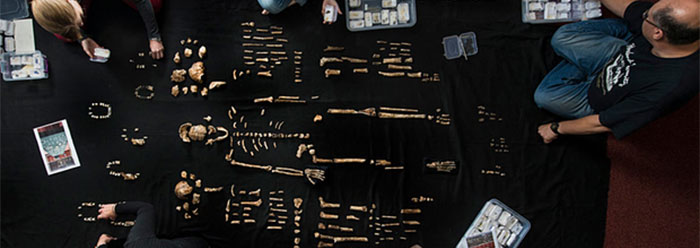
What Was Homo naledi?
Scientists recently reported the discovery of a new human-like species called Homo naledi. Why is this important to Christians? Dr. Clarey clears up the controversy surrounding the latest “missing link” claim.
