"A good tree cannot bring forth evil fruit, neither can a corrupt tree
bring forth good fruit." (Matthew 7:18)
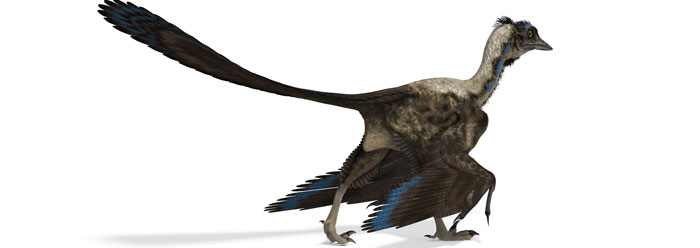
Evolutionists have expended great effort in trying to establish that birds evolved from dinosaurs. Some skeletal similarities do exist—encouraging them to minimize the differences and to champion any possible clue (like hints of feathers in theropod dinosaurs) that the two classes might be related. Now it appears that some would even resort to fraud to establish such a lineage. It behooves us to step back and take a look. What structural and physiological transformations must occur to change one into the other? The following abridged list of evolutionary obstacles might be helpful.
Wings: The proposed ancestors of birds are thought to have walked on their hind legs. Their diminutive forelimbs had digits similar to a hand, but consisting only of digits one, two, and three. Bird forelimbs consist of digits two, three, and four. Today, most hold that ground-dwelling theropods learned to run fast and jump to catch insects and eventually used arms with frayed scales to fly. But flight requires fully formed, interlocking feathers and hollow bones, not to mention the flight muscles and keeled sternum to anchor the muscles.
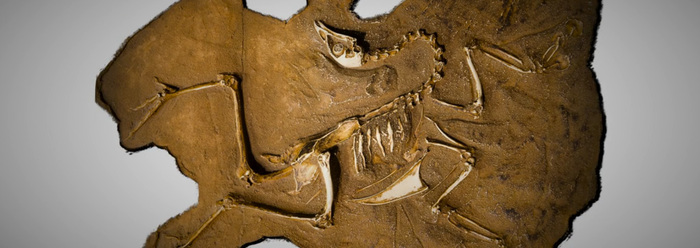
Feathers: Feathers are not at all similar to scales. Even if scales were frayed, they would not be interlocking and impervious to air as are feathers. Actually, feathers are more similar to hair follicles than scales. Could such precise design arise by mutation? In all the recent discoveries of dinosaur fossils with "feathers," the "feathers" are merely inferred. What is actually present is better described as thin filaments which originate under the skin.
Bones: Birds have delicate, hollow bones to lighten their weight while dinosaurs had solid bones. The placement and design of bird bones may be analogous to those in dinosaurs, but they are actually quite different. For example, the heavy tail of dinosaurs (needed for balance on two legs) would prohibit any possible flight. And besides, the theropods were "lizard-hipped" dinosaurs, not "bird-hipped" as would be expected for bird ancestors.
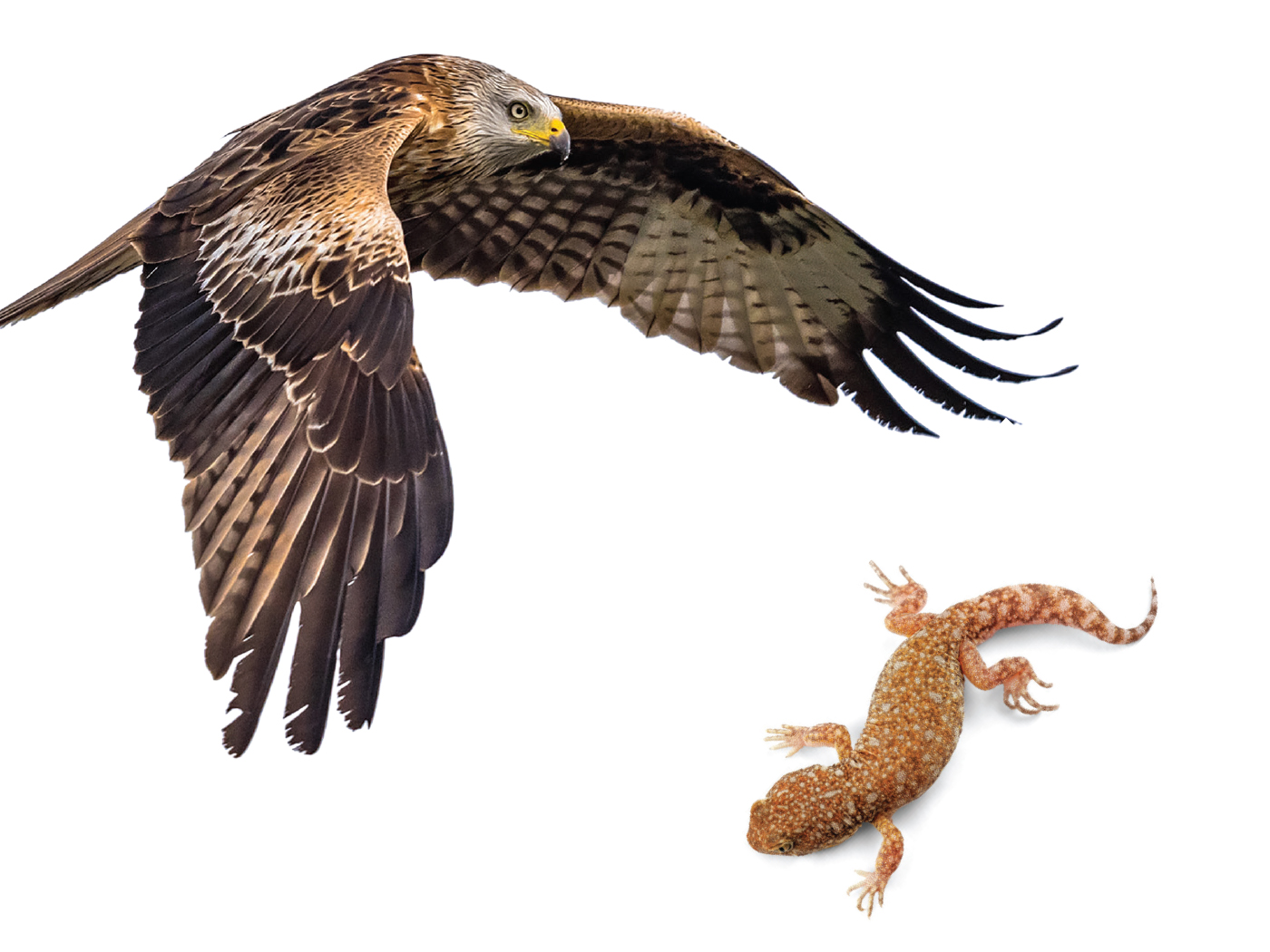
Warm blooded: Birds are warmblooded with exceptionally high metabolism and food demands. While dinosaur metabolism is in question, all modern reptiles are cold-blooded with a more lethargic life style.
Lungs: Birds are unique among land-dwelling vertebrates in that they don't breathe in and out. The air flows continually in a one-directional loop supporting the bird's high metabolism. Reptilian respiration is entirely different, more like that in mammals.
Other organs: The soft parts of birds and dinosaurs, in addition to the lungs, are totally different. A recent "mummified" dinosaur, with soft tissue fossilized, proved to be quite like a crocodile, and not at all like a bird.
Thus, the dinosaur-to-bird transition is blocked by many major obstacles, not just the acquisition of feathers. It gets even worse, for in order to make the transition, most if not all of the definitive characteristics must be acquired simultaneously. They all must be present or else none serves a valid purpose. Evolutionary stories don't fit the facts.