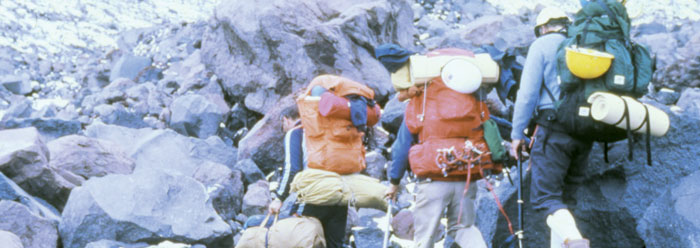
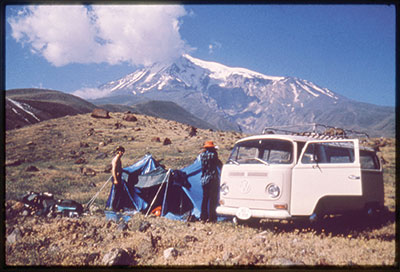
 Mt. Ararat is a volcano, erupting numerous times since the Flood. Its ice cap continually erodes the hardened basaltic rock underneath. As the ice sheets move along, they push the loosened rock over the edges of the mountain, causing high-speed avalanches. On my first expedition I was warned about the “crumbly rock” but was not prepared for the enormity of the dangers.
Thursday, August 3, 1972
I heard a noise up above us on the slope. I looked up just in time to see a rock bigger than my head hurtling through the air right at my head, traveling at great speed. I ducked instantly, and it whistled by just six inches away. We stood in stunned silence for a few seconds until we saw dozens of such rocks speeding toward us from above. We left our packs and ran up the side slopes, off the glacier, and onto the loose rock. At that point even the loose rock was safer than the glacier. We watched as rocks bounced all around where we had been standing, expecting to see our equipment demolished at any second, but the shower was over within a minute and no damage had been done.
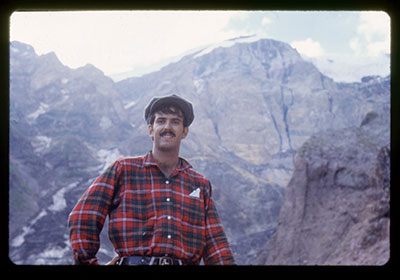 Once our courage returned, we stepped back onto the glacier. Again the rocks came. But we were watching for them and were up the slope before they reached us. However, one stray rock narrowly missed J.B. The situation was indeed grim. We knew the only way up the slope with such heavy packs was on the glacier. We also knew that to stay on the glacier was very dangerous. Furthermore, we knew that the Lord had called us to do a job, sent us halfway around the world, and protected us all the way.
Many more times throughout the day we were subjected to similar rock slides. The slope steepened, causing poor footing and slowing our progress, as well as making it more difficult to avoid the slides. I ripped off my pack, threw it down, and began dodging, running, jumping, falling, and praying, trying to avoid the rocks. It’s very hard to be nimble-footed on these loose rock slopes, especially when wearing metal crampons. But the Lord was in complete control, and I escaped without a scratch.
 The rocks vary from walnut size to Volkswagen size, but at such dizzying speeds even the small ones could kill. They make very little noise in the snow but fall with such force that they shake the earth. The speeds probably reach 100 mph. Their bounces are unpredictable, and it is hard to get out of their way. As they fall, they fly through the air sometimes for hundreds of feet, spinning like a wheel and whistling like shrapnel. Each rock is like a buzz saw and would destroy anything in its path, but we felt we were in the Lord’s will and continued climbing the slope.
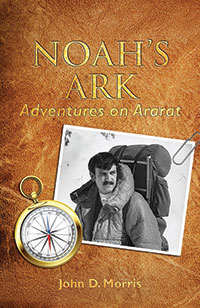
Editor’s note: This excerpt was adapted from Dr. John Morris’ recently released booklet Noah’s Ark: Adventures on Ararat, which recounts some of his adventures as he led teams in search of Noah’s Ark. His scientific expeditions provided critical Flood research in the ensuing years—research made possible by the generous support of countless ICR donors.