With lofty words about humanity’s future, NASA promoters discussed the hope of discovering life on other planets at a recent meeting in NASA headquarters in Washington.1 Despite billions of dollars spent on the decades-long search and the fact that not one shred of distant life evidence has been found, NASA continues to suggest that life might really be out there and that its discovery is within reach. Does scientific evidence really justify this expensive search for distant life? If not, what’s the driving force behind this program?
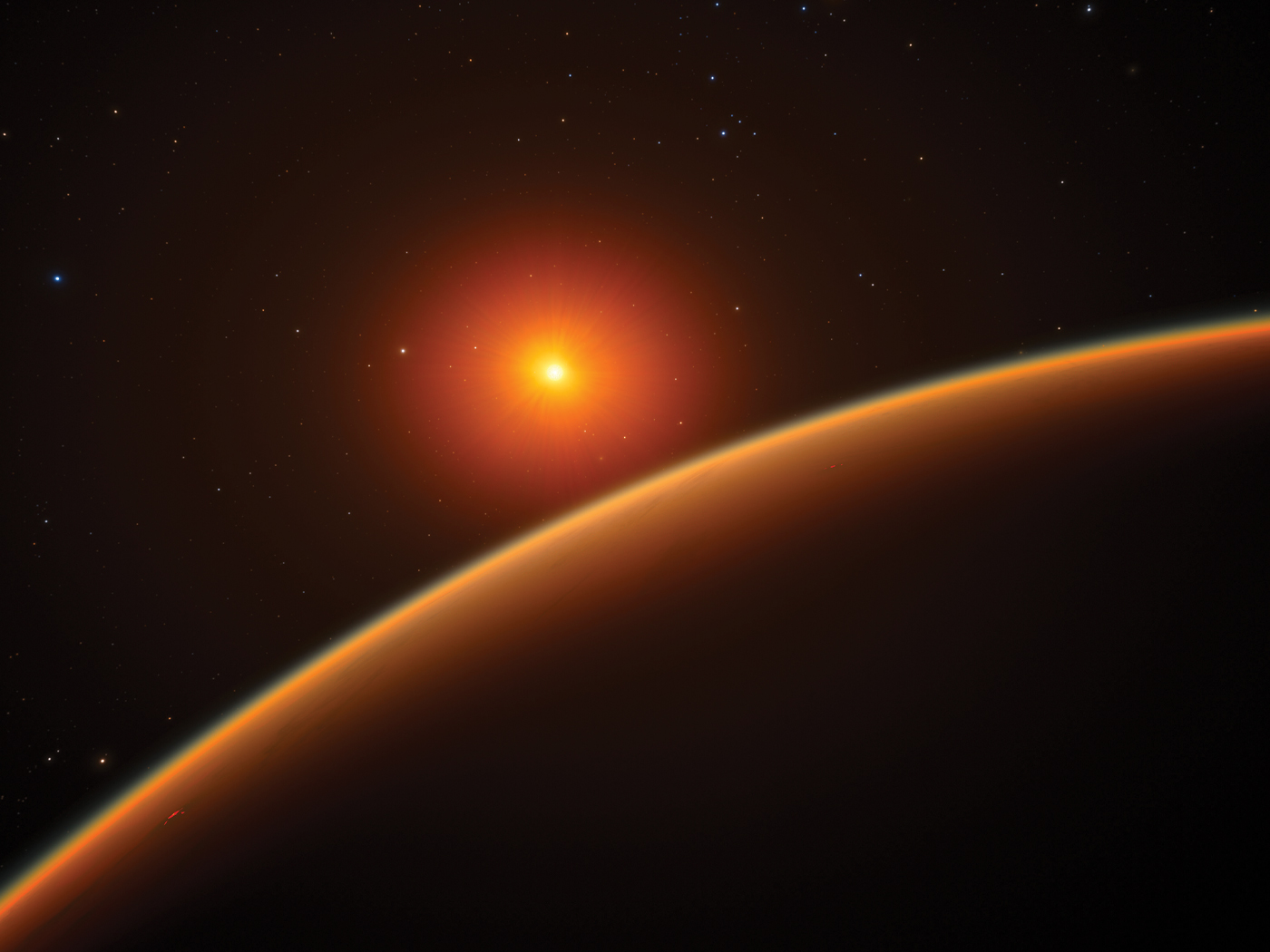
The hope of discovering life in outer space dangles at the end of the long and costly stick, and its elusive carrot takes the form of life-friendly planets in distant star systems. The Kepler space telescope has helped astronomers verify over 1,700 “exoplanets” out of an ever-growing pool of more than 5,000 candidates. These findings almost certainly help fuel NASA’s plans to launch the Transiting Exoplanet Surveying Satellite in 2017, the James Webb Space Telescope in 2018, and others later on—all looking for distant signs of life.
How close do the known exoplanets really bring us to discovering extraterrestrial life? In short, the vast majority of exoplanets are gaseous, and with a small handful of exceptions, the few solid ones do not orbit their stars either close enough or far enough for liquid water to exist on the planet’s surface.2 But far more conditions than simply the existence of liquid water are required to sustain biological life.
NASA News wrote, “Future missions will extend the search for oceans in the form of atmospheric water vapor and for life as in carbon dioxide and other atmospheric chemicals, on nearby planets that are similar to Earth in size and mass, a key step in the search for life.”1
Those who hope for life in outer space seem to assume that they need merely to discover the conditions that sustain life, when ironically those very conditions destroy the chemicals of life. Even here on Earth where oceans of water, appropriate atmospheric chemicals, and an Earth size and mass collaborate to permit life, a century of experiments invoking a countless array of factors have not generated anything close to life.
Despite these difficulties, NASA wrote, “Many scientists believe we are not alone in the universe. It’s probable, they say, that life could have arisen on at least some of the billions of planets thought to exist in our galaxy alone—just as it did here on planet Earth.”1
This exposes the real foundation for belief in exoplanetary life—the assumption that life somehow arose by natural processes here on Earth. By definition, secularists make this assumption into a fact, but science clearly refutes it.3 If belief in evolution underpins the search for life in outer space, then does NASA’s search stem more from faith in evolution than from solid science?
At first blush, the chances that certain conditions spawned life from non-life might appear somewhat favorable given billions of years on trillions of planets, but those chances actually approach zero if there are no such conditions. For example, origin research has so far revealed that the odds of the spontaneous generation of life lie far beneath the odds of the spontaneous generation of aircraft carriers.
Exploring the universe clearly has its benefits, and satisfying our God-given curiosity about this amazing cosmos in which He placed us surely counts as one of them. But as we explore, let us not pretend that the conditions that permit life equal some imaginary conditions that produce life. Science and scripture together confirm that life comes not from the laws of physics and chemistry, but from the life-Giver.4
References
- Finding Life Beyond Earth is Within Reach. NASA News. Posted on nasa.gov July 14, 2014, accessed July 15, 2014.
- Thomas, B. 2010. Doubts Raised about the “Goldilocks” Planet. Acts & Facts. 39 (12): 17.
- Only God Could Have Made Cells. Institute for Creation Research. Fact sheet, accessed July 15, 2014.
-
“Who among all these does not know / That the hand of the Lord has done this, / In whose hand is the life of every living thing, / And the breath of all mankind?” Job 12:9-10.
* Mr. Thomas is Science Writer at the Institute for Creation Research.
Article posted on July 23, 2014.