Are modern schools teaching the scientific method properly? It appears the general public and even the scientific community itself has a rather fuzzy understanding of what it is.1 In its purest form, the scientific method can be succinctly defined as “a systematic methodology for studying natural phenomena.” For example, if we look at the simple pendulum at very small-angle oscillations, we might hypothesize that the period (the time for the pendulum to complete one cycle) depends on the mass attached to the end of the pendulum. This is a valid hypothesis since it can be either verified or falsified by direct observation and/or reproducible experimentation. If we run a series of period measurements with different masses attached to the pendulum arm, we will establish that the period remains the same independent of the mass. So our original hypothesis is incorrect. The scientific method now requires us to abandon that hypothesis.
The Greek philosopher Thales (6th century B.C.) refused to accept supernatural, religious, or mythological explanations for any observations or events that could be considered natural phenomena (such as origins) and thus set the foundation for naturalism, a philosophy based on the fundamental premise that anything supernatural is essentially fiction. Since, according to Thales, there can be no supernatural cause for the universe and logic does not allow something to cause itself, the universe must be eternal. The concept of naturalism might lead to the explanation of many everyday natural phenomena, but it fails miserably in explaining origins. Yet this premise is the foundation for a worldview that has dominated modern science for the last three centuries.
Plato’s development of deductive reasoning was an important step in forming the modern scientific method. In deductive reasoning, a conclusion is reached by applying general rules or principles that hold for the entirety of some closed group and reducing the range under consideration until only the conclusion is left. For example, we can apply the law of mortality to the closed group of all human beings and then conclude that Plato is mortal because he belongs to that closed group of mortals.
Before the scientific method could fully develop, two pagan views that strongly influenced the Greek thinkers had to be dealt with: 1) the organismic view of nature (nature and created objects are divine or are themselves without beginning or end), and 2) circular reasoning as opposed to linear reasoning.2 The organismic view presupposes that nature was uncreated, i.e., no intelligent direction was necessary to produce the world we live in. So, in the organismic worldview, either random chance or a pantheon of gods produced the order we observe in the universe. But this is wholly illogical. Why would a purposeless and uncreated universe exhibit order? How can the universe be orderly if one assumes that multiple competing gods and goddesses are continually interfering with its operation? This fundamental assumption of naturalism is contrary to our observation that the order we observe in our world comes from an intelligent direction. In order to do science, one must assume that the universe is orderly, stable, and rational, but this assumption does not make any sense in a pagan or evolutionary worldview.
Early Christian leaders such as Clement of Alexandria (150–215 A.D.), Basil of Caesarea (330–379 A.D.), and Augustine of Hippo (354–430 A.D.) encouraged future generations to view Greek wisdom as “handmaidens to theology” and science as a means to more exhaustively understand the Bible and God’s magnificent creation.3 In a nutshell, they believed that science should be viewed through the window of the Bible rather than the Bible interpreted through the window of science. For them, and many of us today, this makes perfectly rational sense since the Bible addresses a far wider and deeper reality than science can. Science simply cannot be a foundation for things like mathematics, law, honor, faith, morality, ethics, logic, and love. In short, science does not equal naturalism or epistemology. Science is a powerful tool that helps us gain knowledge—but science is not knowledge itself.
Islamic scholars like Ibn Alhazen further refined the scientific method during the Middle Ages, but a more recognizable form of the method would have to wait until the late 12th century.4 The English statesman, scientist, and Christian theologian Robert Grosseteste (1175–1253) and English thinker and experimenter Roger Bacon (1214–1294) added a repeating cycle of observation, experimentation, hypothesis, and the need for independent verification to the scientific method. The remaining vestiges of Aristotelian philosophy were thrown off by Francis Bacon (1561–1626) in his Novum Organum, in which he established a place for non-empirical philosophy (i.e., mathematics and logic) in the process of uncovering natural axioms (laws).
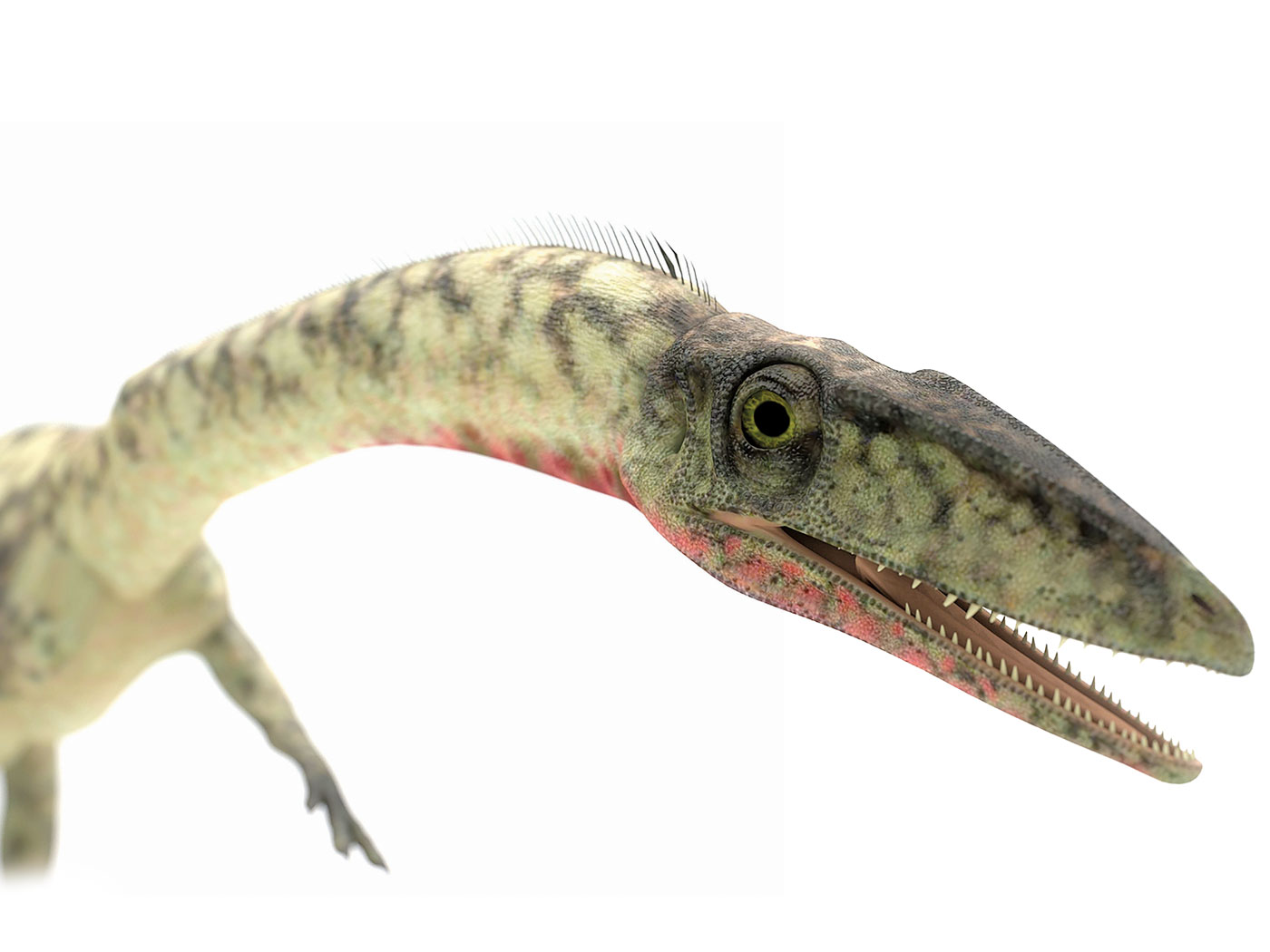
A positive example of the application of the scientific method can be seen in the recent debate over whether large carnivorous dinosaurs, such as Tyrannosaurus and Giganotosaurus, were pack hunters. It had been long assumed that these large carnivores lived mostly solitary lives, much like tigers and bears do today. However, the discovery of the Argentinosaurus and Giganotosaurus in Patagonia, Argentina, led paleontologist Phil Curry (of the Royal Tyrrell Museum of Paleontology) to rethink this assumption.5 The fossil beds in Patagonia seemed to suggest that Argentinosaurus was the only herbivore large enough to provide subsistence for the Giganotosaurus. Unfortunately the Argentinosaurus was too large to be prey for a solitary Giganotosaurus. Therefore, a revival of the original pack-hunter hypothesis seemed to be in order. Later, a site discovered in the badlands of western Canada provided the first indirect observational evidence for pack behavior in a large carnivorous dinosaur—12 individual T. rex ranging from young to fully mature were found together. The relative (< 5%) population density of T. rex in the region made the gathering of the bones due to local flooding highly improbable. A lack of prey animals at the site made a predator trap highly improbable. A second site in Patagonia yielded at least seven distinct Giganotosaurus ranging in age from very young to fully mature individuals and thus provided a second piece of indirect observational data to support the hypothesis. Based on the existing data, it could be concluded that these large carnivores did hunt in packs.
Another example is supplied by Louis Pasteur’s 19th-century investigation into the long-standing hypothesis of spontaneous generation. This hypothesis was based in Aristotelian philosophy and had somehow survived the reforms of Francis Bacon. Spontaneous generation is the idea that certain forms of life can originate (evolve) from inanimate matter, such as fleas coming from dust or maggots from dead fish. Pasteur’s experiments demonstrated conclusively that such organisms originated from genetically related parents of the same species and thus disproved the spontaneous generation hypothesis that had been generally accepted in academic circles for almost two millennia.
A modern example of the misapplication of the scientific method is supplied by noted theoretical physicist Dr. Lawrence Krauss (who ironically is the director of the Origins Project at Arizona State University). He and many others claim as a scientific fact that the universe originated from a quantum fluctuation in nothingness, a quantum fluctuation being defined as the temporary appearance of energetic particles out of empty space.6 Yet no one has ever observed such a fluctuation. How can the possible existence of such a large quantum fluctuation be verified or falsified? It is acceptable to put such ideas forward as philosophical speculation but certainly not as scientific fact. To do so is hijacking the scientific method!
Another example of misapplication is supplied by the well-known Darwinian theory of evolution—which is more properly categorized as a hypothesis. This hypothesis is closely tied to the idea of spontaneous generation, which Louis Pasteur disproved. Evolution hypothesizes that life on Earth sprang from inanimate matter some 3.5 billion years ago and has subsequently evolved through a series of genetic mutations and natural selection into the diversity we currently observe. The evidence cited to support this hypothesis is that the fossil record found in the geological column (rock strata) seems to move from less-complex to more-complex organisms. However, no transitional forms (organisms that combine features of two distinct species) have ever been definitely observed in the present or in the fossil record. No experiment to date has been able to produce a living organism from inanimate matter in spite of valiant attempts by researchers such as Stanley Miller and Harold Urey at the University of Chicago. With no observational or experimental data to back it up, evolution somehow progressed from a suspect hypothesis to scientific fact in less than 50 years.
 Observation and reproducible experimentation are the foundations of science and as such are the established facts upon which the various hypotheses, theories, and natural laws rest. To portray any hypothesis or theory as fact is a clear misapplication of the scientific method. Hypotheses must be verifiable or falsifiable through observation and reproducible experimentation to be considered a legitimate participant in the scientific method. Various hypotheses concerning the age and formation of our universe (the Big Bang and multiverse hypotheses) and the development of living systems (the Darwinian evolution hypothesis) are routinely taught in Western school systems as scientific fact, but none of these hypotheses have been confirmed through observation or experimentation. Alternate hypotheses are often not allowed to be even whispered. Have we now come full circle back to Thales’ stubborn dependence on naturalism alone? Is this science? Or is it the type of dogma that has characterized erroneous philosophies throughout the ages and led to incalculable human misery and a distorted understanding of reality itself?7 We need to reclaim the scientific method and teach it correctly.
References
- Merriam-Webster’s dictionary defines the scientific method as “principles and procedures for the systematic pursuit of knowledge involving the recognition and formulation of a problem, the collection of data through observation and experiment, and the formulation and testing of hypotheses.” Merriam-Webster online dictionary, posted on merriam-webster.com.
- Haffner, P. 2012. Mystery of the Church. Herefordshire, UK: Gracewing, 263.
- Grant, E. 1996. The Foundations of Modern Science in the Middle Ages. Cambridge, UK: Cambridge University Press, 4-5.
- Verma, R. L. 1969. Al-Hazen: father of modern optics. Al-Arabi. 8: 12-13.
- The Biggest Dinosaurs of All Time—Clash of the Giants—Animals Documentary. DocumentaryTube. Posted on youtube.com September 26, 2013, accessed May 15, 2014.
- Krauss, L. M. 2012. A Universe from Nothing. New York: Free Press, 164-165.
- For more on this see Bergman, J. 2012. Hitler and the Nazi Darwinian Worldview. Ontario, Canada: Joshua Press. Also see Guliuzza, R. J. 2009. Darwinian Medicine: A Prescription for Failure. Acts & Facts. 38 (2): 32.
- Lewis, C. S. 1947. Miracles: A Preliminary Study. London: Macmillian, 110.
- Hawking, S. W. 1988. A Brief History of Time: From The Big Bang to Black Holes. New York: Bantam, 10.
* Dr. Cupps is Research Associate at the Institute for Creation Research and received his Ph.D. in nuclear physics at Indiana University-Bloomington.