by John D. Morris, Ph.D., with Bruce Malone *
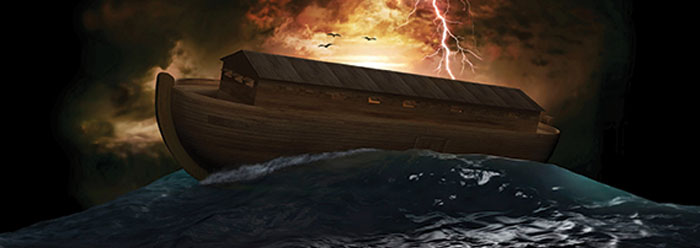
Flood narratives abound in cultures around the world. Creation speaker and scientist Bruce Malone alerted me to one of these accounts in a fascinating translation and history by David McCutchen that documents a clear and detailed Flood tradition. The Red Record: The Wallam Olum presents a “written” history of the Lenni Lenape, or Delaware tribe, a large group of Native Americans that played a prominent role in colonial times.1 A majority of the work chronicles interactions between the European settlers and the tribe. But the earlier sections deal with their view of the origin of all things in a “very good” state, how that state was then lost due to evil, the resulting worldwide Flood, and the migration of their ancestors from the Old World to the New while enduring iceage conditions.
Predictably, certain details are vague and questionable but also intriguing and potentially valuable. First surfacing as a series of linear symbolic annotations on prepared bark tablets, the narrative was arranged into “books.” The symbols are both pictorial and cryptic, making precise translation difficult. The tablets became accessible to the outside world in 1820 when an itinerant doctor chanced upon a village of ill and dying Delaware Native Americans. He was able to nurse some back to health, and as a way of expressing their gratitude—and through fear that their history might be lost—they entrusted him with their sacred records. In 1822, the documents passed to the scholarly Frenchman Constantine Rafinesque, who translated them as best he could, making primary use of language notes compiled by Moravian mission workers.
The Delaware Native Americans’ record lay in obscurity until republished in 1954 by the Indiana Historical Society under the title Walam Olum or Red Score: The Migration Legend of the Lenni Lenape or Delaware Indians.2 The history was subsequently declared by tribal elders to be authentic and representative of their oral stories.
The following column outlines The Wallam Olum’s original etchings, McCutchen’s translations, and parallel events from the book of Genesis’ correct history, which I have noted. This finding is consistent with what historian Bill Cooper wrote: “It was commonly found by missionaries all over the world that the people they encountered knew about the Flood already. Their knowledge of it…was startlingly in agreement with the Book of Genesis.”3 Secularists who claim all Flood legends are myths bear the burden of explaining how so many different people groups retained accounts that so closely overlap the Genesis record.

References
- McCutchen, D., trans. 1993. The Red Record: The Wallam Olum. Garden City Park, NY: Avery Publishing.
- The complete title of the 1954 edition was Walam Olum or Red Score: The Migration Legend of the Lenni Lenape or Delaware Indians, a New Translation, Interpreted by Linguistic, Historical, Archeological, Ethnological, and Physical Anthropological Studies.
- Cooper, B. 2012. The Authenticity of the Book of Genesis. Portsmouth, UK: Creation Science Movement, 166.
* Dr. Morris is President of the Institute for Creation Research and received his Ph.D. in geology from the University of Oklahoma. Bruce Malone is Executive Director of Search for the Truth Ministries.