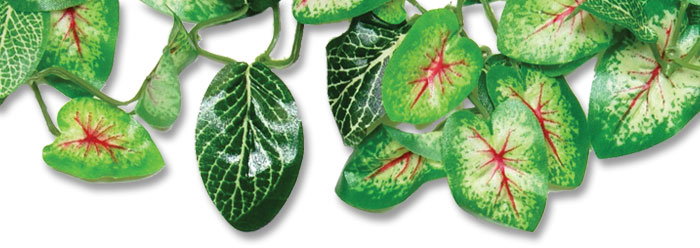
“Britain's Prince Charles…talked to plants but he is no longer alone with a rising number of people joining his campaign to treat plants with respect.”1
The past several decades have seen a rise in "Mother Earth" movements that include such pseudo-religiously-oriented ideas as the Gaia Hypothesis, Wicca, and various parapsychology cults. All of them have their roots in mysticism and evolutionary naturalism, with many of their devotees claiming a "scientific" basis for their tenets. Common to all these varied movements, whether cultic or scientific, is the unshakable belief that life arose from natural elements in some form, and that "higher" life forms (including plants) have some sentient perception.
Many embrace the concept that Mother Nature is actually the collective intelligence of ecosystems (from climate zones to solar systems and galaxies) that are observed by science with "apparent design" in all things.
Difficulties with Perspective
Modern science speaks of life in terms of cellular function. That is, all replicating and self-functioning systems are composed of cells. The cell performs all the functions for movement, reproduction, response, and growth, and many biological pathways are common in the cells of plants, animals, and man. Plants represent the most complicated level of life that can be maintained simply by the functioning of multiple cells working together.
Evolutionary thought ties the function of life all the way from single-cell organisms to humanity. Paramecium, plants, pollywogs, primates, and people are merely increasingly more complex assemblages of cells that have "developed" over deep time. In practice, plants are considered to be just as alive as are people. The life sciences include botany as well as biology.
If this practical perspective were merely a scientific debate, the impact on Christian thinking might not be much. Surely no one "believes" that a plant has the same value as a human being. We eat plants--as indeed the Creator Himself insisted that they were designed to be used (Genesis 1:29).
However, there is a popular teaching among evangelicals that physical death was part of God's original "good" creation. This dangerous doctrine is partially based on the "scientific fact" that plants are living things, and since God commanded humans to use these living plants as food, they "kill" plants when they eat them.
The Biblical Perspective
On Day Three of creation, the "earth" (the same Hebrew word as in Genesis 1:1) was commanded to "bring forth" ("sprout," Genesis 1:11). The earth responded by "shooting out" (verse 12) three categories of earth products: grass--all ground-covering vegetation; herbs--all bushes and shrubs; and trees--all large woody plants. The "herbs" and "tree yielding fruit" are specifically said to have a "seed"--to specify and program growth. These marvelous and beautiful earth products were to be food for each man, beast, fowl, and creeping thing that lived upon the earth (Genesis 1:29-30). No one who is familiar with the Bible argues this point.
The debate comes over the question of what "life" is. As mentioned earlier, the evolutionary assumption is that all systems that function by cells are "alive." The evangelical brethren who use that scientific idea as a basis for their understanding of plants would justify the conclusion that since cells die when plants are eaten, therefore physical death processes are a part of the original design of the Creator.
There is, however, much more to be considered. God "created" (Hebrew bara) on Days One, Five, and Six. That is, God brought into existence something that did not exist before. The other days record God "making" and "shaping" that which was created earlier. The point to be observed here is that life was created on Day Five, as was the image of God created in man on Day Six.
The Hebrew terms used for Days Five and Six are rich in descriptions of this life. Sherets is used for the "moving creatures." Chay is the "life" of verse 20. Nephesh is translated "living creature" in verse 21, but translated "living soul" in Genesis 2:7 (as well as most of the other times it is used in Scripture). These are the terms used for living creatures--along with the Hebrew ruwach, most often translated "spirit." Leviticus 17:11 clearly states that "the life of the flesh is in the blood."
Summary
In no passage of Scripture are plants associated with any of the terms for "life." Plants do not have chay or nephesh or ruwach or any blood. Period. Neither are they "moving creatures." Multicellular plants do not have independent mobility. Most land plants are tied directly to the ground. Some are symbiotically related to hosts (such as moss, lichen, various algae, etc.), but none move about on their own--as does all biblical life.
Yes, plants (earth products) are marvelous, beautiful, and incredibly information-rich. But the chasm between the cellular structure of plants and that of "living creatures" is vast in depth and breadth. Beyond the similar biological pathways, there is both a clear difference in form and a huge informational gap. Plants are not "related" to animals or to man, nor is there any evidence that petunias hear when we talk to them.
Why this emphasis? The insistence by some evangelical scientists and theologians that death is a "normal" part of creation is based on the evolutionary doctrine and scientific perspective that all cellular-based systems are "alive." Thus, plants "die" when eaten, thereby requiring physical death to be a part of the created design. That logic, however, negates or deflects the awful results of sin (Romans 5:12) and makes the physical death of Jesus Christ not much more than a vengeful execution of God the Father on His only begotten Son, rather than the absolutely necessary substitutionary atonement and "shed blood" on the cross of Calvary (Matthew 26:28).
Reference
- Goldsmith, B. More gardeners join Prince Charles in plant talk. Posted on reuters.com September 18, 2007.
* Dr. Morris is Chief Executive Officer of the Institute for Creation Research.
Cite this article: Morris III, H. 2009. Perspectives on Life. Acts & Facts. 38 (12): 22-23.