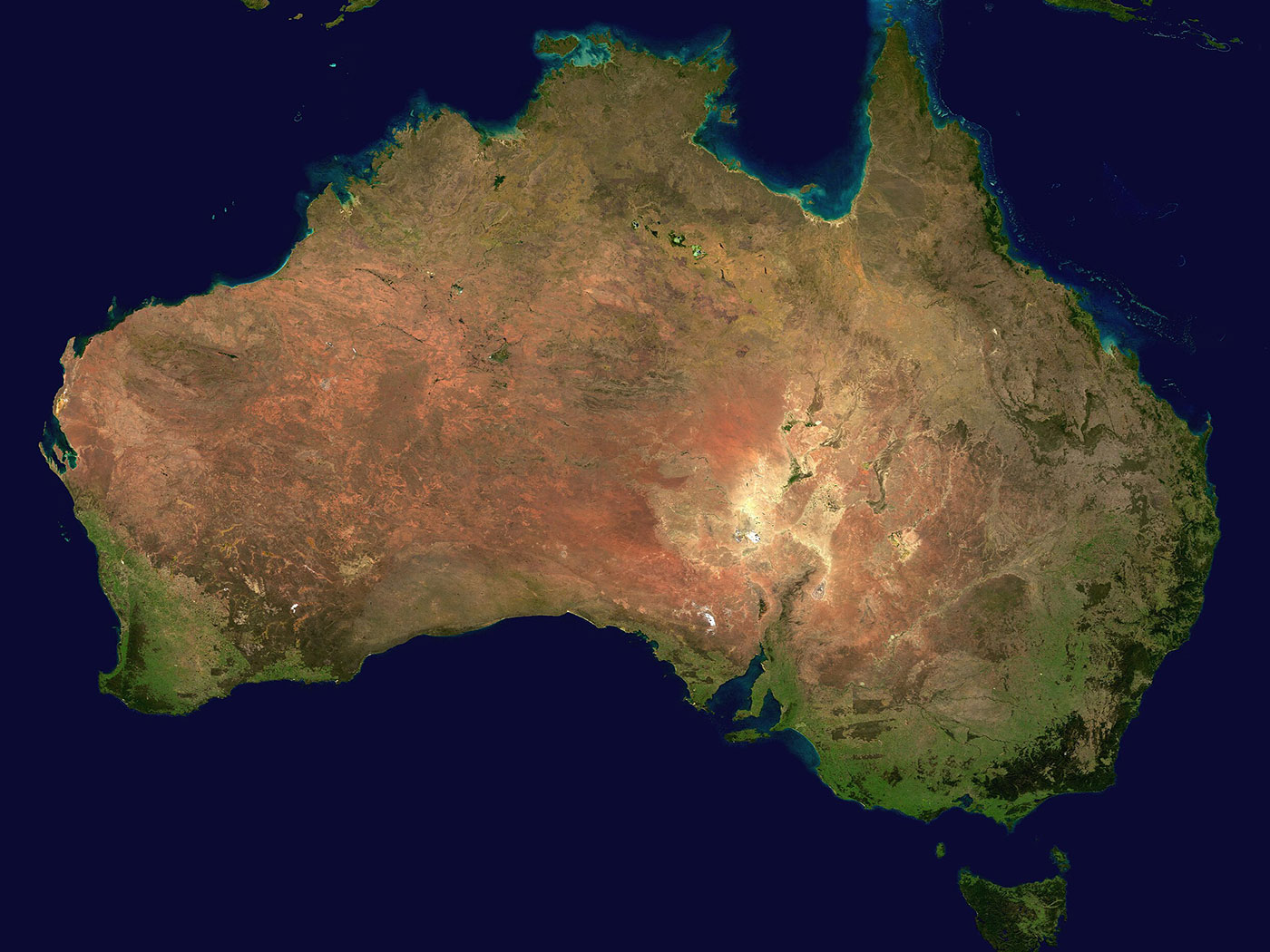
Most diamonds are formed at depths of 150 or so miles. Deep diamonds, however, formed at depths of over 400 miles. The discovery of a new cache of deep diamonds near Eurelia, Southern Australia, has caused some researchers to speculate that they formed much more recently than previously believed.
The Australian diamond source is located on a broad distribution pattern. After mapping the worldwide sources of deep diamonds, it seems that they “were found in areas that would once have lined the edge of the ancient supercontinent Gondwana.”1 Creation researchers agree that the earth used to have a single landmass from which today’s smaller continents originated, but they maintain that it was broken, reshaped, and its remnants distributed across the earth’s surface during the year-long Flood of Noah.
According to eyewitness accounts from Scripture, the ancient single landmass existed for about 1,600 years, from creation until the Flood occurred at about 2350 BC. In contrast, the accepted evolutionary timeline for the beginning of the breakup of southern Gondwana from the larger, single landmass Pangaea is about 200 million years ago. These deep diamond sources may have formed at the same time that the separate landmass of Gondwana did. However, this starkly contrasts with the standard age given for diamonds, which is up to 3 billion years.
John Luddun of the British Geological Survey told New Scientist that “this may well result in a revision of exploration models for kimberlites and the diamonds they host.”1 It could instead lead to a revision of old-age thinking about diamond formation and the age of the earth. With this proposal—that deep diamonds formed when Gondwana did—comes the instant removal of about 2.8 billion years of evolutionary time (93 percent of the standard age)! That these evolutionary time scales are largely fictional is corroborated by the presence of very young carbon-14 in the diamonds’ mineral matrices.2
Another feature of deep diamonds is the unique minerals they contain. “Ca [Calcium] silicate perovskite inclusions are enriched in trace elements many times above primitive mantle levels, suggesting an enriched source such as subducted crust,” one study revealed.3 Subduction is (or was) a geological process whereby a portion of crustal rock with high density slides beneath an adjacent crustal rock with lower density. If subducting crust provided the unique source of these diamond inclusions (and perhaps even the carbon source for the diamonds themselves), then the Catastrophic Plate Tectonics model of continental breakup during the Flood could easily provide part of the explanation for their formation.4
Both the researchers’ admission of this possible gross discrepancy of dates, and the explanatory power of the Creation-Flood model as applied to diamond formation, indicate that the Bible’s history offers an accurate depiction of earth’s past.
References
- Brahic, C. 2009. Ancient supercontinent was a diamond factory. New Scientist. Posted on newscientist.com January 12, 2009, accessed January 14, 2009.
- Baumgardner, J. et al. 2003. Measurable 14C in Fossilized Organic Materials: Confirming the Young Earth Creation-Flood Model. Proceedings of the Fifth International Conference on Creationism. Pittsburgh, PA: Creation Science Fellowship, 127-142.
- McCammon, C. 2001. Deep Diamond Mysteries. Science. 293 (5531): 813-814.
- Baumgardner, J. 2005. Recent Rapid Uplift of Today's Mountains. Acts & Facts 34 (3).
* Mr. Thomas is Science Writer.
Article posted on January 20, 2009.