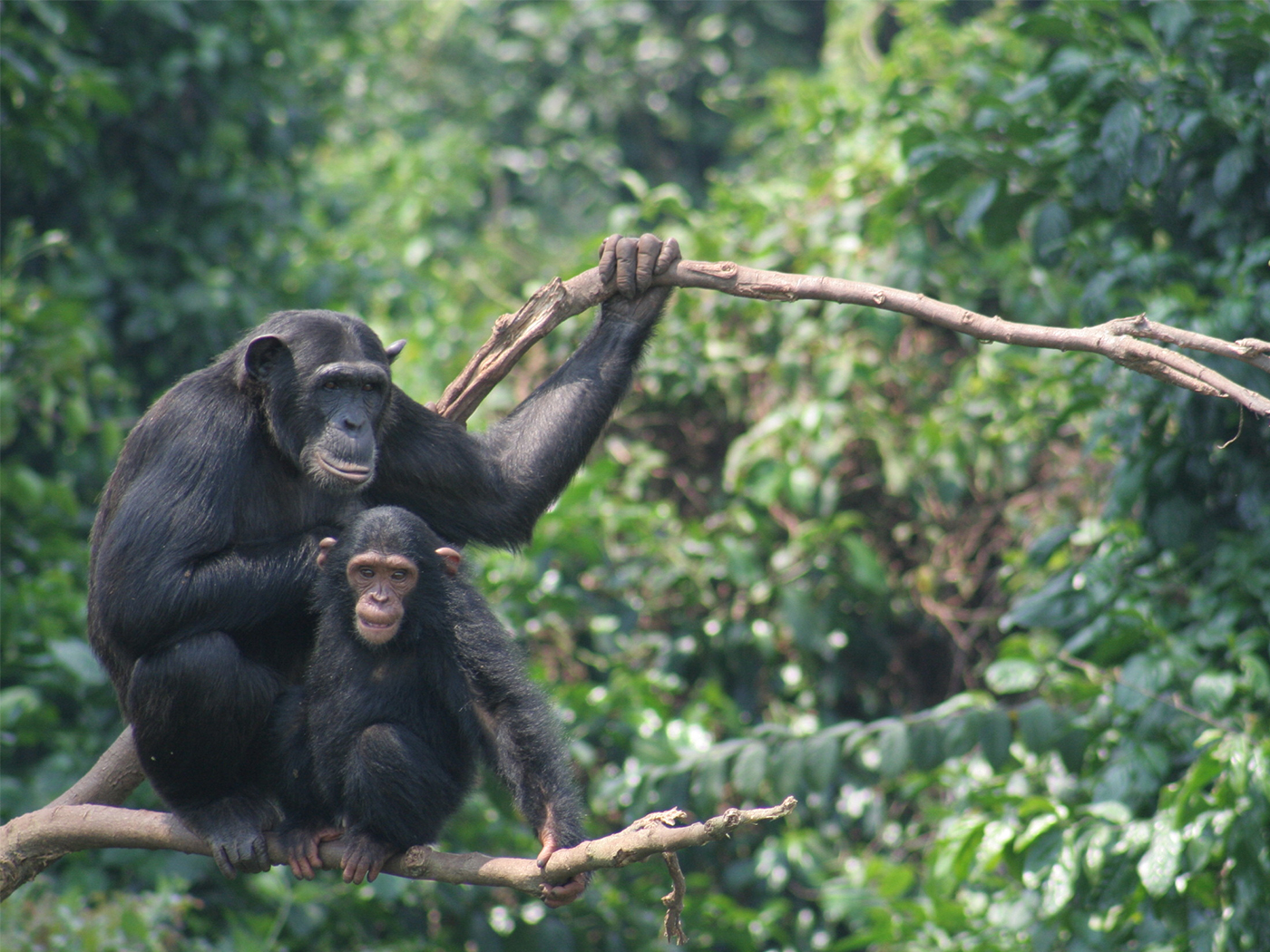
The Bible teaches, and the fossil record shows, that man and ape have always been separate. Evolutionary naturalists disagree and attempt to interpret shattered fossil remains of apes in a Darwinian context, producing questionable "missing links."
On September 20, the story broke of "a remarkably complete skeleton of a 3-year-old female from the ape-man species represented by ’Lucy’" (Ritter 2006). This fossil was discovered 6 years ago in Ethiopia's Dikika region, and, not surprisingly, it was dated at "3.3 million years old making [it] the oldest known skeleton of such a youthful human ancestor" (Ritter 2006).
But what are the facts about this "member of Australopithecus afarensis, which lived in Africa" and may have been "quickly buried by sediment in a flood" (Ritter 2006)?
The Lower Body
Ritter’s story states that "the lower body is very human-like" and that this creature supposedly "stood upright and walked on two feet." It should be noted, however, that no one has actually seen this Ethiopian creature walk upright. On the other hand, scientists have consistently observed the living pygmy chimpanzee walking upright about 10 percent of the time. In other words, upright walking is not convincing evidence that this "3.3 million year old" ape was on its way to producing the human race. The origin of bipedalism has its share of problems.
The field of human evolution has never been placid or calm. Although Darwinists insist man was not created (Genesis 1:26–27), there is, and always has been, outright disagreement regarding all facets of human evolution and this recent Ethiopian discovery has simply fanned the flames of this "contentious debate." Indeed, evolutionist Bernard Wood states that the climbing ability of this ape "won't settle the debate among scientists, which he said ’makes the Middle East look like a picnic’" (Ritter 2006).
For decades there have been two sharply differing evolutionary camps: the fossil experts (paleontologists) and the molecular biologists. Each group has its unique scenario for human evolution. Understandably, creationists are very interested to hear what the molecular evolutionary biologists have to say about this "human-like child" fossil (BBC 2006).
Bipedal locomotion (mentioned in several stories regarding this recently-discovered juvenile fossil) is one of the most contentious issues between Darwinists. Evolutionist Simon Underdown of Oxford Brookes University in England says, "This tremendous fossil will make us challenge many of the ideas we have about how and why we came to walk on two feet" (Reaney 2006).
Darwinists continue to strongly disagree among themselves: "How and why natural selection favored the transition to bipedal posture and locomotion are likewise ongoing subjects of scholarly debate and conjecture" (Stanford 2006).
The Upper Body
The upper body of the newly discovered child fossil is virtually indistinguishable from an ape’s. Ritter states that the hyoid bone is "very chimp-like," not human; the fingers are very curved, which indicates climbing ability, like an ape, not a human; the organ of balance in the inner ear is ape-like, not human; the shoulder blades are gorilla-like, not human; and the neck is short and thick like a great ape’s, not like a human’s.
Ritter states, "The question is whether such features [long arms] indicate climbing ability or just evolutionary baggage." Yet, science has shown repeatedly that the secular evolutionary baggage argument is without merit. A typical and popular example of evolutionary baggage is the outdated vestigial organs argument that was popular long ago. Scientific research has since shown that people and animals do not have evolutionary leftovers and that there are clear explanations for organs and structures such as the coccyx, appendix, and tonsils. The long arms in the afarensis specimen were created as such because the specimen was an ape, a tree climber.
While evolutionists continue to debate the form and function of this newly-discovered fossil, creationists continue to base the model of man’s origin on Genesis 1:26-27.
References
Ritter, Malcolm. 2006. Scientists find 'Lucy' species skeleton, News.Yahoo.com. September 20, 2006.
BBC News. 2006. "Lucy's baby" found in Ethiopia, BBCNews.com. September 20, 2006. http://news.bbc.co.uk/2/hi/science/natur
e/5363328.stm.
Reaney, Patricia. 2006. Remains of earliest child discovered in Ethiopia, News.Yahoo.com. September 20, 2006.
Stanford, C. B. 2006. Arboreal bipedalism in wild chimpanzees: Implications for the evolution of hominid posture and locomotion. American Journal of Physical Anthropology 129 (2): 225.
Article posted on September 25, 2006.