A recent attempt by European astronomers to use the Hubble Space Telescope to find evidence for the first stars expected by secular theory has failed. This is despite the Hubble Space Telescope’s ability to image objects at vast distances—so vast that these objects were supposedly formed 500 million years after the alleged Big Bang.1-3
Astronomers classify stars into three populations, or groups, according to the stars’ chemical compositions, or metallicities. In astronomical vocabulary, a metal is any chemical element heavier than hydrogen or helium. The metal content of these star populations is thought to be related to their age and evolutionary history. The very “first” stars are called Population III stars.4 Because the Big Bang supposedly produced only hydrogen and helium, with small amounts of lithium and beryllium, then these very first Population III stars should contain almost no metals.
Eventually nuclear reactions in the cores of these Population III stars would produce heavier elements which would eventually be dispersed throughout interstellar space via supernova explosions. These heavier elements would become part of the chemical constituents of a later group of stars, called Population II stars. These Population II stars would eventually produce more metallic elements, which would eventually enter the interiors of the most recently formed Population I stars. So Population I stars should have the highest metallicities, Population II stars should have intermediate metallicities, and Population III stars should have the lowest metallicities of all.
In a Big Bang scenario, Population III stars were required in order to produce metallic elements. However, an omnipotent Creator doesn’t need an evolutionary process or multiple generations of stars in order to populate the heavens. God is capable of creating with a word as many stars as He likes with whatever chemical compositions He desires!
In that light, it is interesting that Population I and II stars have been observed, but not the Population III stars required by secular theory.
The press release from the European Space Agency and the Hubble Information Center is refreshingly candid about the difficulty secular astronomers have in providing a naturalistic explanation for the first stars and galaxies: “We do not know when or how the first stars and galaxies in the Universe formed.”1
Because these expected Population III stars have not been observed, secular astronomers have concluded that the first stars and galaxies must have formed even earlier—less than 500 million years after the Big Bang. Lead researcher Rachana Bhatawdekar of the European Space Agency said, “These results have profound astrophysical consequences as they show that galaxies must have formed much earlier than we thought.”1
That is one possibility. Or perhaps the evolutionary story devised to explain the existence of stars is simply wrong. Perhaps the reason these Population III stars have not been detected is because they never existed!
Once again, secular astronomers and astrophysicists were surprised by their observations.1 That they are continually being surprised by the data is an indication that the secular models are simply wrong.5
References
1. Hubble makes surprising find in the early universe. PhysOrg. Posted on phys.org June 4, 2020, accessed June 4, 2020.
2. Big Bang astronomers assume that light from objects billions of light-years away takes billions of years to reach us. That would mean that we are seeing objects at these vast distances, not as they are now, but as they were billions of years ago. Although this assumption may seem reasonable, it is based on subtle assumptions that have not been demonstrated to be true, and creationists think this assumption is in error. See also reference 3.
3. Coppedge, D. F. 2007. The Light-Distance Problem. Acts & Facts. 36 (6).
4. One might intuitively think that this hypothetical first “generation” of stars would be labelled as Population I stars, but for historical reasons, this is not the case.
5. Coppedge, D. F. 2008. The Message in Surprise Effects. Acts & Facts. 37 (8): 15.
*Dr. Jake Hebert is Research Associate at the Institute for Creation Research and earned his Ph.D. in physics from the University of Texas at Dallas.
Universe’s "First" Stars Are Missing?
More The Universe Was Created
Reminder: Saturn's Moon Titan Really Looks Young
Scientists led by Valerio Poggiali of Cornell University’s Center for Astrophysics and Planetary Science have used Cassini spacecraft data to learn...
Rare 'Christmas Star' Conjunction
On December 21 about an hour before sunset, the planets Jupiter and Saturn will appear very close together low in the western sky in a celestial event...
Do Black Holes Exist?
Black holes were predicted by Albert Einstein, but do they really exist? If so, what are they? ICR astrophysicist Dr. Jason Lisle sheds light on these...
More The Universe Is Stable
Many Martian Volcanoes May Be Mudflows
Tens of thousands of volcano-looking features exist across the northern lowlands and other areas across Mars.1 In the past, these volcanoes...
Billions of Years of Lunar Rockfalls?
A team of researchers used more than two million images obtained by NASA’s Lunar Reconnaissance Orbiter to construct the first near-global map of...
Actor Says Virus Is Earth’s Response to Humanity
English actor Idris Elba believes the COVID-19 virus is a defensive action by the Earth against the harm humanity is doing to it.1
Elba and...
More Astronomy
Reminder: Saturn's Moon Titan Really Looks Young
Scientists led by Valerio Poggiali of Cornell University’s Center for Astrophysics and Planetary Science have used Cassini spacecraft data to learn...
Titan Receding from Saturn Faster than Expected
Data obtained from the Cassini space probe show that Saturn’s largest moon, Titan, is receding away from Saturn a hundred times faster than scientists...
Lunar Recession in the News
Recently, the issue of the moon’s motion away from Earth was discussed on a popular science website.1,2 The author of the article is a...
More Contrasting Worldviews
Human Brain Research Finds New Folds
Brain researchers from San Diego State University have just reported digitally capturing the dense folds of a preserved human cerebellum using a high resolution...

John Walton’s Twisted Views on Disease and Suffering
John Walton is an influential Old Testament theologian at Wheaton College with an unorthodox and non-literal view of Genesis.1 He is also an...

Take it to the Lord in Prayer
In a recent ICR Facebook post,1 friends shared how they structured their prayers, especially during the COVID-19 pandemic. Several offered various...
More The Knowledge of the Night
Picture Perfect: A Youthful Saturn
This summer, the Hubble Space Telescope took a brilliant new photograph of Saturn and its rings.1 Saturn’s moons Mimas and Enceladus can...
Reminder: Saturn's Moon Titan Really Looks Young
Scientists led by Valerio Poggiali of Cornell University’s Center for Astrophysics and Planetary Science have used Cassini spacecraft data to learn...
Perseid Meteor Shower Peaks Next Week
Both amateur and professional stargazers have an opportunity to see a little more of God’s glory revealed in the heavens1 next week. The...
More Science
Viking DNA Highlights Post-Babel Genetic Diversity
The standard theme often given for Viking history is that of blond-haired, blued-eyed, burly men exploring, trading, ransacking, and pillaging across Europe,...
Have Scientists Found Life on Venus?
Secular scientists are obsessed with attempting to show that life on Earth is not unique and therefore must exist, if not elsewhere in our solar system...
Babies Are Born Ready to Read
Dogs don’t read the words on a page. Neither did Coco, the famous gorilla that learned to communicate using simple hand signs. So what affords humans...
More Technology
Providential Programming for Christian Radio Broadcasting
Sometimes providential programming includes a disastrous interruption with our plans which God directs toward His plan.
Many Christian ministries, including...
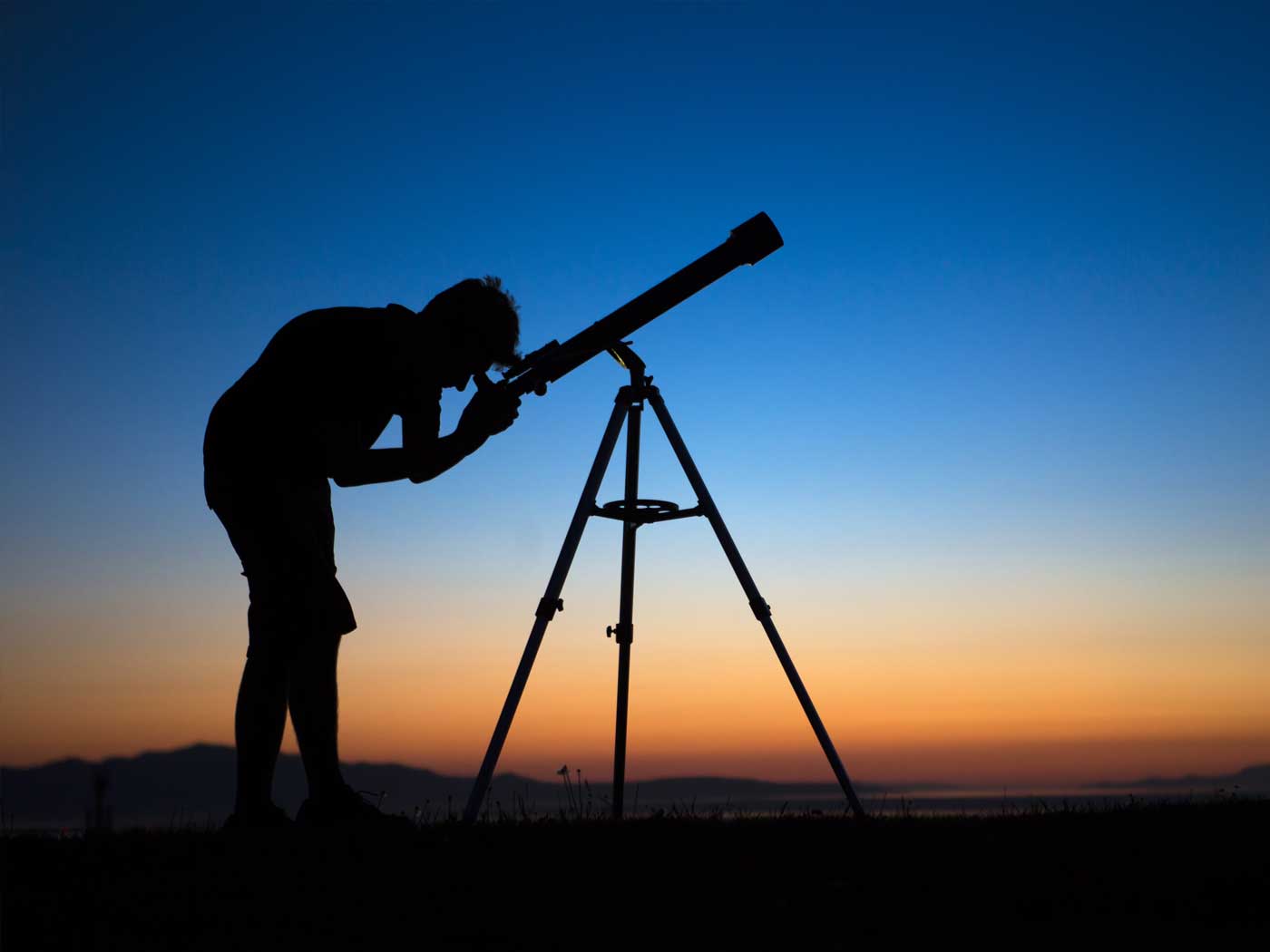
Enjoying God’s Universe While Isolated, on a Budget
Around three thousand years, King David wrote,
When I consider Your heavens, the work of Your fingers, the moon and the stars, which You have ordained,...

Avian Ventilation and Ventilators
During this time of the devastating COVID-19 pandemic, medical science is seeking a vaccine as well as drugs that will treat the symptoms. In the meantime,...
More Creation Science Update
ICR Research Is Revealing Evidence for Pre-Flood Longevity
One of the claims of Scripture most ridiculed by skeptics is the Bible’s matter-of-fact assertion that ancient people once lived for hundreds...
Cambrian Soft Tissue Defies Evolution
Paleontologists have discovered “early fossils [of] simple hollow tubes ranging from a few millimetres to many centimetres in length.”1...
The Role and Realm of Science
In society today, “science” often takes center stage as a significant influencer on policy decisions and public opinion. Climate change, pandemic...
The Latest
Can Metals Explain the Origin of Life?
A spark plug can make a spark, but no one would say a spark plug can build a car. In much the same way, a chemical reaction can do one useful job without...
Jumping Genes: Engineered to Move
Scientists recently found a “jumping gene” in an odd place. An RNA molecule from a tiny predatory bacterium had entered the cells of a very...
Institute for Creation Research Partners with Louisiana Baptist...
The Institute for Creation Research (ICR) announced today a strategic handover of its School of Biblical Apologetics (SOBA) educational content to Louisiana...
A Tangled Human Tree—or One Human Family?
What if the “ghosts” in our DNA are not lost steps in human evolution? A new Science study found DNA patterns that may point to two unknown...
Mapping the Sense of Smell
Your sense of smell involves much more than enjoying a hike through an aromatic pine forest or appreciating delicious foods.1,2
Our ability...
September 11, 2001: We Will Never Forget
“Fret not thyself because of evil men, neither be thou envious at the wicked: for there shall be no reward to the evil man; the candle of the...
What Can Fossil Teeth Really Tell Us?
A few tiny fossil teeth have been asked to carry a very large story. Researchers used them to name a new order of marsupials, Keeunamorphia, and to...
Man and His Labor
“Man goeth forth unto his work and to his labour until the evening.” (Psalm 104:23)
The 104th Psalm is a beautiful psalm of creation and...
Changing Climates, Stable Primates
What do you picture when you think of the first primates? Conventional scientists have long proposed warm forests, thick vines, and tropical heat as...
September Wallpaper
"[Cast] all your care upon Him, for He cares for you." (1 Peter 5:7, NKJV)
ICR's September 2026 wallpaper is now...
Shop Related Products