



The Mythical Horse Series
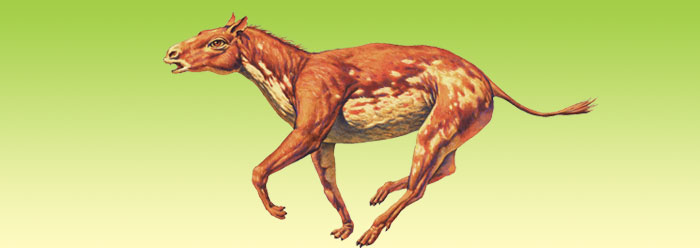
Horse evolution prominently appears in textbooks as a supreme example of the evolution of one body style into another. All students remember the "horse series" sketches, tracing the development of a small browser named Hyracotherium (formerly known as Eohippus) with four toes on the front feet and three on the rear, into the large one-toed horse of today.

Evolution Continues to Be a Hard Cell
The increasing amount of research at the cellular level has boded ill for the naturalist who insists that life must be interpreted (strained?) through a Darwinian explanatory filter. For instance, recent studies have focused on ion channels, which are passages designed to transport charged atoms (ions) through a membrane formed by a specific protein or proteins on the surface of cells.


The Message in Surprise Effects
"Surprise effect" was a term used by information-theory pioneer Claude Shannon to indicate the presence of information. In a string of symbols, it's not surprising to find randomness or patterns produced by natural law. It is surprising, though, to find a message. The SETI program, for example, looks for just such an information-bearing surprise in radio waves reaching earth.

The Origin of Flight
Evolution has many steep obstacles to overcome. Many are the stupendous design characteristics and environmental balances that can scarcely be understood by today's scientists, let alone mimicked. Yet evolution must work alone with random mutations (usually harmful and therefore discarded) and unthinking natural selection, which cannot see the future or do anything novel on its own.
Pages
