Two of Jupiter’s four Galilean moons, Io and Ganymede, were recently featured in science news stories—stories that remind us that these moons are problematic for those who believe the solar system is billions of years old.1,2
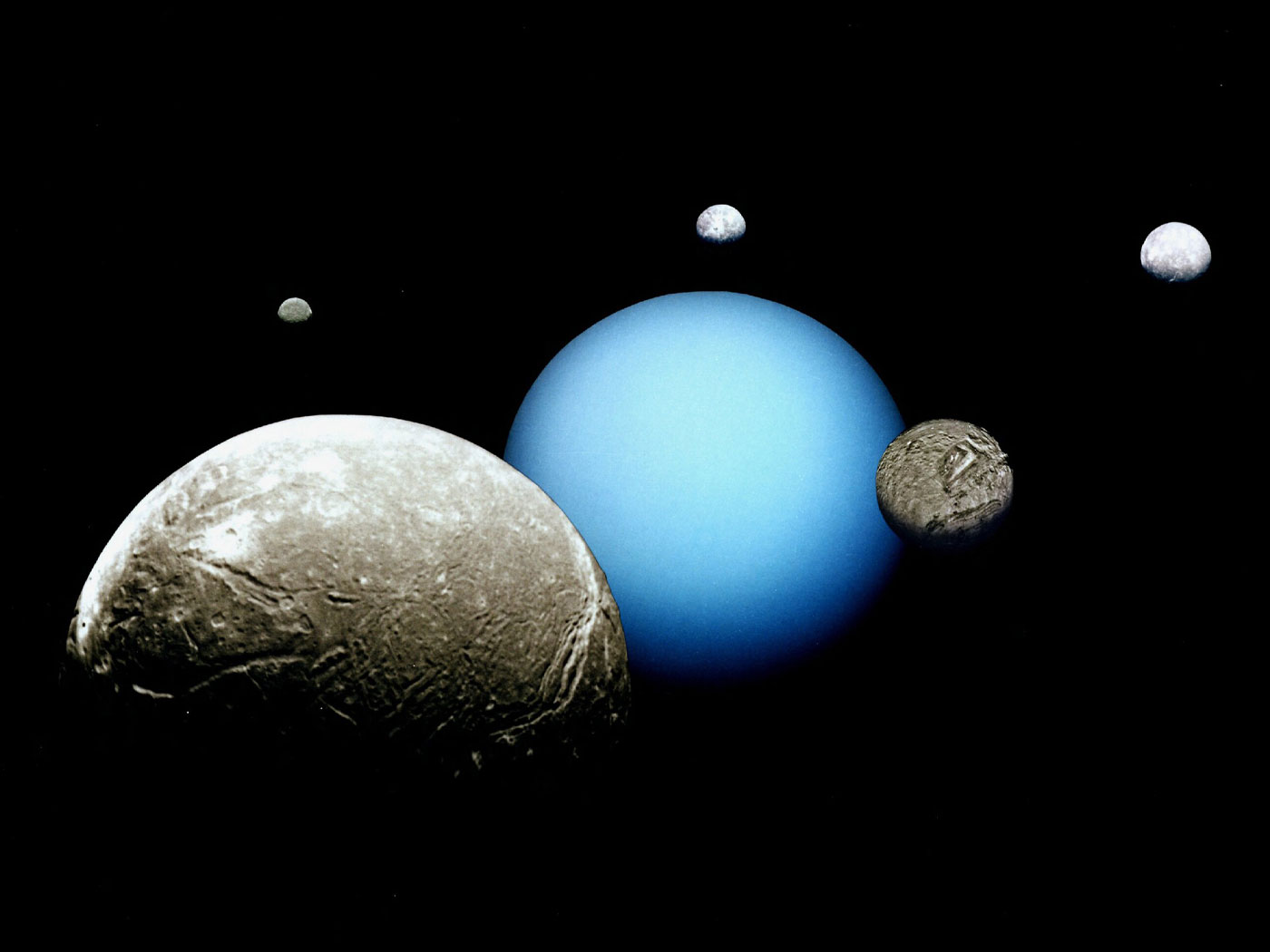
The four largest of Jupiter’s more than 100 moons are called the Galilean moons, in honor of their discovery by Galileo Galilei. In order of increasing distance from Jupiter, they are: Io, Europa, Ganymede, and Callisto (see photo above). Io and Ganymede both challenge the solar system’s presumed age of 4.6 billion years because they seem warmer than they should be after such a long time.
Small planets and moons quickly radiate heat to space, cooling off rapidly in the process. If these celestial bodies really are billions of years old, whatever primordial warmth they originally had should have been lost to space eons ago. Uniformitarian scientists are aware of this, and they argue that radioactive decay and tidal flexing can keep these small bodies warm over long ages. Heat is produced when radioactive elements decay. Likewise, tidal flexing, the stretching and compressing of a planet or moon’s interior due to gravitational tugs from nearby bodies, also produces heat.
However, in many cases, neither tidal flexing nor radioactive decay are plausible heat sources. Heat from radioactive decay can account for only a tiny fraction of Io’s heat output.3 Tidal flexing is a possible explanation for Io’s heat, but it is problematic also. Volcanism on Io is so intense that at the current measured rate, Io’s volcanism should have completely turned its interior inside out more than 100 times over the supposed age of the solar system!4 Additionally, a process called magmatic differentiation should have depleted Io’s crust of magnesium if the volcanic activity had been occurring for as long as conventional scientists claim. But this is not what’s observed.5,6 Moreover, Io is losing three tons of material to space every second through volcanism.7 It is very difficult to see how such volcanic activity could have persisted for billions of years.
To make matters worse, the recent news article on Io suggests that scientists may have “massively underestimated Io’s [heat] output,” exacerbating the problem even further.1 For these reasons, most uniformitarians would likely argue that Io’s intense volcanism started relatively recently, although some are still trying to claim that Io’s volcanism has persisted for billions of years.7 But a recent start to Io’s prodigious volcanism is troubling to uniformitarian scientists because such volcanism should only last a short time compared to the age of the solar system. Thus, it seems an odd coincidence that we were lucky enough to develop the technology to observe this volcanism just as it is occurring.8
Ganymede, the other Jupiter moon in which we’re interested, has a magnetic field. This surprised conventional scientists because their uniformitarian dynamo theory, which they need to explain how a planet or moon can maintain a magnetic field over deep time, requires the moon or planet to have a liquid core. Yet Ganymede’s liquid core should have frozen or solidified eons ago.9
Scientists have given up on tidal flexing as an explanation for Ganymede’s presumed warmth and have started invoking more exotic scenarios, such as iron “snow” or the formation of iron-sulfide crystals in Ganymede’s core.6,10,11 But even these strange theories have problems.6,11 Now scientists are claiming that perhaps Ganymede’s core never fully formed and that heat from this ongoing formation process may sustain a liquid dynamo.2 The fact that uniformitarian scientists are inventing yet another mechanism to try to explain Ganymede’s magnetic field is an indication that the other explanations didn’t work very well.
Both Io and Ganymede silently testify that they were created about 6,000 years ago by the Lord Jesus Christ, just as Scripture declares.12,13
References
- Tomaswick, A. We Might Have Massively Underestimated Io’s Thermal Output. Phys.org. Posted on phys.org May 4, 2026, accessed May 11, 2026.
- Kasal, K. Ganymede’s Unique Magnetic Field May Be Powered by Ongoing Core Formation—Not a Cooling Core. Phys.org. Posted on phys.org May 9, 2026, accessed May 11, 2026.
- Spencer, W. R. 2003. Tidal Dissipation and the Age of IO. Proceedings of the International Conference on Creationism. 5 (1): 585–596.
- Spencer, W. 2020. The Volcanism and Age of Io. Journal of Creation. 34 (2): 117–123.
- Lopes, R. M. C. 2007. Io: The Volcanic Moon. In Encyclopedia of the Solar System, 2nd ed. L. McFadden, P. R. Weissman, and T. V. Johnson, eds. Amsterdam, NL: Academic Press, 428.
- Hebert, J. 2023. Jupiter’s Young Moons. Acts & Facts. 52 (3): 14–16.
- Andrews, R. G. Jupiter’s Moon Io is a Volcanic Hellscape—and Has Been Since the Solar System Began. National Geographic. Posted on nationalgeographic.com April 18, 2024, accessed March 23, 2026.
- McKee, M. 2013. Planetary Science: Caught in the Act. Nature. 493 (7434): 592–596.
- Williams, M. Jupiter’s Moon Ganymede. Phys.org. Posted on phys.org October 16, 2015, accessed May 11, 2026.
- Bland, M. T., A. P. Showman, and G. Tobie. 2008. The Production of Ganymede’s Magnetic Field. Icarus. 198 (2): 384–399.
- Spencer, W. 2022. The Iron Snow Dynamo Theory for Ganymede. Journal of Creation. 36 (3): 3–5.
- Genesis 1; Psalm 19:1–2; Colossians 1:13–18.
- Johnson, J. J. S. 2008. How Young Is the Earth? Applying Simple Math to Data Provided in Genesis. Acts & Facts. 37 (10): 4.
* Dr. Hebert is a research scientist at the Institute for Creation Research and earned his Ph.D. in physics from the University of Texas at Dallas.