"LORD, how manifold are thy works! In wisdom hast thou made them all:
the earth is full of thy riches" (Psalm 104:24).
Evolutionists consider what they call "living fossils" to be rare, the famous Coelacanth fish being the best-known example. The fossils of this fish are found only in rocks older than 70 million years (assuming the standard geologic time scale to be real), but living coelacanths have been found in the Indian Ocean.
New cases of so-called living fossils do turn up fairly often. Graptolites have been considered in the past to be index fossils for the Ordovician period, 300 million years old. Yet they recently were found still living in the south Pacific.1
Other famous living fossils include the tuatara (supposedly extinct since the Cretaceous Period until found still living in New Zealand), the Lepidocaris crustacean (only found as fossils in Devonian rocks), the Metasequoia conifer tree (thought extinct for the past 20 million years), the Neopilina mollusk (supposedly extinct for 280 million years), the lingula brachiopod ("extinct" since the Ordovician), and even the trilobite (chief index fossil of the even more ancient Cambrian Period).2
Evolutionists tend to reserve the title of "living fossil" for those animals and plants which had been considered extinct until suddenly they turned up living today. Consequently, the vast numbers of living organisms that were already known to be in the fossil record are generally ignored as examples of living fossils. These even include those organisms supposed to be the most ancient of all. Evolution is supposed to have begun when prokaryotes evolved out of the primeval soup. It is significant, therefore, that:
Fossils very similar to living prokaryotes are found in rocks about 3500 million years old.3
Likewise, the primitive one-celled organisms called eukaryotes are supposed to have evolved from prokaryotes. But, these also are still living, essentially unchanged, in the modern world.
Simple eukaryotes, resembling living unicellular algae, are first confirmed in the fossil record about 1500 million years ago and first suspected in rocks almost 2000 million years old.4
The most important modern prokaryotes are probably the bacteria and the blue-green algae, and these certainly should be considered living fossils. They have been found in abundance in 3.4 billion year-old rocks from South America. Modern soil bacteria have been found in Precambrian rocks. One wonders why, if evolution really works, these "primitive" organisms have not changed significantly in over a billion years.
The prolific evolutionist, Stephen Jay Gould, has insisted that there is no evidence whatever against evolution. Yet he stresses the fact that bacteria have changed little since ancient times.
The most salient feature of life has been the stability of its bacterial mode from the beginning of the fossil record until today and, with little doubt, into all future time so long as the Earth endures.5
The same situation applies throughout the geologic column. In the supposed "oldest" period with metazoan fossils, all the present-day animal phyla are found as fossils, largely in modern form. As Gould says:
In one of the most crucial and enigmatic episodes in the history of life, . . . nearly all animal phyla made their first appearance in the fossil record at essentially the same time, an interval of some 5 million years (about 525 to 530 million years ago) called the Cambrian explosion.6
Speaking of the Cambrian fauna, there are many that still survive, all looking much like they did over 500 million years ago. The prominent British evolutionist Richard Dawkins has made the following comment:
And we find many of them already in an advanced state of evolution, the very first time they appear. It is as though they were just planted there, without any evolutionary history. Needless to say, this appearance of sudden planting has delighted creationists.7
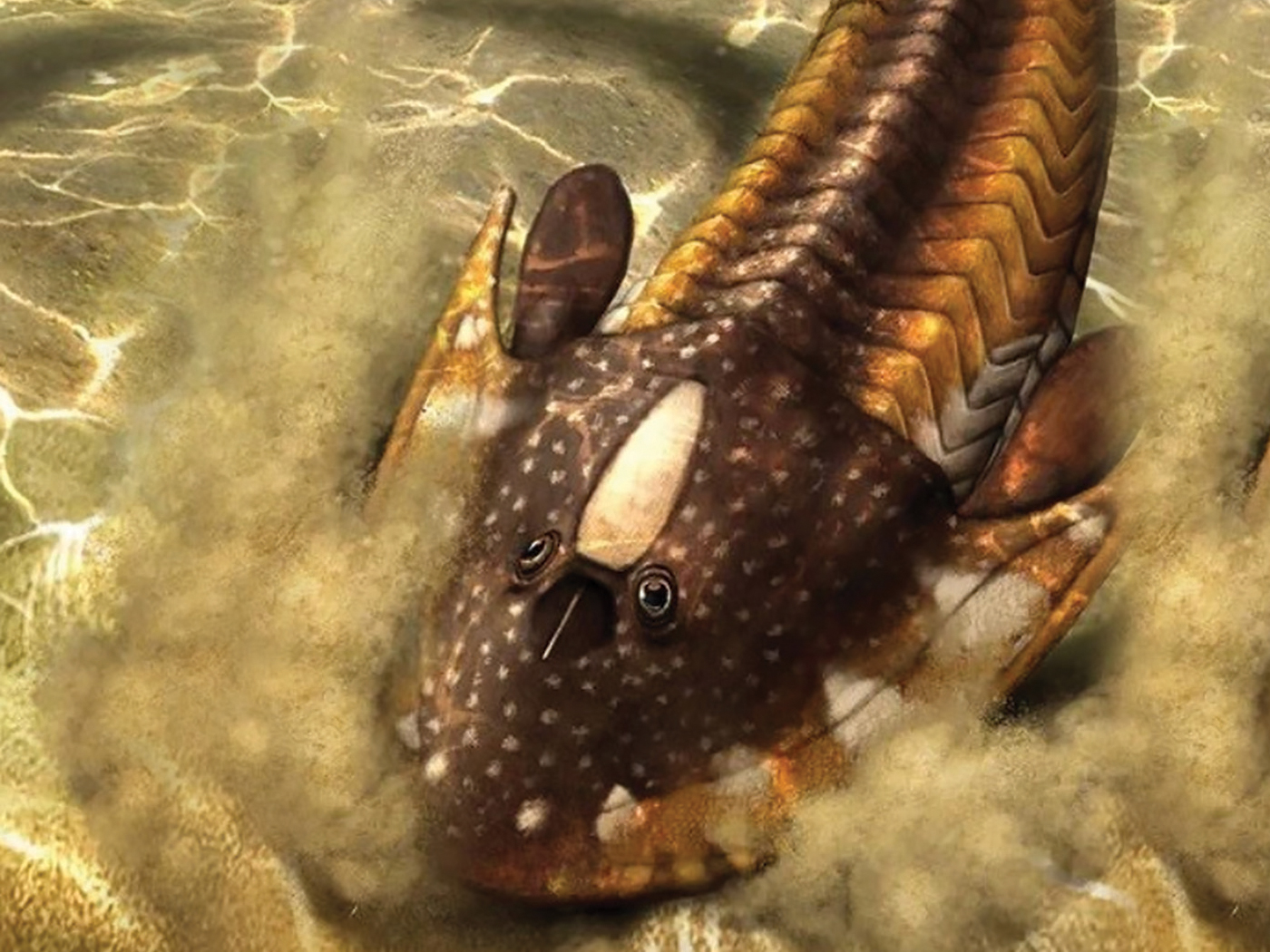
Indeed it has. Until recently, the phylum of vertebrates had been considered a later arrival in evolutionary history. But not now! Even the vertebrate phylum now extends into the Cambrian period, especially with the recent discovery of two fossil fish in China:
The two new fossils . . . from Chengjiang are the most convincing Early Cambrian vertebrates ever found.8
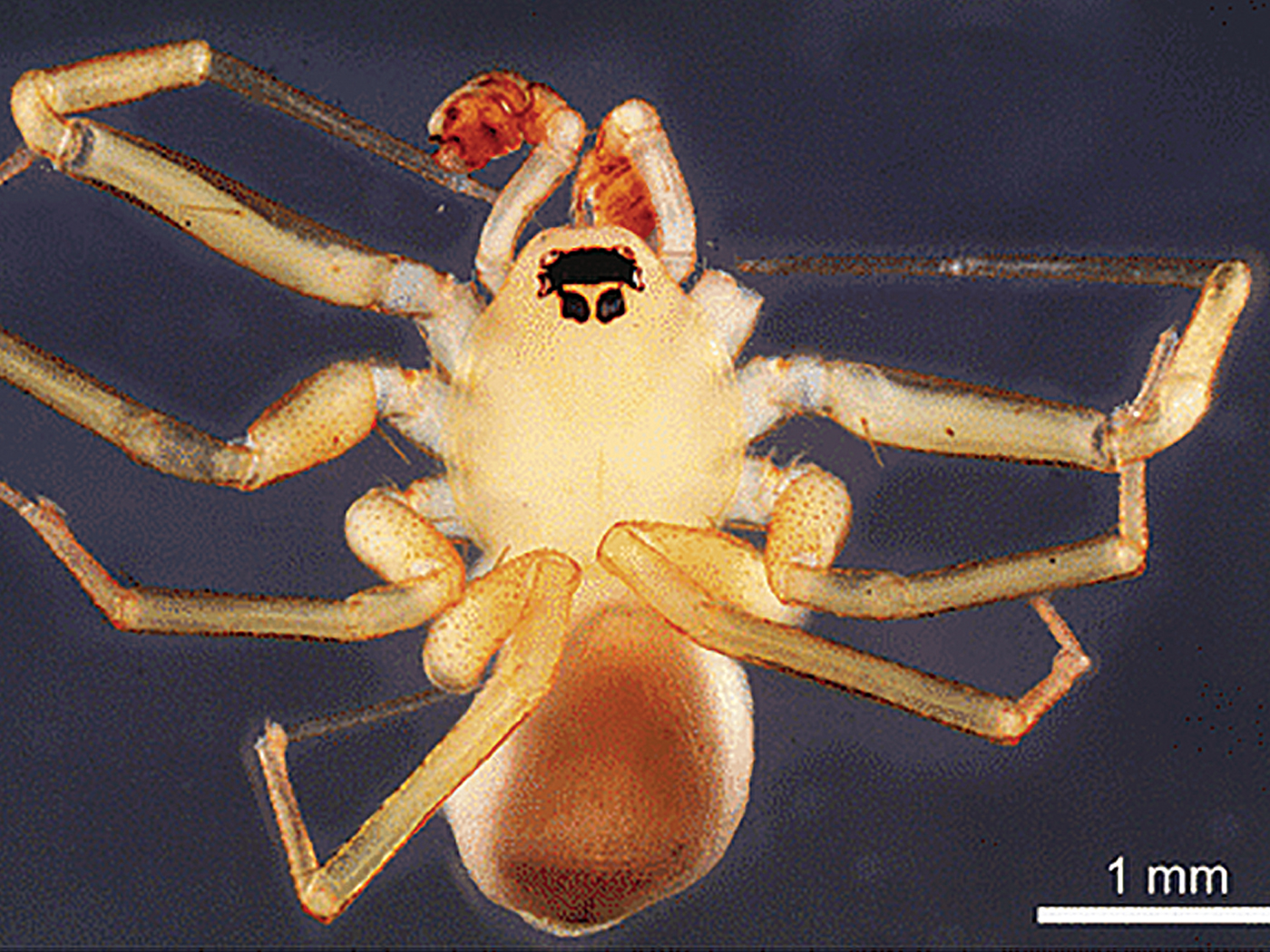
The insects and other land invertebrates are also a very important group, and these practically all seem to be living fossils. With respect to the arthropod phylum (the largest in the animal kingdom), consider the millipedes, for example.
Indeed, the oldest fossils of land-dwelling animals are millipedes, dating to more than 425 million years ago. Incredibly, the archaic forms are nearly indistinguishable from certain groups living today.9
The same phenomenon holds for practically all the insects.
Compared with other life forms, insects are actually slow to evolve new families—but they are even slower to go extinct. Some 84 percent of the insect families alive today were alive 100 million years ago. . . .10
Whether bees or ants, cicadas or beetles, termites or cockroaches, the fossils of these and other insects are always practically identical with (though often larger than) their modern descendants. The same applies to the arachnids and myriapods.
Space does not allow discussion of modern amphibians (e.g., frogs, toads), reptiles (crocodiles, alligators, turtles), mammals (bats, squirrels, shrews, opossums, tarsiers, etc.), all of which (and many, many others) are practically identical with their fossil representatives.
Speaking of extinction, the dinosaurs come to mind. These also may have been living fossils up until modern times, except that they were called dragons. Not many people realize how closely the ancient and medieval descriptions of various types of dragons correspond with modern paleontological reconstructions of various dinosaurs. But encyclopedia articles on "Dragons" have occasionally noted this characteristic. Dinosaurs were according to two of these,
. . . gigantic and astonishingly dragon-like extinct reptiles of past ages.11
The dragons of legend are strangely like . . . the great reptiles which inhabited the earth long before man is supposed to have appeared on the earth.12
The Bible, of course, also mentions dragons as real living animals at the time it was being written.
There is no space here to discuss the various ages themselves but, in the young-earth model of geologic history, all the alleged "ages" were actually different deposits either of the great flood or of the residual catastrophes following it. Thus, it is not surprising that the sedimentary rocks laid down by the Flood contain fossils of most of the creatures still surviving in the present age. Still further correlation with extant plants and animals will, no doubt, be developed as more fossils are discovered.
The fossil record is often so sparse that . . . there are plenty of cases where groups survived for tens of millions of years without leaving a single fossil.13
In actuality, as documented in many books by young-earth creationists, the fossil record is not a record of long evolutionary ages, with distinctive life forms in each age, as evolutionists allege, but of just one age, that of the great flood. No wonder, then, that practically all living organisms are represented in the rocks of the geologic column.
And in their marvelous variety and complexity they all bear witness to the wisdom and power of their Creator, while the great panorama of suffering and death (often even extinction) displayed in their fossilized preservation is a perpetual reminder, not of evolution, but of the terrible consequences of human sin on man's entire dominion.
References
1 Sue Rigby, "Graptolites Come to Life," Nature (vol. 362, March 18, 1993), pp. 209-210.
2 "Living Fossil Resembles Long-Extinct Trilobite," Science Digest (vol. 42, December 1957), p. 59.
3 Colin Patterson, Evolution (Second Edition, London, Natural History Museum, 1999), p. 129.
4 Ibid., p. 131.
5 Stephen J. Gould, "The Evolution of Life." In Evolution! Facts and Fallacies, Ed. by J. Wm. Schopf (San Diego: Academic Press, 1999), p. 5.
6 Ibid., p. 38.
7 Richard Dawkins, The Blind Watchmaker (New York: W.W. Norton Co., 1987).
8 Philippe Janvier, "Catching the First Fish," Nature (vol. 402, November 4, 1999), p. 21.
9 William A. Shear, "Millipedes," American Scientist (vol. 87, May/June 1999), p. 234
10 Carl Zimmer, "Insects Ascendant," Discover (vol. 14, November 1993), p. 30.
11 Article "Dragon" in Encyclopedia Britannica, 1949 edition.
12 Article "Dragon" in World Book Encyclopedia, 1965 edition.
13 Peter J. Bowler, Review of In Search of Deep Time, by Henry Gee (Free Press, 1999). In American Scientist (vol. 88, March/April 2000), p. 169.
* Dr. Morris is Founder and President Emeritus of ICR.