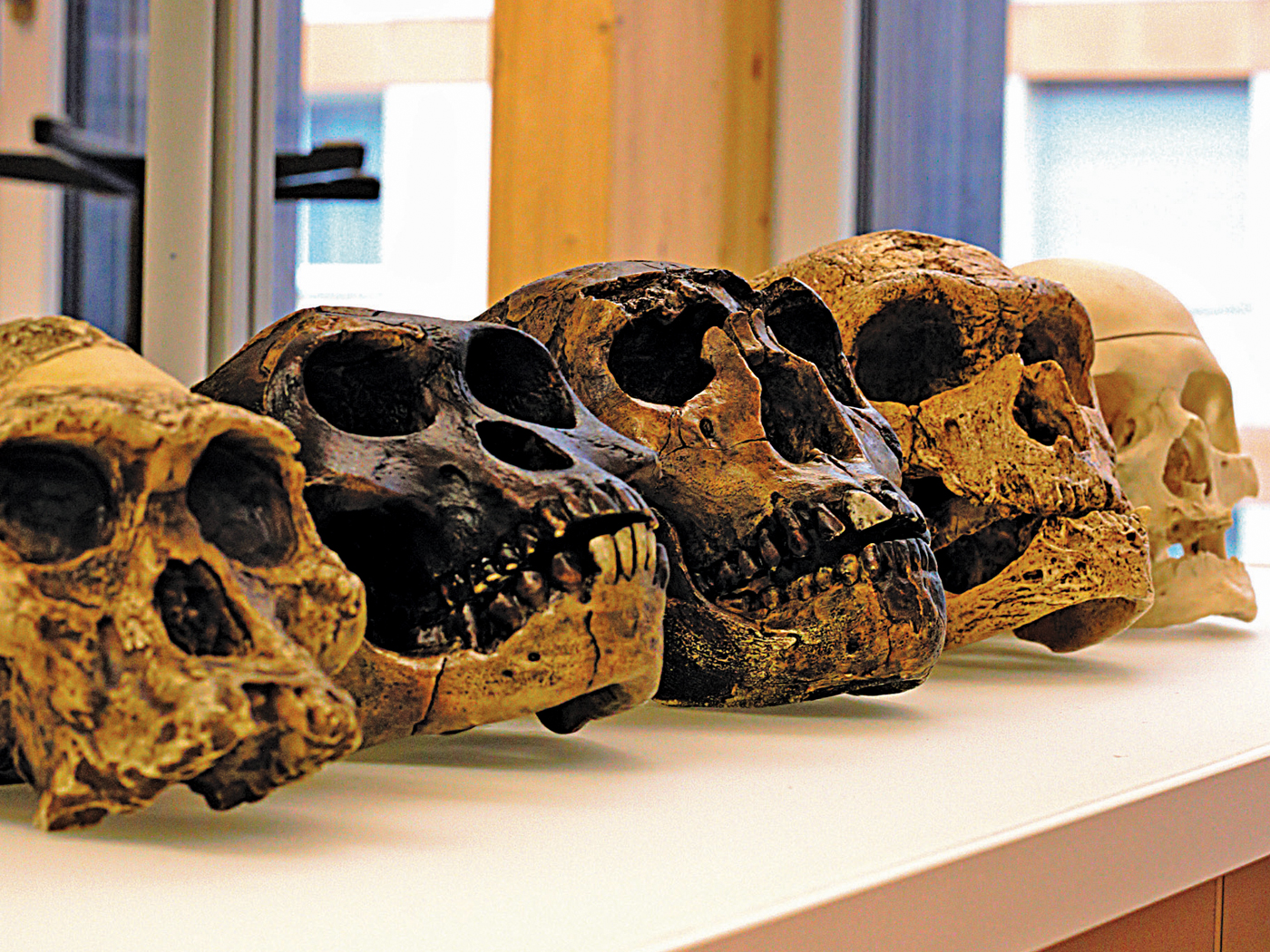
Why do you share DNA with an ant? Why do mammals generally have four limbs? Why do different creatures’ limbs often develop via similar genetic programs? Evolutionists attribute these biological similarities—this “homology”—to a “common ancestor” among diverse creatures.
For example, evolutionists like Stephen Matheson reject “common design” by an omnipotent Designer as an explanation for these facts. “As a competing explanation, design is currently a failure….We have no good reason to suppose that [shared anatomical patterns and genetic programs] could not have been otherwise, and in some cases, we know that it can work in other ways….To unseat common ancestry, or at least to rival it, design theory has to show that life could not have been otherwise” (emphasis added).1
Is the creationist explanation of “design” in trouble? Do we really have no good reason—from a design perspective—to expect similarities among the anatomical, developmental, and genetic patterns we see? Let’s apply what I call the “parking lot test” to Matheson’s evolutionary claims.
A quick trip to the nearest parking lot helps us to unravel evolutionary logic and arrive at the true explanation for motor vehicle origins. Do cars share a similar “anatomy”? By far, most run on four wheels rather than three or five. Is the “developmental program” (e.g., the construction process) for each vehicle shared? Is the “genetic program” (e.g., the blueprint) for a Honda Civic fundamentally different from the blueprint for a Ford Focus? Profound similarities underlie vehicles whose origins are continents apart!
By evolutionary standards, these vehicles should have originated from a common ancestor millions of years ago. “We have no good reason to suppose” that all cars should share a similar chassis or overall structural pattern. We might search in vain for the definitive scientific paper showing that four wheels are the optimum design for cars. We might never find the peer-reviewed papers which performed exhaustive tests of every possible car blueprint. Yet we know that all cars were designed by intelligent designers and were not the product of time and chance. Evolutionary logic fails the “parking lot test.”
What does this discussion reveal? It reveals that some evolutionists are very poor at reasoning from a design perspective. Hence, if evolutionary logic and reasoning cannot correctly explain the origin of things whose intelligent design has been directly observed (e.g., motor vehicles), why should we trust evolutionary logic when applied to things whose origins we have not directly observed (e.g., dinosaurs)?
Simple “parking lot” type tests expose even more weaknesses in evolutionary reasoning about the existence of shared features. For example, evolutionists cite so-called “transitional forms” in the fossil record as premier evidence of descent with modification from a common starting point. Real transitional forms do not exist—we only see fossils that blend features of two fundamentally different categories of creatures (e.g., Tiktaalik, a supposed transition between sea and land creatures). Evolutionists might again assert that we have “no good reason” to think that these creatures were designed.
Yet a trip to a military base—or even to the Wisconsin Dells for a “duck” tour—reveals the error of this reasoning.2 Not only have intelligent military engineers designed both motorized land vehicles (e.g., tanks and troop carriers) and sea vehicles (e.g., aircraft carriers, destroyers, and submarines), they have also created amphibious assault vehicles. These vehicles are “transitional” in their design in that they blend the characteristics of fully functional land and sea vehicles. Hence, creatures that blend features of two fundamentally different categories of creatures are products of deliberate engineering.
We may have “no good reason” to expect that “homology” is the product of intelligent design—until we take a trip to the parking lot.
References
- Matheson, S. New Limbs from Old Fins, Part 6. The BioLogos Forum. Posted on biologos.com on October 20, 2011, accessed June 26, 2013.
- For example, those offered through wisconsinducktours.com.
* Dr. Jeanson is Deputy Director for Life Sciences Research and received his Ph.D. in Cell and Developmental Biology from Harvard University.
Cite this article: Jeanson, N. 2013. Does "Homology" Prove Evolution? Acts & Facts. 42 (9): 20.