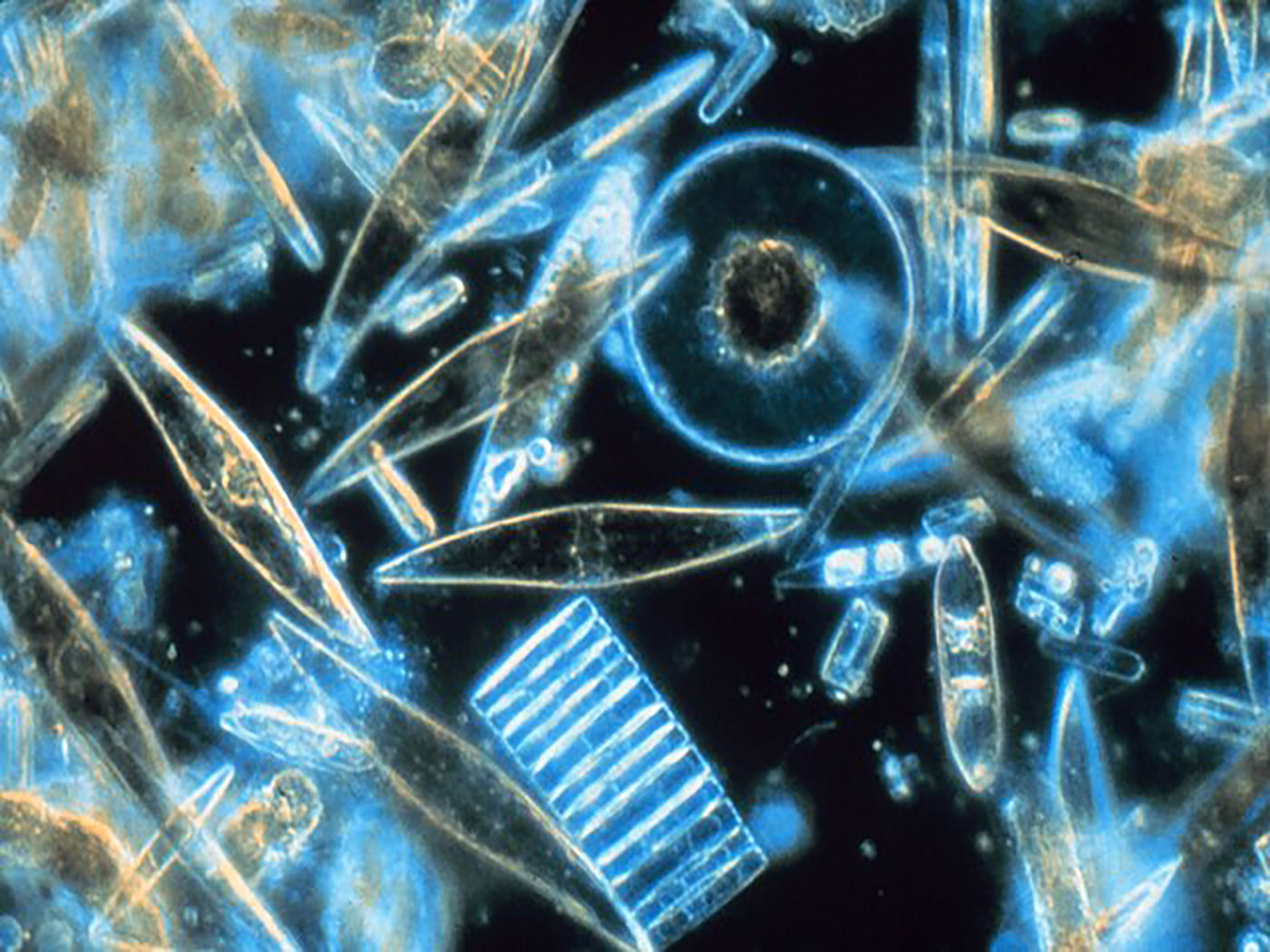
Paddlefish, also known as spoonbill catfish, are cartilaginous fish that inhabit freshwater lakes. They only like to feed on plankton, a category of aquatic food that includes tiny crustaceans like brine shrimp and water fleas. Paddlefish hunt using sensors on their paddle, or nose, that guide them right to their small prey. Biologists from Ohio University recently discovered why this system works so well.
Special cells called electroreceptors are embedded within tiny pockets distributed along the skin surface of the paddlefish's long nose. These receptors, which detect weak electric currents, would be useless unless they could send their signals to the brain for processing—which they do via other neurons. The researchers determined the range of electric intensity over which the paddlefish's system was most effective.
The scientists measured a live fish's neuron activity as it responded to electric patterns and intensities. Zooplankton heartbeats produce tiny electric impulses. Researchers compared the fish's response to weaker patterns that mimick those produced by plankton with the way it responded to stronger signals. "The paddlefish sensors best encode the signals emitted by zooplankton," according to an AIP Physics News Highlights report.1 The results of the study appear in the interdisciplinary journal Chaos.
But the researchers also observed "internal oscillators" that coordinate signals from the paddlefish electroreceptors into wave-like pulses that flash from the paddle tip toward the gills.
When the investigators increased the electric power stimulus, the fish's detectors lost the wave pulses, instead firing bursts of nerve activity amidst "noise" without patterns. These results suggested that when whole groups of electroreceptors receive electric signals from plankton, they are more likely to transmit stronger signals toward the brain.
In this way, the fish not only can detect the presence of plankton, but also their distance from its mouth. Apparently, the fish's elaborate system converts the plankton's electric signal strength into a distance, and constantly updates and compares that distance during successive oscillations of its electroreceptors. These signals then guide the fish right to its meal, even in murky waters.
Researchers found that this ingenious system best detected plankton signals. And the rest of the fish's body, including the physical structure of the brain, paddle, gills and mouth, is all coordinated to eat only zooplankton. In fact, paddlefish do not eat insects or worms, which keeps them from falling prey to fishermen's lures.
This means that the first paddlefish had to have every necessary component perfectly fitted together from the beginning in order to find its food. And that means that paddlefish were unquestionably created.
References
- Paddlefish sensors tuned to detect signals from zooplankton prey. Physics News Highlights. American Institute of Physics news release, January 4, 2012. Reporting on research published in Neiman, A. B. and D. F. Russell. 2011. Sensory coding in oscillatory electroreceptors of paddlefish. Chaos. 21 (4): 047505.
Image credit: USGS
* Mr. Thomas is Science Writer at the Institute for Creation Research.
Article posted on January 24, 2012.